A Buyer’s Guide to AI-Designed Furniture
What You Need to Know Before Investing in AI-Designed Furniture
AI-generated furniture can be an exceptional starting point for bespoke luxury design, but an image alone is not enough to produce a real piece of furniture. Before manufacture begins, the concept must be translated into dimensions, materials, technical drawings, structural details, finishes and production specifications. This guide explains the questions to ask before turning an AI furniture image into a finished piece, the pitfalls to avoid, and how to protect quality, comfort, cost and design integrity.
If you’re considering commissioning AI-designed furniture, our buyer’s guide covers everything you need to know:
You’ll learn:
- Why AI furniture concepts often need heavy refinement to be structurally sound and manufacturable
- The typical process involved, from concept development to final production
- How timescales, materials, and engineering differ from traditional bespoke projects
- The critical role of technical drawings, 3D modelling, and prototyping
- Why not all manufacturers are equipped to take on AI-led designs
- With visionary design comes greater complexity, and therefore, quality control becomes even more critical
- How to ensure your chosen design partner can actually deliver what they promise
Whether you’re experimenting with AI tools yourself or collaborating with a designer or manufacturer, this guide will help you ask the right questions and avoid costly missteps, ensuring your finished piece is as exceptional in reality as it is on screen.
AI Visuals Are Just the Start
AI can generate visually impressive images of luxury furniture in seconds, but an image isn’t a design — it’s a spark. Turning those concepts into high-end, functional pieces takes far more than digital creativity. It requires the technical knowledge to translate a visual into detailed drawings and 3D models, the engineering skill to ensure it performs in the real world, and the craftsmanship to bring it to life with precision. Producing a luxury piece from an AI image requires technical expertise, creative problem-solving, and deep collaboration between designers and manufacturers.
If you’re considering exploring this exciting new frontier, you should look to work with a furniture and design expert with years of experience in designing and manufacturing high-end, bespoke pieces. Someone who understands stress tolerances, materials, and finish complexities.
Taking an AI image from a concept to reality requires being able to produce something that not only looks stunning but also performs beautifully in the real world. Look for a partner with deep technical knowledge, a proven production process, and a track record in delivering custom luxury furniture at the highest standard.
At Juliettes Interiors, we use AI to unlock new creative possibilities, but the real work begins when our expert team steps in to engineer, refine, and manufacture that concept into a liveable, luxury product. AI alone doesn’t understand structure, stress tolerance, or ergonomic function — we do. That’s where our 20+ years of bespoke furniture design experience come in.
In short, AI sparks the vision, but experience makes it real.
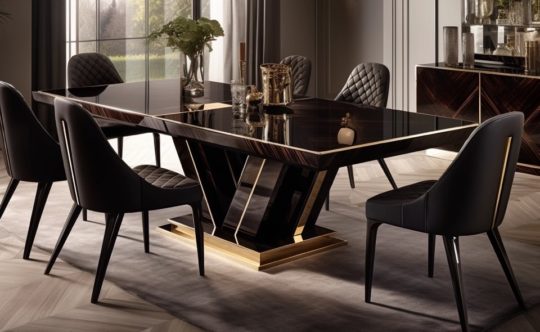
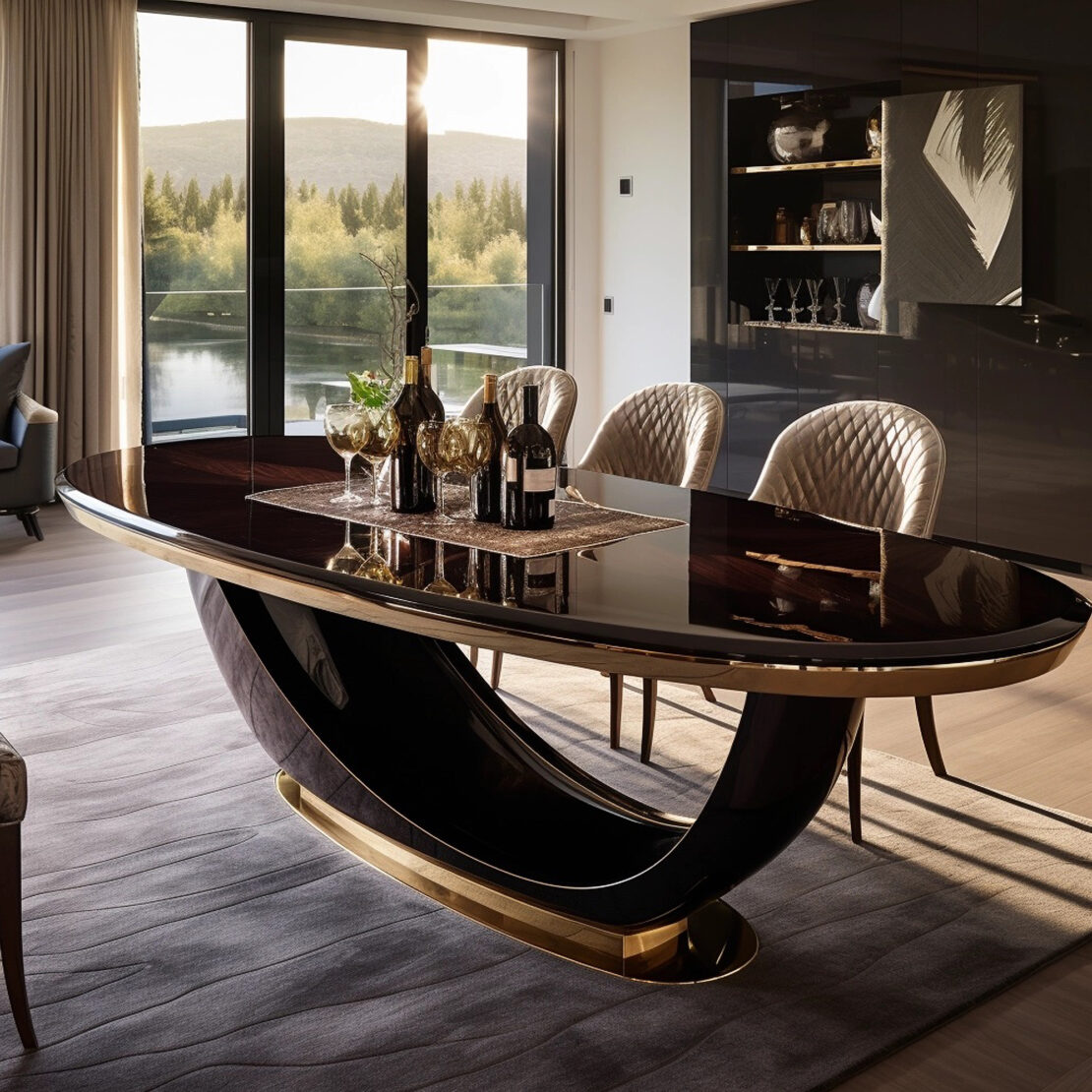
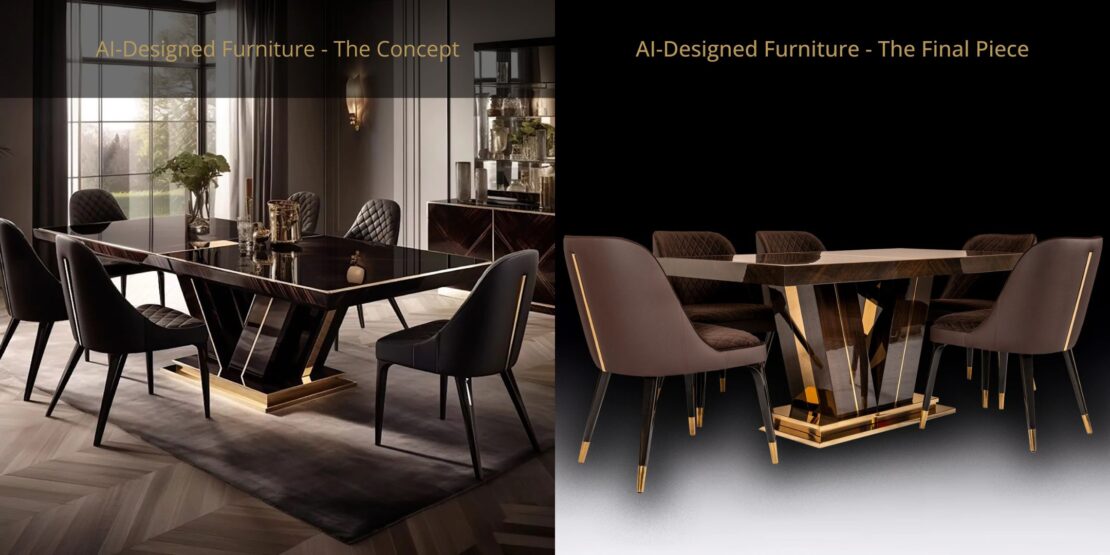
Take this luxury dining table concept, designed by Juliettes Interiors with the help of AI. Then see the transformation into reality in the video below.
AI Design Concept
AI Design Concept Turned into Reality
Now you’ve got a taste of what’s possible, here are some of the things you need to know and to look out for, if you’re thinking of commissioning your own bespoke furniture designed using AI.
Expect Longer Lead Times – Why AI-Designed Furniture Takes Longer
Commissioning bespoke AI-designed furniture isn’t a quick or standard process. In fact, it typically takes twice as long as producing traditional made-to-order pieces. That’s because AI doesn’t follow templates — it creates entirely new forms. And with that originality comes complexity.
Every component must be engineered from scratch. There’s no pre-existing model to adapt, no shortcuts. What begins as a conceptual AI image needs to be translated into something structurally sound, comfortable, durable, and manufacturable to the highest luxury standards.
Here’s what the process involves to take an AI image from concept development to final production:
1. Concept Visualisation through AI
The journey begins with AI-generated imagery. These visuals help capture bold, unconventional ideas that push creative boundaries. However, they rarely account for proportion, joinery, material behaviour, or weight distribution — all of which need to be assessed and refined by experienced designers.
2. Technical Development (2D CAD Drawings & Elevations)
Once a concept is selected, it’s reimagined in technical form. Detailed 2D CAD drawings and shop elevations are created, mapping out precise dimensions, joints, and construction logic. This stage ensures the design can be engineered safely and accurately.
3. 360° 3D Modelling
The technical drawings are transformed into fully rotatable 3D models, allowing both the client and manufacturer to view the piece from every angle. This helps identify any functional issues and confirm proportions, depth, and balance before moving forward.
4. Material Selection & Structural Testing
The right materials must be selected not just for visual appeal, but for performance, stability, and finish compatibility. Traditional manufacturing or product design might suggest products are best suited to being crafted in traditional materials such a wood, veneer, natural stone, etc., but the reality may demand a switch to fibreglass, resin, or reinforced metal. Each new design often means new material challenges.
5. Manufacturer Prototyping & Final Render Approval
With materials agreed and technical files complete, the manufacturer creates a prototype or render for review. At this stage, it’s crucial to involve multiple layers of quality control: joinery details, corner stress points, and finishing techniques must all meet the original intent.
6. Precision Production — No Room for Error
With bespoke AI-designed furniture, the first production has to be flawless. Unlike standard pieces, there is no backup version, no batch of prototypes. The approved version goes straight into full build, and everything must be perfect, from internal structure to external detailing and finish.
This extended timeline isn’t a drawback, it’s merely a reflection of the care, skill, and complexity required to produce something truly one-of-a-kind. The result? A piece that didn’t exist until you imagined it. Crafted from a vision, shaped by technology, and brought to life through expert craftsmanship.
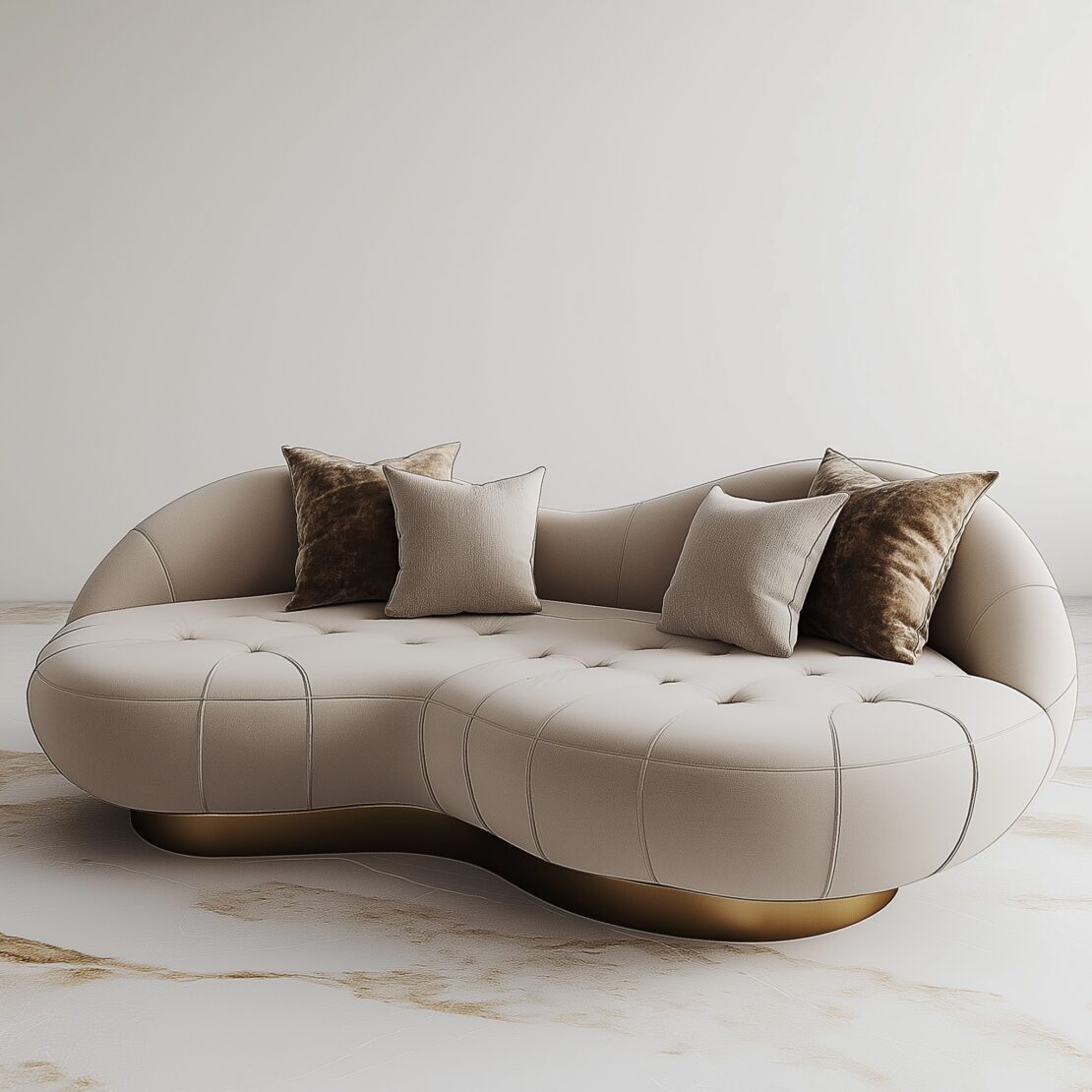
Few Manufacturers Have the Capability or the Courage to Deliver AI-Designs
AI-led designs often push boundaries that traditional workshops shy away from: bold forms, experimental structures, or non-standard materials (e.g. switching from wood to fibreglass). That’s why it’s essential to partner with forward-thinking, highly skilled manufacturers who embrace innovation and have the technical capabilities and fearlessness to execute.
At Juliettes Interiors, we work with a global network of forward-thinking manufacturers who are not only capable but excited to take on complex projects. Our team leads every step, from materials research and prototyping to finish verification, ensuring the piece you receive is not just manufacturable, but exceptional.
Exceptional Outcomes Rely on Exceptional Quality Control
With visionary design comes greater complexity, and quality control becomes even more critical. These designs often introduce complex, unfamiliar forms and structural challenges that traditional manufacturers may hesitate to take on, especially when they involve material shifts, like replacing wood with fibreglass or sculpted resin. Every detail must be engineered from scratch, and every join, curve, and contour must balance aesthetics with function.
Manufacturing Complexity Increases Dramatically
AI doesn’t account for load-bearing stress, ergonomic comfort, or fabrication feasibility, which means the technical demands increase exponentially. Bespoke solutions may be needed at every stage, from hidden reinforcements and precision joinery to structural stability and finish durability. That’s why producing AI-designed furniture requires a manufacturer with not just skill, but a deep understanding of advanced materials and non-standard construction methods.
Luxury is Defined by What You Don’t See, Which is Why Rigorous Quality Control is Essential
Quality control must be as meticulous as the design itself. Every piece must pass through multiple stages of review, with CAD drawings, renders, prototypes, and finishes checked for structural integrity, visual fidelity, and practicality. Structural joins, surface treatments, and installation feasibility, nothing can be left to assumption. It’s this level of care that ensures what’s delivered doesn’t just meet expectations, but quietly exceeds them in ways only true luxury craftsmanship can.
We’ve all seen “what I ordered vs what I got” horror stories. At Juliettes Interiors, our process ensures your vision is not only realised but elevated in every detail. What begins as a dream becomes a finished piece that exceeds expectation in form, finish, and finesse.
What to Look for in an AI-to-Reality Furniture Design Partner
Commissioning AI-designed furniture is a bold and visionary step, and not one to entrust to just anyone. The right partner won’t just promise results; they’ll have a proven record of transforming ambitious concepts into impeccably crafted, functional masterpieces.
The most successful projects begin with a team that offers:
- Deep expertise in bespoke luxury furniture manufacturing
- Global experience across private residences and commercial interiors
- A commitment to craftsmanship, quality, and personalisation at every stage
Before committing, ensure your chosen studio or supplier can confidently present:
- Detailed 2D shop drawings and joinery elevations, reflecting structural logic and design integrity
- Fully rotatable 3D renders, precisely aligned with technical plans and refined for every angle
- A portfolio of successfully delivered AI-led pieces, tailored to bespoke client briefs
- A transparent, multi-layered quality control process, especially when working across global manufacturers
- Client testimonials, case studies, and technical documentation, reflecting both expertise and trust
Luxury design demands discretion, excellence, and certainty. Don’t settle for promises; always ask for proof. A true expert will not only show you what’s possible but what they’ve already achieved for clients who expect the extraordinary.
At Juliettes Interiors, we’re proud to be leading the evolution of luxury interiors through AI-designed furniture, not just creating images, but turning digital ideas into tangible, functional, and breathtakingly beautiful pieces for our discerning clientele. Check out this AI-designed dining table and chairs in situ, which we created for a recent interior design project in London.
Partnering with Juliettes Interiors for AI-Designed Furniture
At Juliettes Interiors, we don’t just follow trends, we help define them. With over two decades of expertise in luxury furniture design and bespoke manufacturing, we’ve become the trusted partner for private clients, interior designers, architects, and developers across the globe. Our reputation is built on delivering pieces that are not only visually striking but expertly engineered, flawlessly crafted, and tailored to the individual. See our latest AI-designed furniture pieces.
The best AI-designed furniture is not made by copying an image blindly. It is created by combining imagination with technical knowledge, material expertise and skilled craftsmanship. A successful piece should look beautiful, function properly, suit the space, withstand use and feel worthy of its setting. For luxury interiors, the difference is in the questions asked before production begins.
From our award-winning London design studio, our team provides expert guidance at every stage. Whether you’re commissioning a one-off showpiece or a full interior transformation. Our AI-assisted design service is at the forefront of innovation, allowing clients to turn ambitious digital concepts into elegant, functional works of art.
In addition to our fully bespoke furniture design services, we offer:
- Customisable luxury furniture collections with options for finishes, fabrics, and dimensions
- End-to-end luxury interior design services, from concept and material selection to technical drawings, prototyping, and white-glove installation
- Turnkey project management, ensuring a seamless, luxury experience from start to finish
Whether you’re based in London or abroad, you’ll benefit from our personal, attentive caring service, paired with the technical expertise to make even the most complex AI-led designs a stunning, real-world reality.
At Juliettes Interiors, luxury is never compromised. Every piece we create is a reflection of our commitment to excellence, in the designs, in the details, and in the delivery. Get in touch today.
FAQs
Can AI-generated furniture actually be made in real life?
Yes, but not directly from the image alone. An AI image is a concept, not a production drawing. It may show impossible curves, unsupported structures, unrealistic joints, misleading scale, or materials that would not behave as shown.
Before production, the image must be translated into a proper design specification. That usually includes dimensions, construction method, materials, finishes, upholstery details, metalwork, weight, joinery, tolerances and installation requirements. A good maker will not simply copy the image; they will rationalise it into something structurally sound, usable and durable.
The pitfall is assuming that a beautiful render equals a buildable design. It does not.
What should I ask before turning an AI furniture image into a real piece?
Ask these questions before committing to manufacture:
- Is the design structurally possible?
- What are the exact dimensions?
- What materials will be used?
- Is the piece decorative, functional, or both?
- How will the item support weight in daily use?
- Are the legs, base, arms or frame strong enough?
- Will the proportions work in the intended room?
- Can the finish shown in the image be achieved in real materials?
- Will the upholstery, veneer, lacquer or metalwork age well?
- Is a technical drawing required before production?
- Is a prototype, mock-up or sample needed?
- Who owns the final design rights?
- What happens if the finished piece differs from the AI image?</p>
- What is the lead time?
- What are the approval stages before manufacture starts?
These questions protect the buyer from the main risk: commissioning an expensive piece that looks impressive on screen but fails in proportion, comfort, finish or build quality.
Is an AI furniture image enough for a manufacturer?
No. A manufacturer needs more than an image. They need a technical brief.
At minimum, the brief should include the intended use, dimensions, materials, finish, construction method, comfort requirements, location, access restrictions, installation method and any safety or compliance requirements. Bespoke furniture makers work across wood, metal, glass, plastics, fabric and specialist finishes, so the design has to be broken down into real components before production. (Skills England)
An AI image can be the starting point. It is not the manufacturing instruction.
What are the biggest pitfalls of AI-designed furniture?
The main pitfalls are:
- Unrealistic structure
AI often creates legs, bases or frames that look elegant but would not support real weight. - False material behaviour
AI may show marble bending, glass flowing, metal floating, or upholstery forming impossible curves. - Scale errors
A chair may look beautiful but be too low, too narrow, too deep or impossible to sit in comfortably. - Missing construction details
AI does not usually show joints, fixings, internal frames, seams, stitching, brackets or reinforcement. - Finish mismatch
The image may show a perfect fantasy surface that cannot be matched exactly in veneer, lacquer, resin, brass, bronze or stone. - Comfort failure
A sculptural sofa or chair may look impressive but be too upright, too shallow, too hard or impractical. - Budget creep
Complex curves, specialist finishes, hand carving, moulding, metalwork and prototyping can increase cost sharply. - Copyright and design rights uncertainty
AI-generated designs raise live legal questions around ownership and protection, especially where there is little or no human creative input. UK commentary in 2026 indicates that registered design protection may be available for purely computer-generated designs, but copyright and other protections remain less clear. (Taylor Wessing)
How do I know if an AI furniture design is buildable?
A design is buildable if a qualified furniture designer or maker can turn it into:
- a dimensioned drawing;
- a material specification;
- a structural method;
- a finish schedule;
- a costed quotation;
- a clear production programme.
If the maker cannot explain how the item will stand, support weight, be assembled, be transported and be installed, the design is not yet ready.
For high-value pieces, you should also ask whether the maker recommends a sample, prototype or partial mock-up. This is especially important for curved sofas, sculptural chairs, dining tables, cabinets with unusual doors, metal bases, stone tops or pieces with integrated lighting.
Can I copy an AI image and ask someone to manufacture it?
You can ask, but you should not assume it is legally or commercially safe.
There are three separate issues. First, the AI image may resemble an existing designer’s work. Secondly, the terms of the AI platform may affect how the image can be used commercially. Thirdly, ownership of AI-generated designs is still legally complex. The UK has ongoing uncertainty around copyright and AI, including the use of copyrighted material in AI training and the protection of AI-generated output. (GOV.UK)
For luxury bespoke work, the safest route is to use the AI image as inspiration, then develop an original, documented design with human creative input, drawings and specifications.
What information should a luxury furniture buyer provide to the designer or maker?
A serious buyer should provide:
- the AI concept image;
- intended room location;
- approximate dimensions;
- desired material and finish;
- required function;
- comfort expectations;
- colour palette;
- budget range;
- access restrictions;
- delivery location;
- deadline;
- whether the piece must match existing furniture, joinery or architecture.
For example, “make this chair” is not enough. A better brief would say: “Produce a sculptural occasional chair inspired by this image, suitable for a formal drawing room, with a seat height of approximately 45 cm, supportive upholstery, walnut frame, antique brass detailing and ivory boucle fabric.”
That gives the maker something real to price, draw and produce.
How accurate will the finished furniture be compared with the AI image?
It should be close in design intent, but it will rarely be identical.
AI images often contain visual contradictions: one leg may differ from another, curves may not align, textures may shift, and construction details may be missing. A professional process should identify these issues before production starts.
The buyer should ask for approval stages, such as:
- concept confirmation;
- scaled design drawing;
- material samples;
- finish samples;
- production drawing;
- final written sign-off.
Without these stages, disputes are more likely because the client may expect the fantasy image while the maker produces the practical interpretation.
Do I need technical drawings for AI-generated furniture?
Yes, for any expensive bespoke piece.
Technical drawings protect both buyer and maker. They confirm scale, proportions, construction, materials, finishes and details before manufacture begins. Architectural Digest’s guidance on custom furniture also stresses the importance of accurate measurements, clear expectations, qualified vendors and responsibility for mistakes. (Architectural Digest)
For luxury furniture, drawings are not optional. They are the bridge between imagination and production.
Should I ask for samples before production?
Yes, particularly for high-value work.
Ask for samples of wood, veneer, lacquer, metal, stone, fabric, leather, trim, stitching, patina and any specialist finish. Computer-generated images are unreliable for colour, texture, sheen and scale.
This is especially important for:
- antique brass;
- gold leaf;
- silver leaf;
- bronze;
- polished metal;
- high-gloss lacquer;
- exotic veneer;
- marble;
- bouclé;
- velvet;
- leather;
- carved or ribbed surfaces.
A sample avoids the common problem where the finished piece is technically correct but visually disappointing.
How much does it cost to make AI-generated furniture?
The cost depends on complexity, material, scale, finish, production method and whether prototyping is required.
An AI image can make a piece look deceptively simple. In reality, the most expensive elements are often hidden: internal framing, specialist curves, hand carving, moulds, metal reinforcement, upholstery structure, finishing, transport and installation.
A luxury buyer should not ask only, “How much is this?” They should ask, “What construction method are you pricing for?” A cheaper quote may mean weaker construction, inferior materials, no prototype, poorer finishing or a less faithful interpretation of the design.
How long does bespoke AI-generated furniture take to produce?
Lead times vary, but high-end bespoke furniture is rarely immediate. The process may include design development, technical drawings, sampling, quotation, approval, production, finishing, quality control, packing, shipping and installation.
For complex luxury pieces, the buyer should expect a staged process rather than a quick order. Rushing can cause errors in proportion, finish, comfort and durability.
The right question is not simply “How fast can you make it?” The better question is: “What stages are required to produce this properly?”
What are the risks with comfort and ergonomics?
This is one of the most overlooked risks.
AI may create a chair, sofa or bed that looks luxurious but does not support the body properly. Seat height, seat depth, back angle, arm height, cushion density and lumbar support all matter.
For chairs and sofas, ask:
- What is the seat height?
- What is the seat depth?
- What is the back angle?
- What cushion filling will be used?
- Is the piece for occasional or daily use?
- Can a comfort prototype be tested?
- Will the design suit the client’s height and posture?
A visually dramatic piece that is uncomfortable will fail, however beautiful it looks.
What questions should I ask about materials?
- Is this solid wood, veneer, MDF, plywood, metal, resin, stone or composite?
- Is the material suitable for the intended use?
- Will the material move, crack, dent, stain or fade?
- Can the finish be repaired?
- Is the surface suitable for family use, entertaining or commercial wear?
- Will the material support the weight and shape shown in the AI image?
- Are there alternative materials that give the same look with better durability?
Luxury does not mean fragile. A proper specification should balance appearance, performance and longevity.
What questions should I ask about finishes?
Ask:
- Is the finish hand-applied or sprayed?
- Is it lacquer, wax, oil, metal leaf, patina, plated metal or polished metal?
- Will it look exactly like the image?
- Can I approve a finish sample?
- How does it need to be maintained?
- Is it suitable for sunlight, moisture, heat or frequent handling?
- Can it be repaired if scratched?
The finish is where many luxury commissions succeed or fail. AI renders often exaggerate sheen, depth, shadow and texture. Physical samples are essential.
What should I ask about delivery and installation?
Ask:
- Will the piece fit through doors, lifts and staircases?
- Does it need to be made in sections?
- Who is responsible for access checks?
- Does the item require wall fixing or floor fixing?
- Is specialist installation needed?
- Who insures the piece in transit?
- What happens if the item is damaged during delivery?
- Who removes packaging?
- Is white-glove installation included?
Large luxury furniture often fails at the final stage because nobody checked access properly. For heavy stone, glass, metal or oversized upholstered items, access planning is not optional.
What should be included in the quotation?
A proper quotation should include:
- item description;
- dimensions;
- materials;
- finish;
- upholstery details;
- construction method;
- drawings included or excluded;
- samples included or excluded;
- prototype included or excluded;
- delivery cost;
- installation cost;
- VAT or taxes;
- payment schedule;
- lead time;
- approval process;
- cancellation terms;
- tolerance for handmade variation.
A vague quote is a red flag. If the quote does not define what is being made, the buyer has little protection.
What should I ask about design ownership?
Ask:
- Who owns the AI image?
- Who owns the developed furniture design?
- Can the buyer reproduce the piece again?
- Can the maker sell the same design to another client?
- Can the design be photographed and published?
- Can it be registered as a design?
- Has the design been checked against existing furniture or designer pieces?
This matters particularly for HNW and UHNW clients who expect exclusivity. If the design is intended to be one-of-a-kind, that must be stated in writing.
Is AI-designed furniture suitable for luxury interiors?
Yes, but only when controlled by proper design and production discipline.
AI is useful for visual exploration. It can help clients see unusual forms, finishes, colourways and design directions quickly. However, the final piece still depends on human expertise: proportion, material knowledge, technical design, craftsmanship and quality control.
AI should not replace the designer or maker. It should accelerate the concept stage, then be refined into a properly specified bespoke piece.
What is the safest process for commissioning AI-generated furniture?
The safest process is:
- Create or select the AI concept image.
- Review whether the design is practical.
- Define size, use, material and finish.
- Produce a design brief.
- Prepare scaled drawings.
- Confirm structural feasibility.
- Obtain samples.
- Confirm price and lead time.
- Approve production drawings.
- Manufacture the piece.
- Inspect before dispatch.
- Deliver and install professionally.
This process prevents the most common mistake: moving straight from image to production.