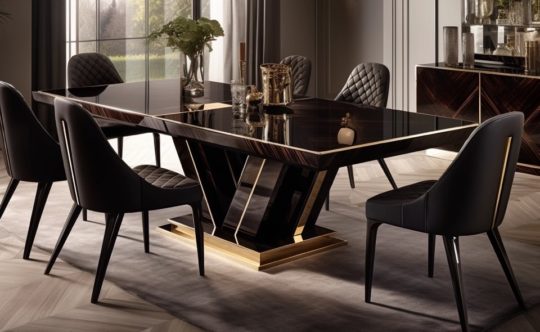
Juliettes Interiors turns AI-generated furniture images into real bespoke luxury furniture. We refine the concept, resolve the technical details, select suitable materials and manage production, so the final piece is beautiful, functional and suitable for high-end interiors.
Can AI-generated furniture be made into real furniture? Yes. AI-generated furniture images can be used as the starting point for bespoke furniture, but they must be technically developed before production. Juliettes Interiors assesses the scale, proportions, structure, materials, fixings, finishes and usability before turning the concept into a finished luxury piece.
Key Takeaways: Bringing AI Designs to Life
From Concept to Reality
We specialise in taking AI-generated interior design concepts and manufacturing them into physical, luxury bespoke furniture.
Overcoming AI Limitations
While AI creates stunning mood concepts, it lacks an understanding of structural integrity, ergonomics, and practical dimensions (like legroom or mirror weight).
Expert Engineering
Our design team bridges the gap by resolving technical flaws, calculating weight-bearing capacities, and specifying the correct internal hardware.
Bespoke Customisation
Every AI concept is refined by human craftsmen to meet the exact dimensions, premium finishes, and practical needs of your physical space.
Knowledge Matters
This is where real furniture knowledge matters. At Juliettes Interiors, we have completed another successful AI furniture design for an international interior designer. This project began with AI-generated images supplied by our customer. The brief was clear. The client wanted the look, mood and style shown in the images, but translated into real, usable furniture, with customised tweaks, finishes and colours specified by the client.
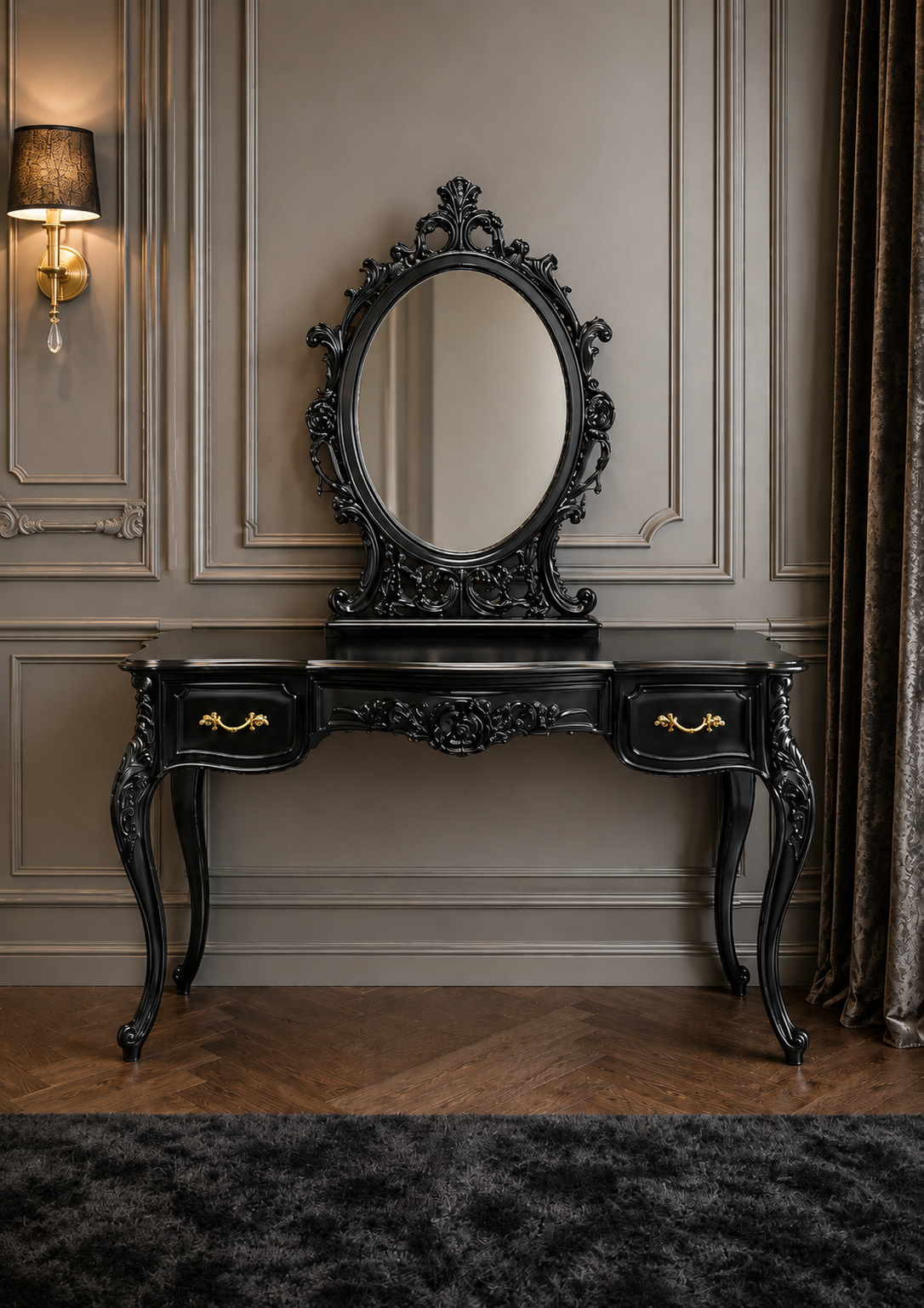
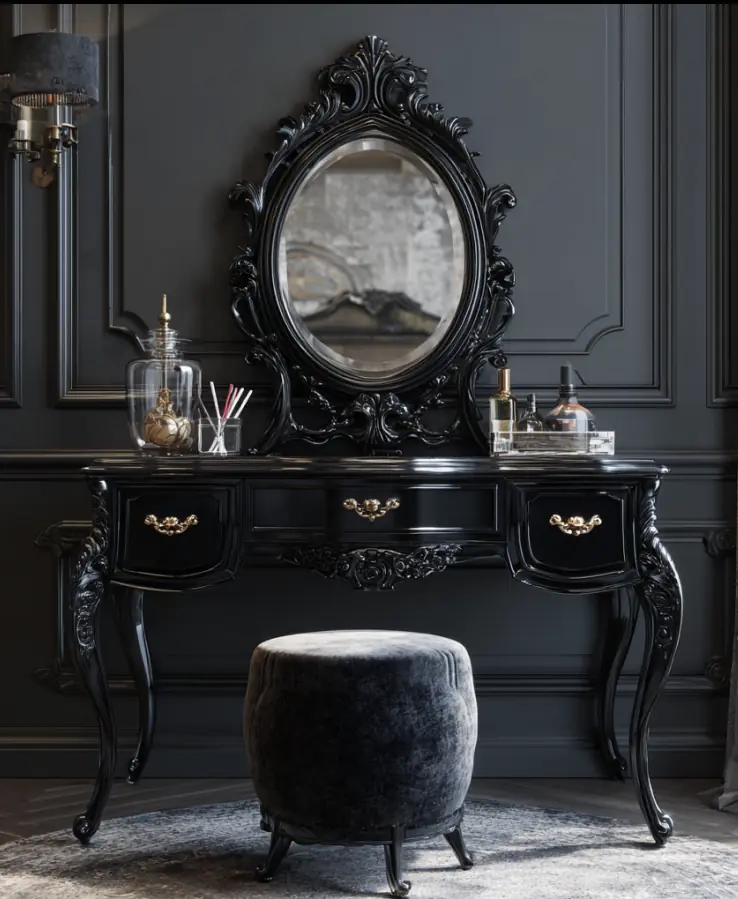
The final result is stunning classical bespoke bedroom furniture made to a high luxury standard. It includes an ornate black dressing table with a matching ornate mirror and a pair of black and white bedside tables. Each piece was developed from visual inspiration into a finished item with structure, detail and function.
Adjustments and Details
It features a deep black finish, curved legs, decorative carved details, a large oval mirror and ornate classical brass pull handles. Some adjustments were needed to allow the piece to be a usable. We therefore adjusted the carvings onto the drawer fronts to keep the final design as close as possible to the original concept. For example the original AI generated image did not allow enough space for legs to go under the table based on the proportional dimensions and details.
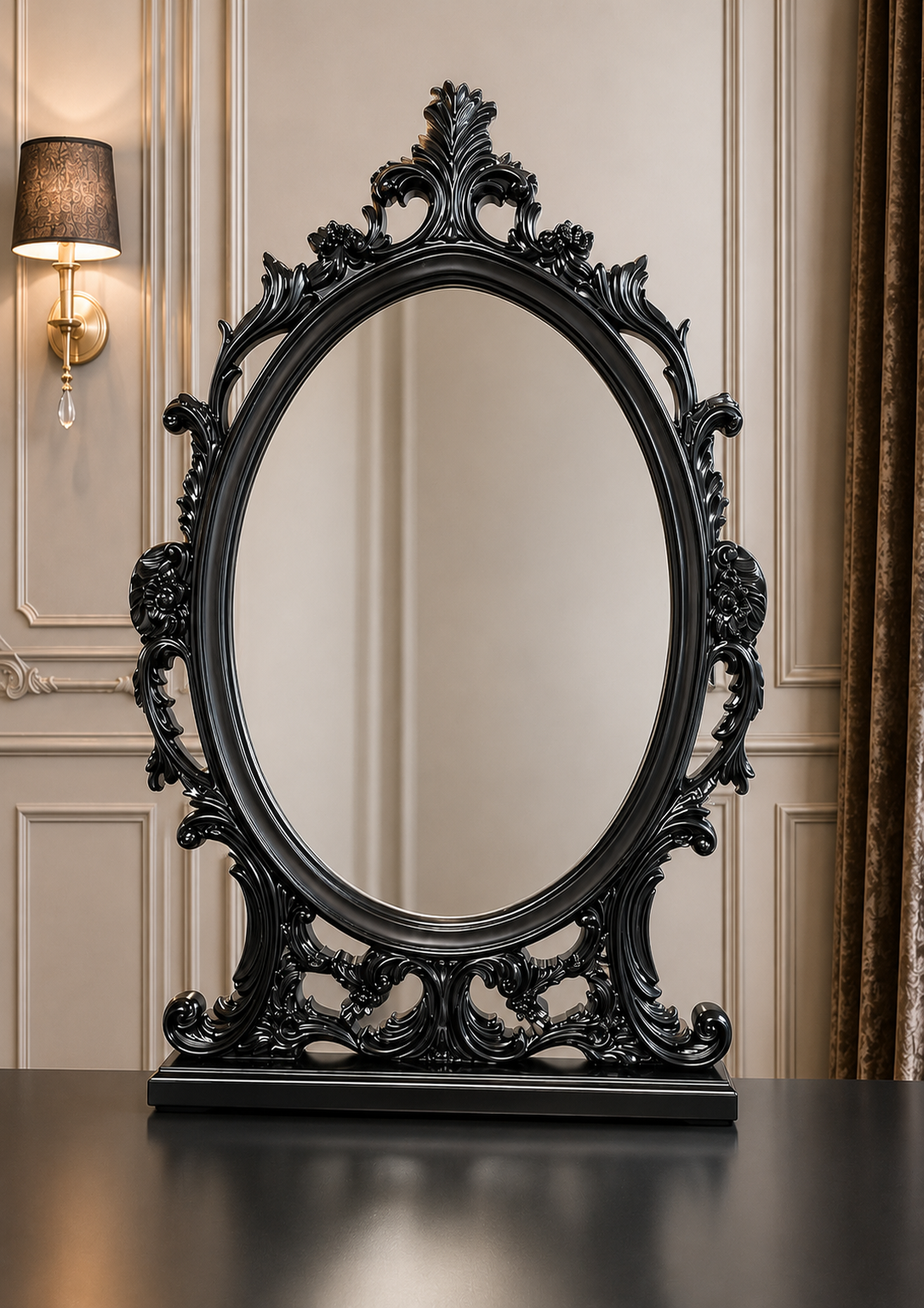
The mirror was an important part of the design. It needed to feel grand without looking too heavy. The frame includes detailed scrollwork and a traditional carved shape. The high-gloss black finish helps the details catch the light and gives the piece a rich, refined look. Attaching such a large, heavy mirror to the dressing table was another detail that required careful planning. The structure needed to be strong, but the fixings also had to remain discreet, especially when viewed from the front.
The dressing table also had to function properly. The height, leg position and working space had to be considered. A beautiful design is not enough if the furniture is uncomfortable or impractical. Every part of the final piece had to serve both the look and the use.
Bespoke French Style Classic Black and White Bedside Tables
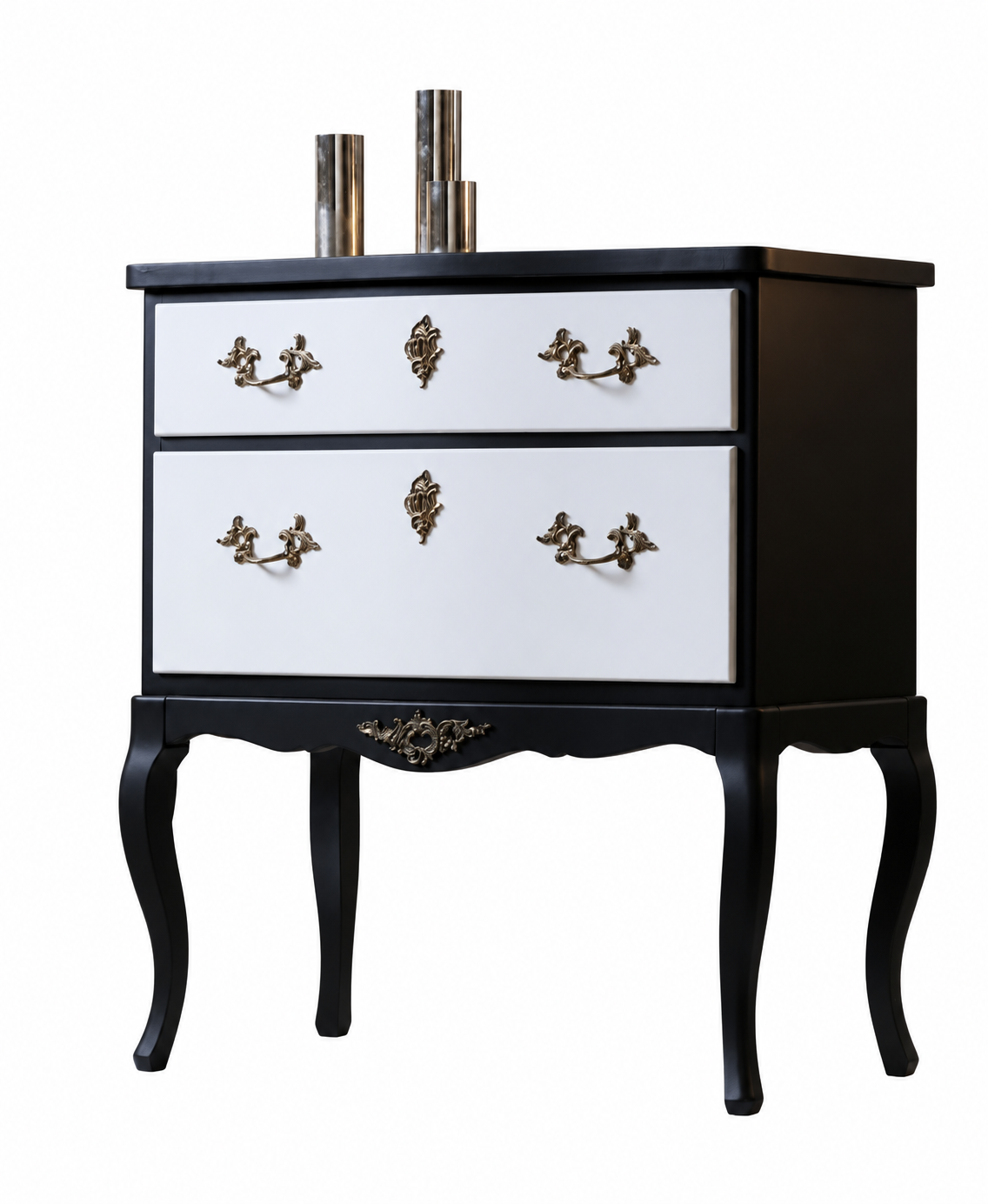
The brief for the pair of classic bedside tables was to retain the overall style of the AI concept while refining the proportions, finishes and detailing for the final client. The pieces were designed to sit alongside the dressing table as part of the same bedroom scheme. The customised contrast paint finish inside the drawers added a discreet bespoke detail, while the black and white exterior created a classic, elegant appearance.
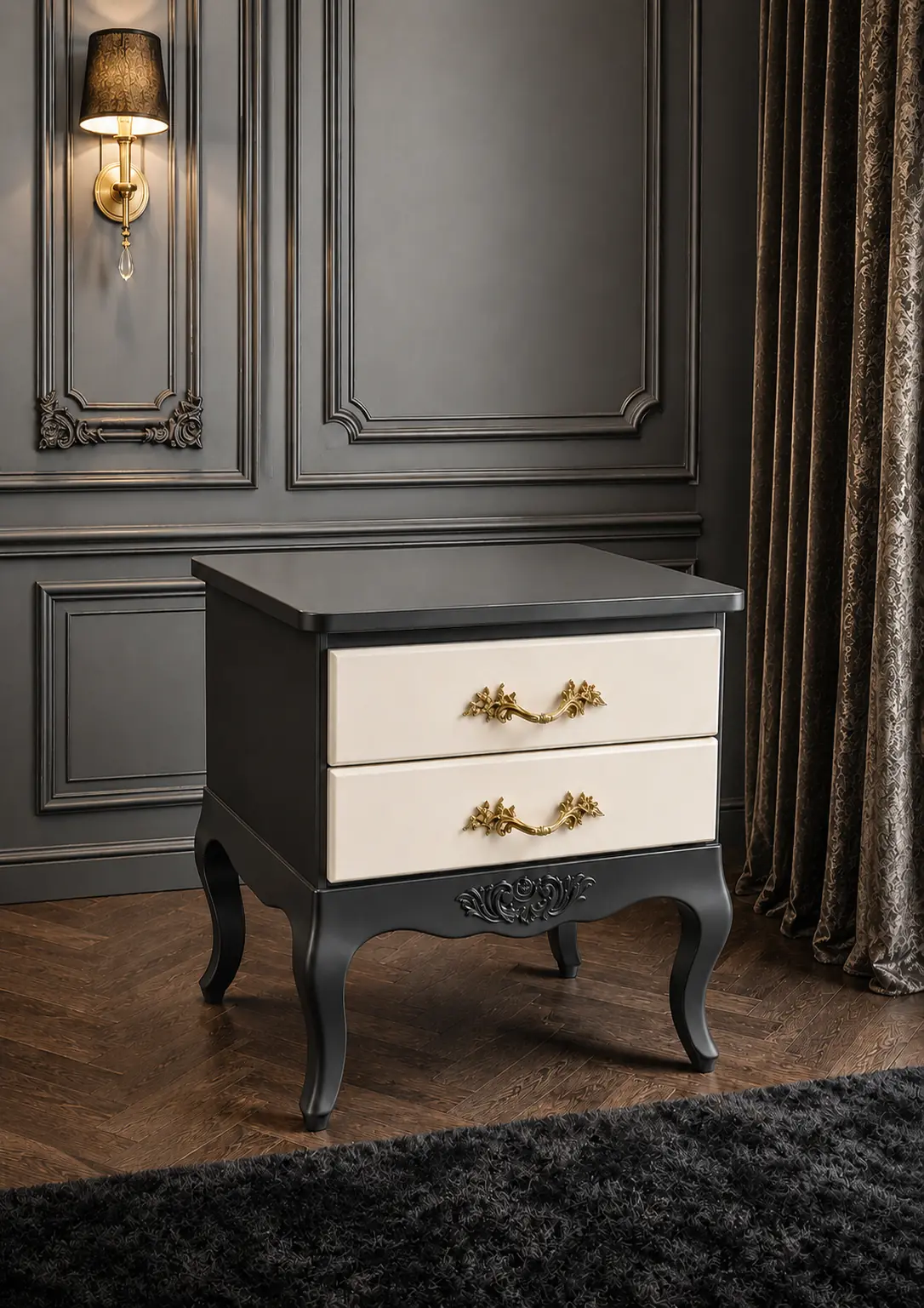
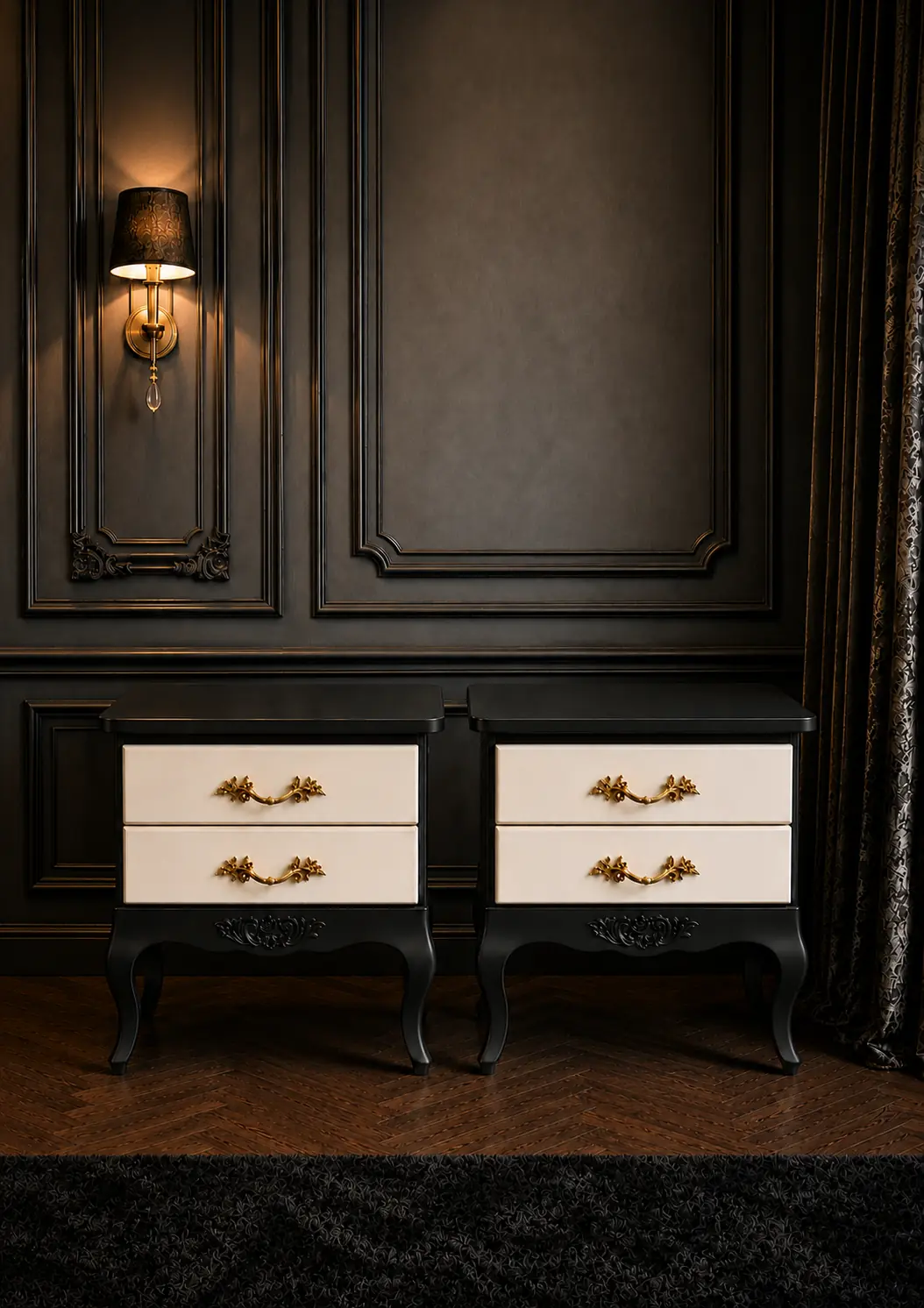
The brass-style handles add warmth and detail. They also help soften the bold black and white finish. The curved legs and carved lower detail link the bedside tables back to the traditional style of the dressing table.
The final bedside tables are more refined than the AI image. The proportions are cleaner. The finish is smoother. The detailing feels more balanced. This shows the difference between visual inspiration and professional production.
The Process: Turning AI Interior Design Concepts into Physical Furniture
Concept Analysis
Reviewing the AI-generated imagery for mood, style, and proportional feasibility.
Technical Translation
Adjusting dimensions so the piece is practical (e.g., ensuring enough legroom under a dressing table or calculating the weight support for a heavy mirror).
Material & Hardware Specification
Selecting the exact paints, finishes, and internal hardware (like custom drawer runners) that AI images cannot generate.
Bespoke Production
Utilising skilled craftsmen to build the physical piece to luxury standards.
The customer’s original AI image showed a dramatic black dressing table with an ornate mirror, a dark glamorous mood, carved detailing and a traditional shape. The bedside table images showed a black and white design with brass-style handles and curved legs, with less decorative detail than the dressing table.
These images gave us a strong design direction. However, they did not provide the information needed for production. We had to study the proportions, shape, finish and detailing. We also had to make sure each item would work as practical furniture.
The final pieces needed to stay close to the original concept. At the same time, they had to be strong, usable and well made. This balance is one of the most important parts of bespoke furniture design.
The Limitations of AI in Custom Furniture Manufacturing
The original AI images were basic, lacked technical detail and came without a production specification. Several technical issues needed to be overcome to make the mirror and dressing table not only safe but fully functional. All drawers were fully lined internally with the client’s chosen metallic gold paint, adding an extra bespoke luxury detail.
Where does AI play a part in luxury interior design?
AI is a useful tool for luxury interior design and furniture inspiration. It can help clients explore ideas that may not already exist. It can also help show a mood, shape or style quickly. Our trade and private clients can generate their own AI images, knowing that Juliettes Interiors can help turn those concepts into real, professionally made furniture.
However, AI does not solve the technical issues around the production stage. It does not know whether a leg shape will support the weight, whether a drawer will open correctly, or how to determine the best finish, hardware, fixing method or scale. That is where Juliettes Interiors adds value. Since 2005, we have worked with luxury interiors, bespoke furniture and specialist production. This experience allows us to take an AI image and turn it into a real piece of furniture.
Here are the original AI images given to us to work from.
This project shows how a simple AI image can become a finished luxury furniture set. The original images gave us the creative direction. Our design and production process turned that direction into real furniture.
The finished dressing table, mirror and bedside tables keep the spirit of the original idea. Yet they also have the detail, finish and quality needed for a high-end interior.
For clients, this opens up a new way to create bespoke furniture. Instead of choosing only from existing designs, they can use AI images as the starting point. We can then refine the idea, assess what is possible and guide the piece through production.
The result is furniture that feels personal, original and made for the space.
Bespoke AI Furniture by Juliettes Interiors
This bedroom furniture project is another example of how Juliettes Interiors combines creativity with practical expertise. We do not simply copy an image. We study it, improve it and make it work in the real world.
The final pieces show what is possible when AI inspiration meets skilled design and careful craftsmanship. The transformation from image to furniture is not automatic. It requires judgement, patience and experience.
For clients who want something unique, AI furniture design can be a powerful starting point. With the right team, that starting point can become a beautiful, functional and lasting piece of luxury furniture.
Ready to make your luxury AI furniture?
Whether you are an interior designer or a private client, you can begin with your imagination. We can turn your AI furniture image into a real, high-quality luxury piece, refined for scale, comfort, structure, finish and long-term use.
We focus on the technical details you should not have to manage, from proportions and materials to fixing methods, finishes and production standards. The result is an exceptional one-off piece, brought to life from your own ideas.
If you do not yet have an AI image, we can also help develop the concept for you. Tell us what you want to achieve, and we can create the AI visuals before progressing the design into a practical bespoke furniture specification.
Contact Juliettes Interiors today to discuss your AI furniture creation.
Take a look at our articles about this subject on our previous blogs. Luxury furniture designs. AI-Designed Furniture Buyer’s Guide.
Can you turn an AI furniture image into real furniture?
Yes. An AI furniture image can be used as the starting point for a bespoke furniture design, but it must be technically developed before production. Scale, materials, fixing methods, drawer function, structure, finish and comfort all need to be assessed before the piece can be made.
What information is needed to make furniture from an AI image?
We usually need the AI image, approximate dimensions, intended room, preferred materials, finish, colour, function and budget range. From there, the design can be refined into a practical specification for production.
Why can’t an AI furniture image be copied exactly?
AI images often contain impossible proportions, missing construction details, unrealistic supports or decorative elements that would not work in real life. The design must be interpreted and engineered so the final furniture is safe, usable and well made.
What types of AI-designed furniture can be made?
AI images can be developed into dressing tables, beds, bedside tables, wardrobes, cabinets, mirrors, consoles, dining tables, chairs and other bespoke furniture, depending on the design, scale and technical requirements.
How much does it cost to make furniture from an AI image?
Cost depends on dimensions, materials, finish, complexity, carving, hardware and production method.
Can interior designers use Juliettes Interiors to produce AI-designed furniture for clients?
Absolutely, this is our speciality and something we have been offering for a few years, backed up by decades of experience.
What are the risks of making furniture from an AI image?
Proportions, weak structure, impractical drawers, unstable legs, poor scale, incorrect material assumptions and unrealistic decorative detailing and ensuring quality craftsmanship are all part of the risks.
Can you build furniture from a Midjourney or ChatGPT image?
Yes. We regularly take AI-generated images from platforms like Midjourney, ChatGPT, or DALL-E and translate them into technical manufacturing blueprints.
Why does an AI furniture design need to be changed?
AI models do not understand physics, weight distribution, or human ergonomics. We adjust the proportions to ensure the piece is structurally sound, usable, and comfortable while maintaining the original aesthetic.
How long does it take to manufacture furniture from an AI prompt?
Once our design team finalises the structural CAD drawings and specifies the materials, standard bespoke manufacturing timelines apply (typically 9 to 16 weeks).