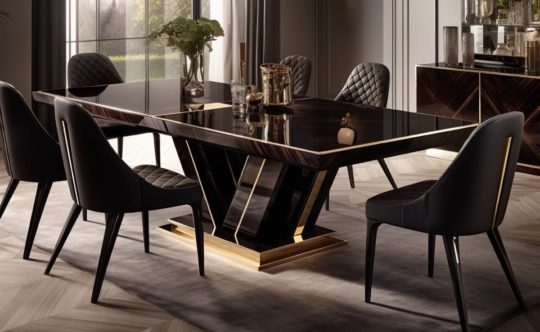
Bespoke furniture finishes can change the character of a room as decisively as the shape of the furniture itself. A matt surface softens reflections; a polished one catches the light. Wood furniture finishes bring movement, while stone, glass and metal each add a different kind of depth. At Juliettes Interiors, finish choices vary by piece. This guide will help you compare the materials and details shown in our current collection, then decide what to ask about before ordering.
Interior designer mood boards
These illustrative material palettes bring together the textures, colours and sheen of finishes discussed below.
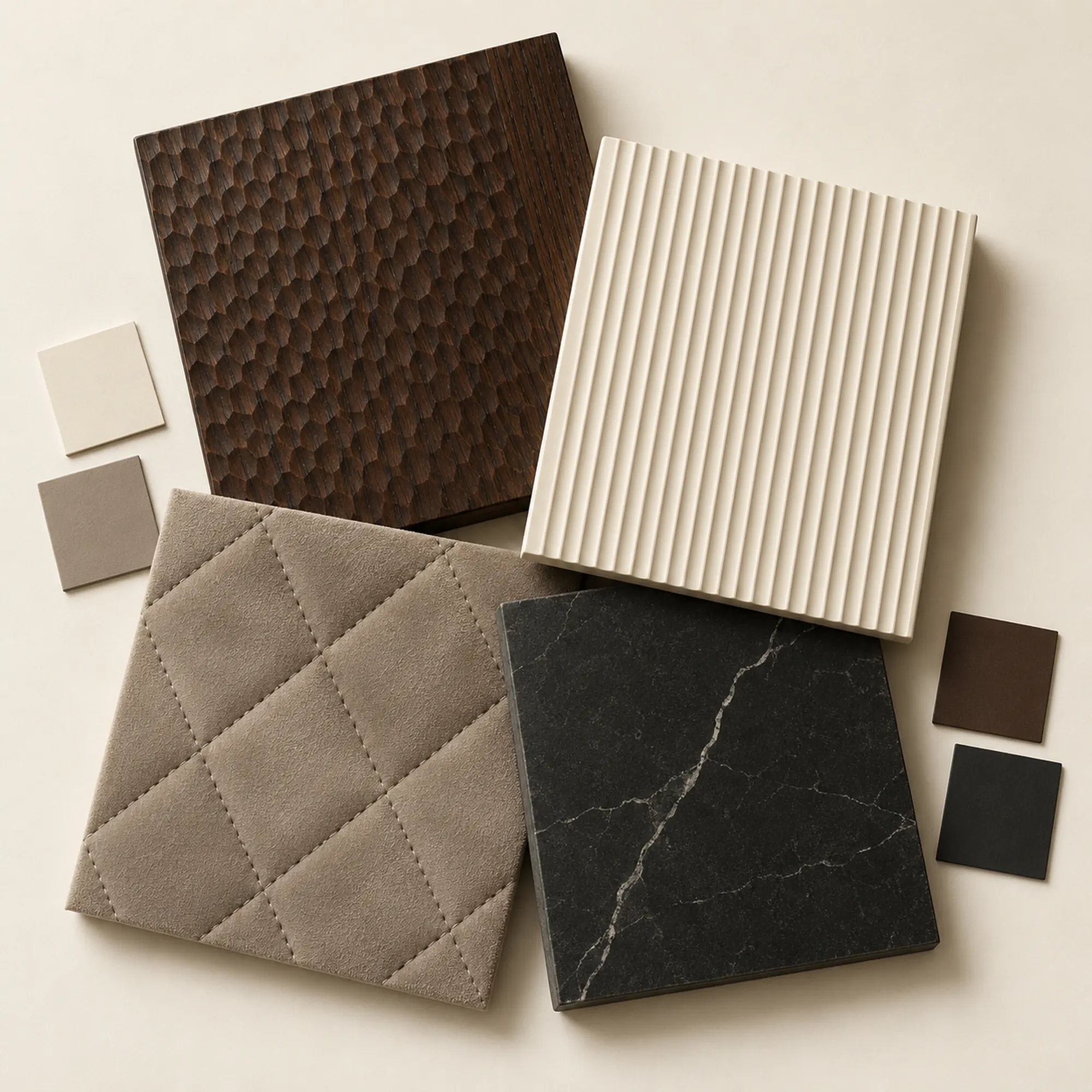
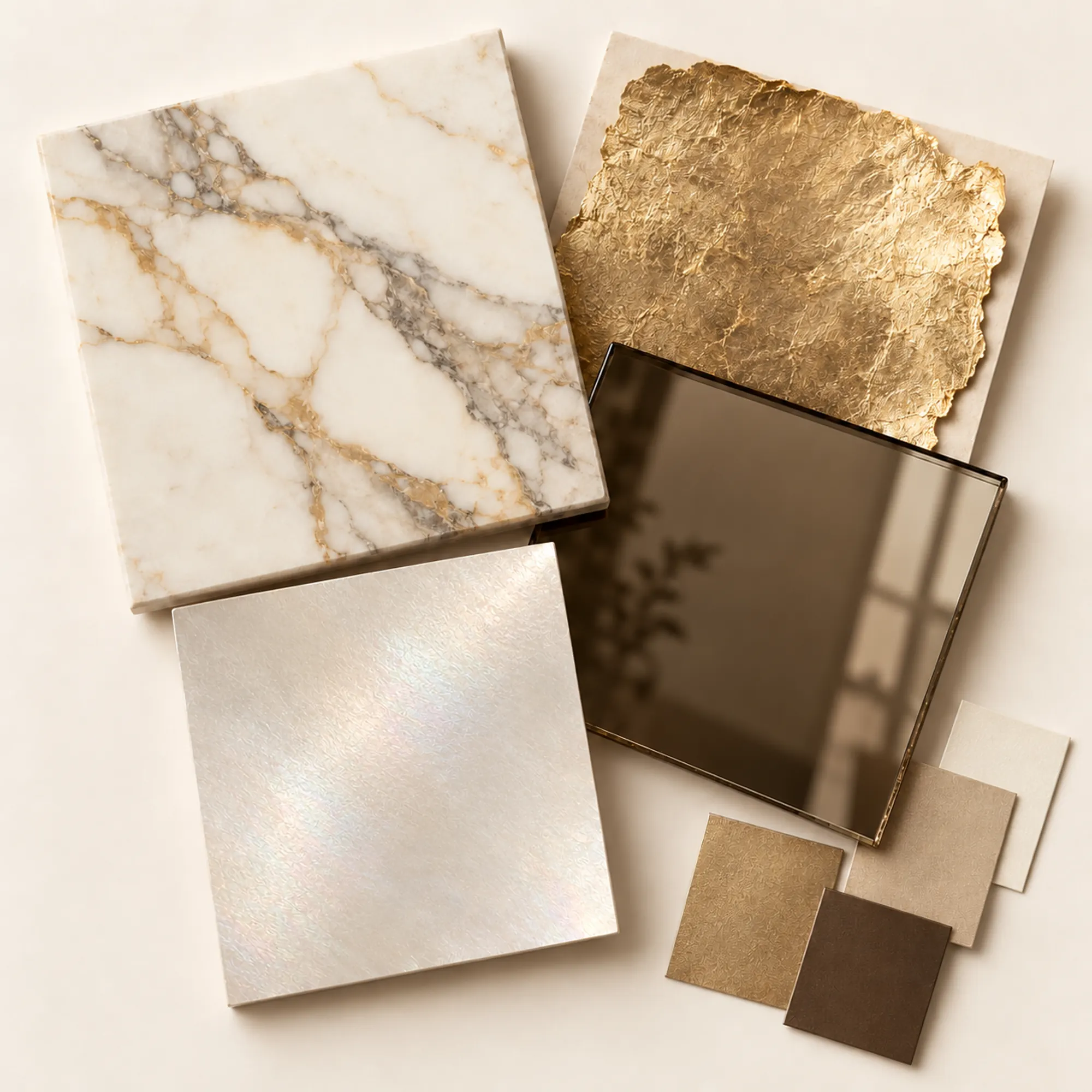
These are illustrative material palettes, not photographs of physical samples. They do not show confirmed options for any one product; check the actual specification and sample availability before ordering.
How to choose bespoke furniture finishes
Begin with the room. Look at the daylight, the existing materials and the surfaces you touch most often. A mirrored cabinet can brighten a dim corner, while a textured front can bring interest to a calm scheme. For a dining table, ask about everyday care as well as appearance. For a bedside piece, consider how the finish looks in lamplight.
It also helps to choose one leading material and let the others support it. For example, a pronounced oak grain may need only a quiet metal detail. A richly veined top can sit more comfortably on a simple base. The best bespoke furniture finishes work with the piece and the room. Photographs are a starting point; a sample, where available, gives a better sense of colour, texture and sheen. Always confirm the specification and any available alternatives for the individual piece.
Wood furniture finishes: grain and textured veneers
Wood furniture finishes introduce natural variation, from restrained linear grain to more expressive pattern. The direction of the grain matters too: vertical lines can make a cabinet feel taller, while a broad grain across a top gives the surface more presence. A veneer can show the character of real wood while allowing a carefully arranged pattern across a larger piece.
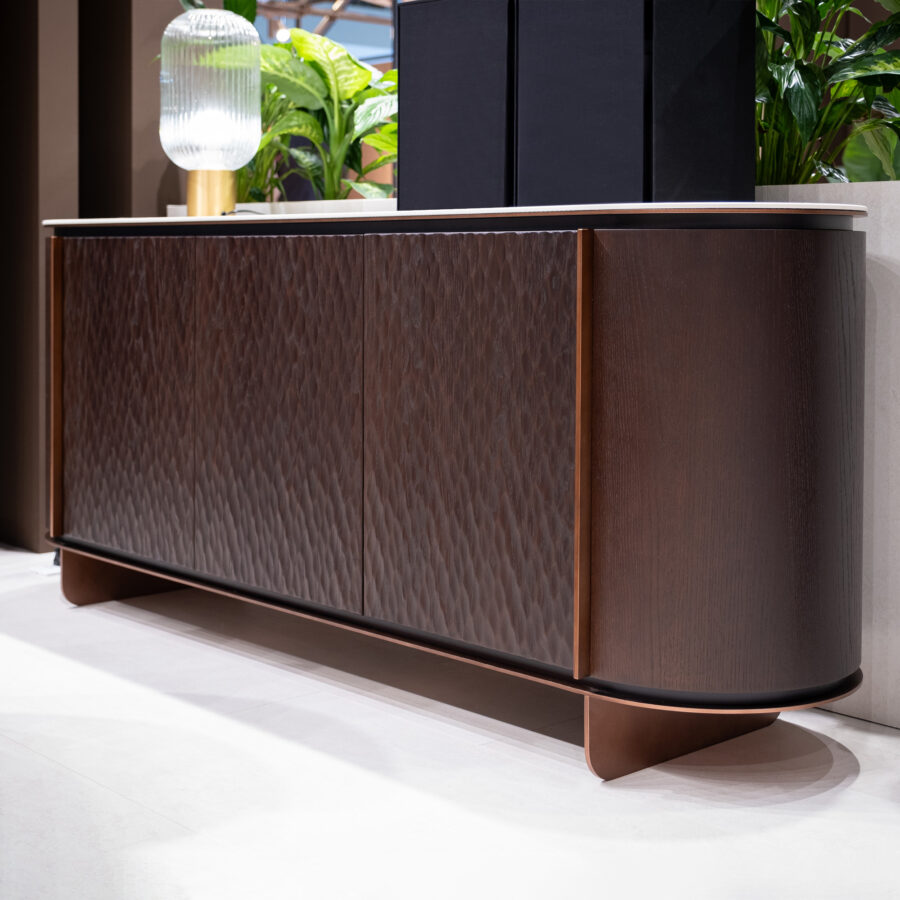
Texture adds another dimension. The doors of our hammered oak veneer sideboard have a tactile, worked surface. Its top is described as Patagonia porcelain stoneware, so the wood and stoneware are distinct materials within one design. If you like this pairing, ask which details and finishes are available on the piece you choose.
Lacquer, painted details and levels of sheen
Lacquer offers a more even field of colour than wood grain. Gloss catches and reflects light; matt lacquer lets the shape and texture of a piece take the lead. Neither is automatically the better choice. In a room with many reflective surfaces, a matt cabinet may bring balance. Against quiet walls and soft upholstery, a glossy accent can create a focal point.
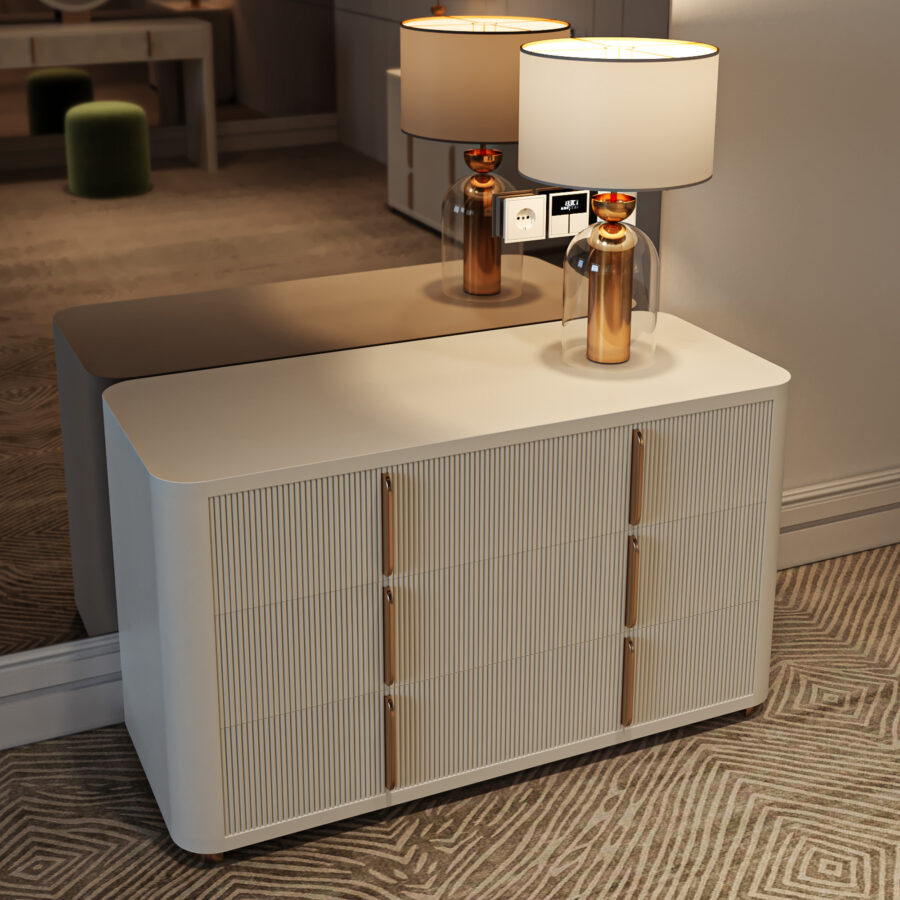
Finish and form also work together. Our ribbed lacquered dresser combines a matt lacquer finish with sculpted drawer fronts. The ribs create a play of light without relying on mirror-like shine. Hand-painted or antiqued details can serve a different purpose: they draw attention to carving and contours. Check the product specification before assuming that a pictured paint or lacquer colour can be changed.
Bespoke furniture finishes in metal and gold tones
Metal can provide a slim outline, a structural base or a more emphatic decorative detail. The effect changes with colour and sheen. Warm bronze and brass tones sit naturally beside timber and stone-look surfaces; cooler chrome and silver tones can sharpen a glass or mirrored composition. Brushed and patinated effects tend to feel quieter than a highly polished finish.
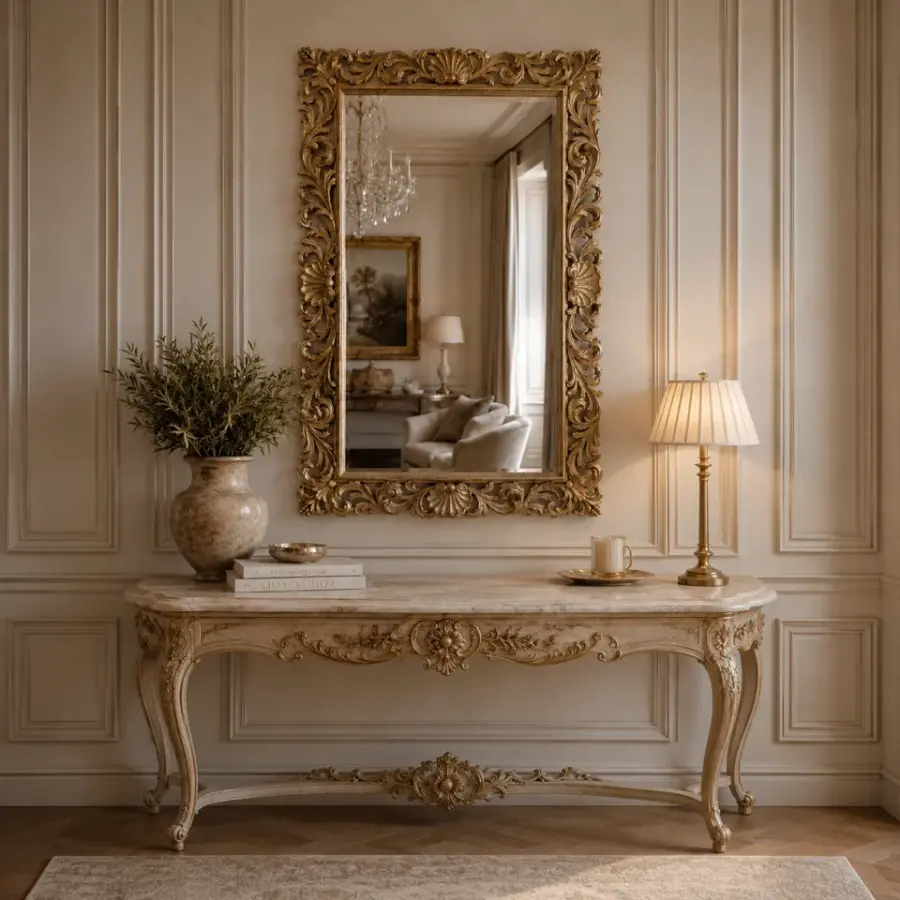
Gold tones can be achieved in different ways, including metallic leaf, plating and painted effects. The colour alone cannot establish how a piece is made. Our ornate gold Baroque wall mirror has a carved-style frame with scrolling acanthus and shell details in a rich antique gold finish. Its frame makes the finish a decorative feature alongside the reflection. The listing offers five standard sizes and says alternative finishes and sizes are available by request; confirm the frame material and exact finish for the version you choose.
Natural marble and everyday care
Stone brings colour and pattern that can anchor a room. Natural marble varies from slab to slab, so a small sample may not show every vein or tonal shift. Its appeal comes with practical questions: ask about the exact material, surface treatment and care instructions for the table or cabinet under consideration. Natural stone should not be described as maintenance-free.
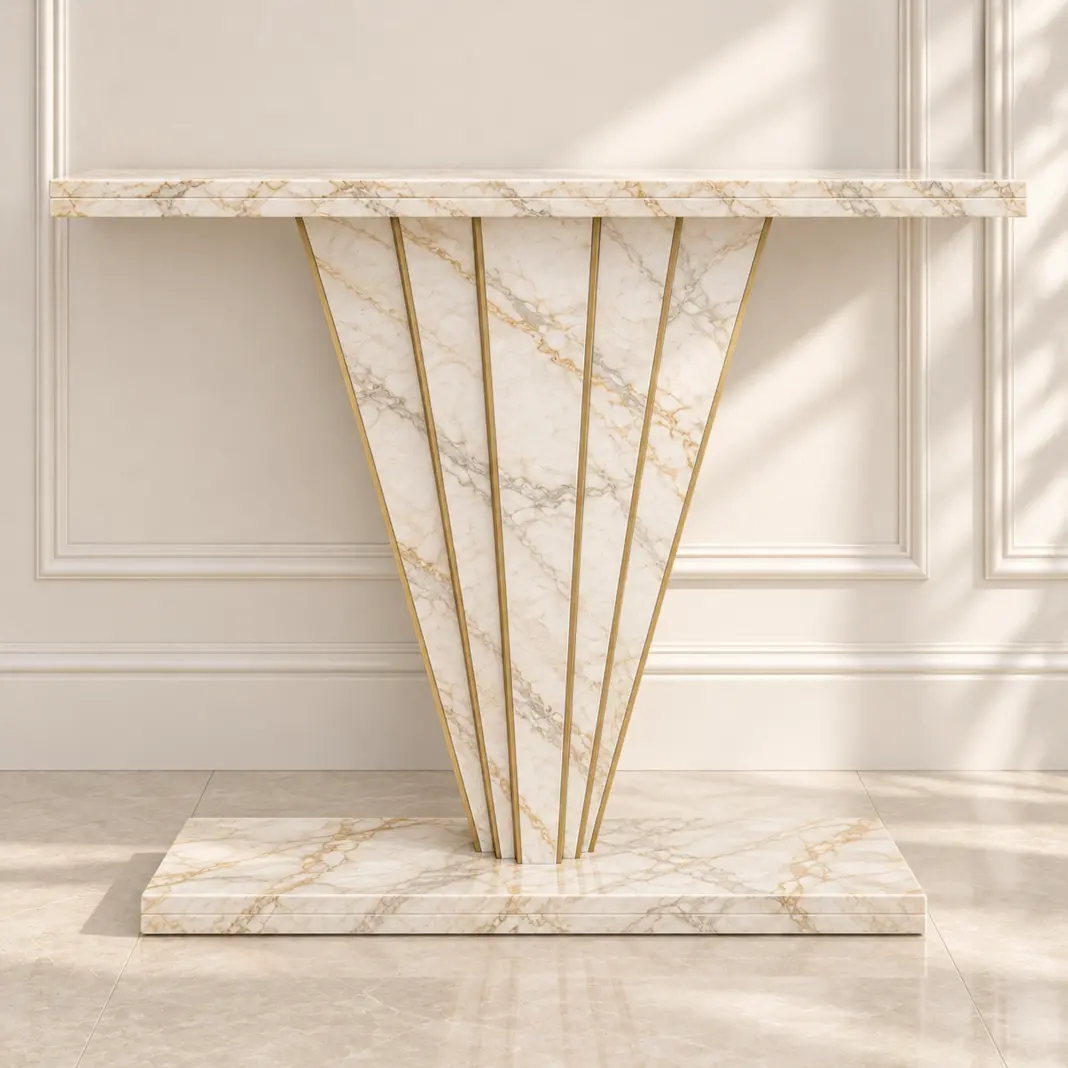
Our Art Deco Calacatta Oro marble console table is shown as a design concept with Calacatta Oro Borghini Extra marble and brushed brass inlays. The pale ground, soft grey veining and warm gold notes illustrate how marble can give a sculptural piece movement and light. The images are visualisations, so confirm the exact slab, metal finish, availability and production time before ordering. Follow the care instructions for the stone supplied. The Natural Stone Institute’s guidance also recommends dealing with spills promptly and avoiding acidic cleaners.
Quartz, porcelain stoneware and stone effects
Furniture finishes that resemble stone are not necessarily natural stone. A quartz top, porcelain stoneware and a stone-effect surface may look related in a photograph, but their composition and care can differ. Ask what the top is made from rather than relying on an appearance or a product name. That distinction is especially useful for a dining table or another surface used every day.
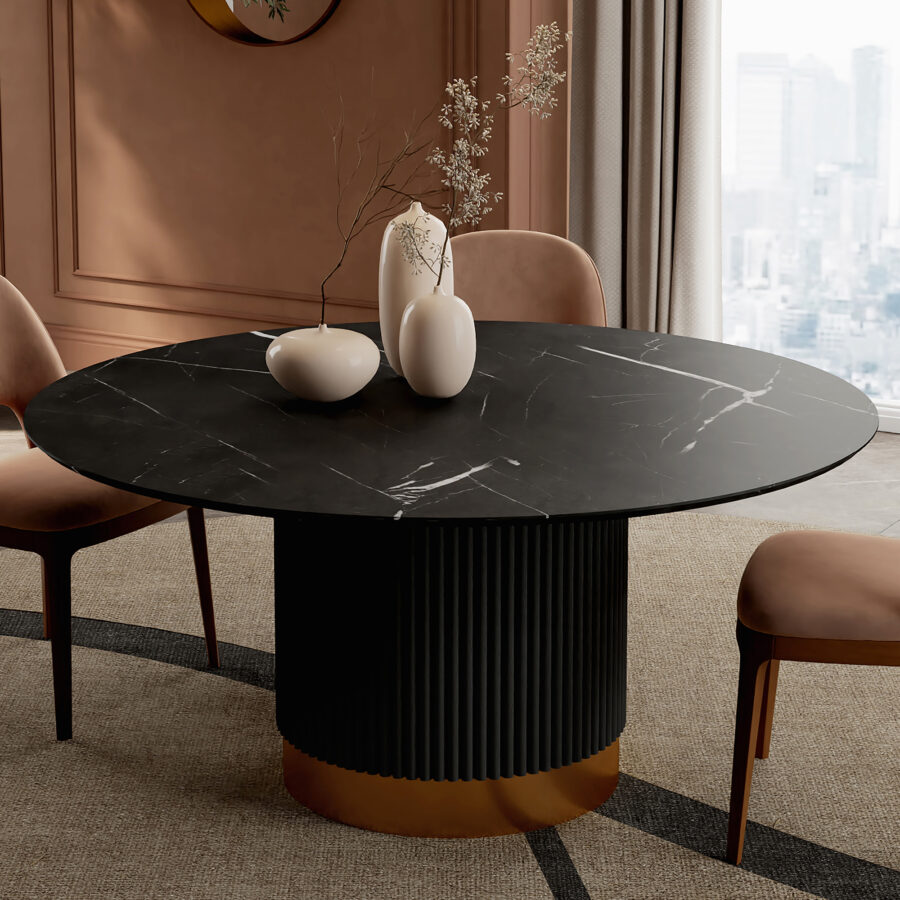
For comparison, our collection includes a quartz dining table, the porcelain stoneware top on the hammered oak sideboard, and a stone-effect dining table. Each offers a different interpretation of a veined surface. Confirm the construction, finish and care instructions of the exact model before choosing.
Bespoke furniture finishes in glass and mirror
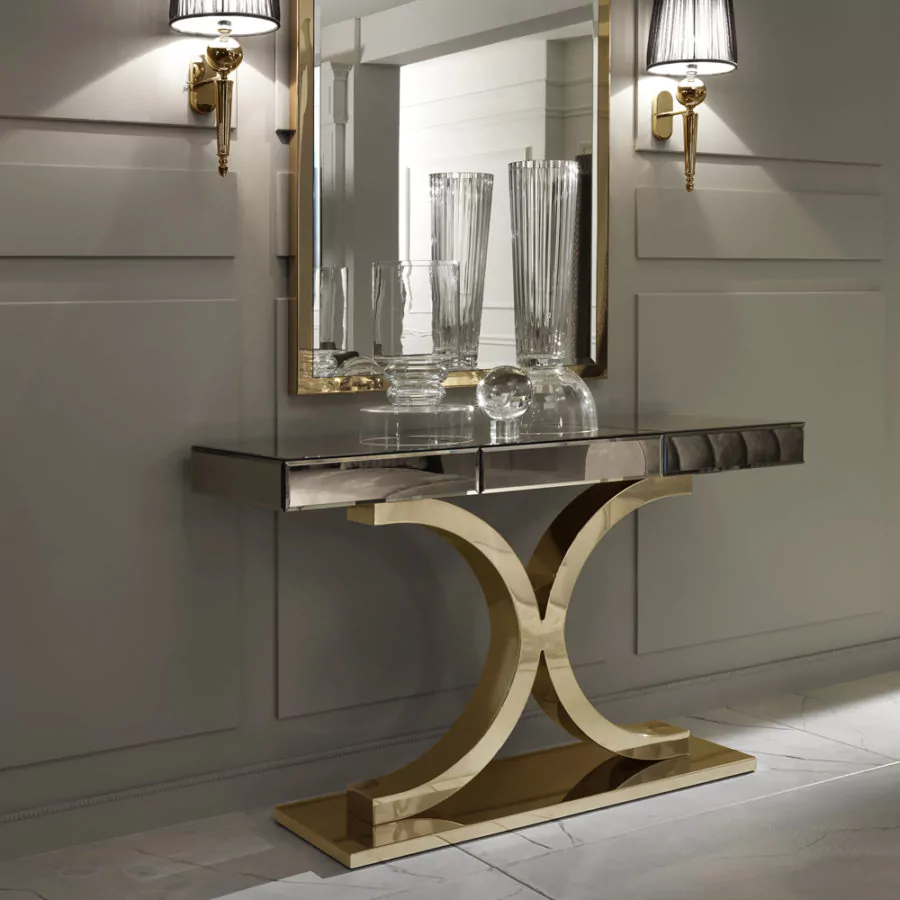
Glass and mirror change the way a piece relates to its surroundings. Clear glass leaves the base visible, while bronze mirrored glass gives a warmer, darker reflection. On a console table, a reflective top can pick up light and colour from the room while drawing attention to the structure beneath it. Think about fingerprints, reflections and the care needed for the chosen surface.
Our bronze mirrored glass console table pairs a bronze mirrored glass top with a stainless-steel frame in a 24-carat gold finish. Its curved base and concealed central drawer bring decorative form and practical storage together. The product page lists alternative frame and top finishes, with bespoke dimensions available on request. Confirm the specification, price and care instructions for the version you choose.
Mother-of-pearl finishes
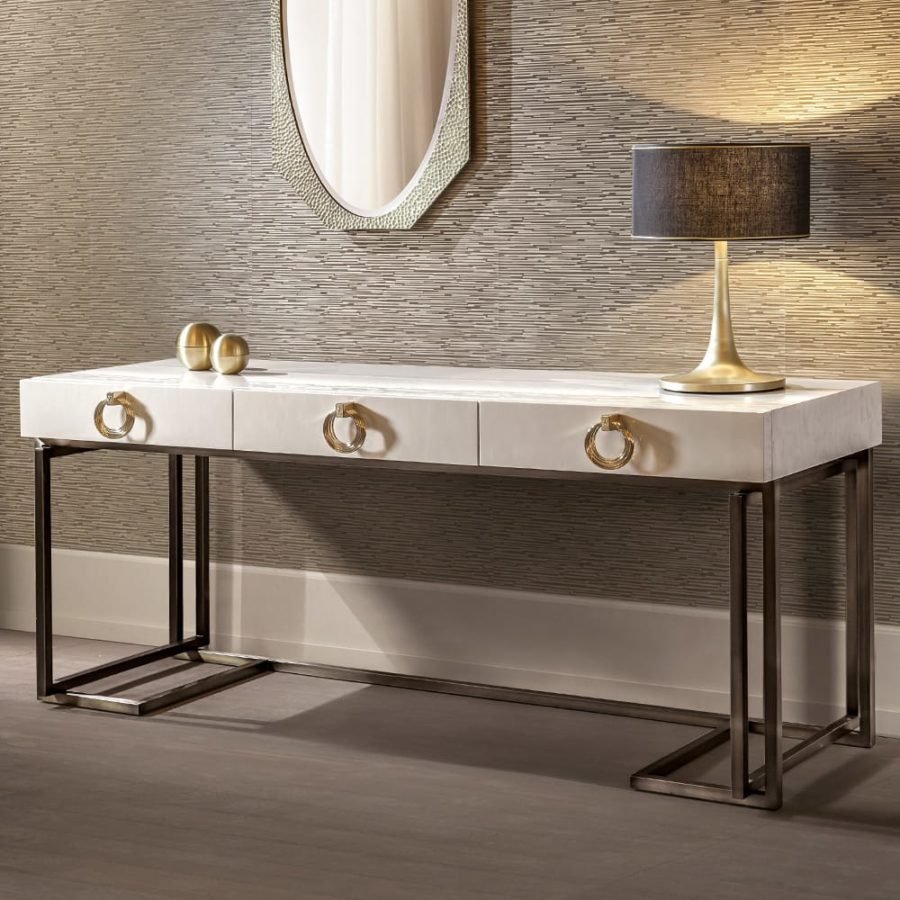
Mother-of-pearl brings a soft, quietly luxurious shimmer to furniture. Our mother-of-pearl console table pairs a pale, softly reflective finish with three drawers, jewel-like pale-gold handles and a contrasting brushed-bronzed base. The combination makes a decorative focal point in a hallway or living room, with storage for smaller items.
Leather and tactile surface details
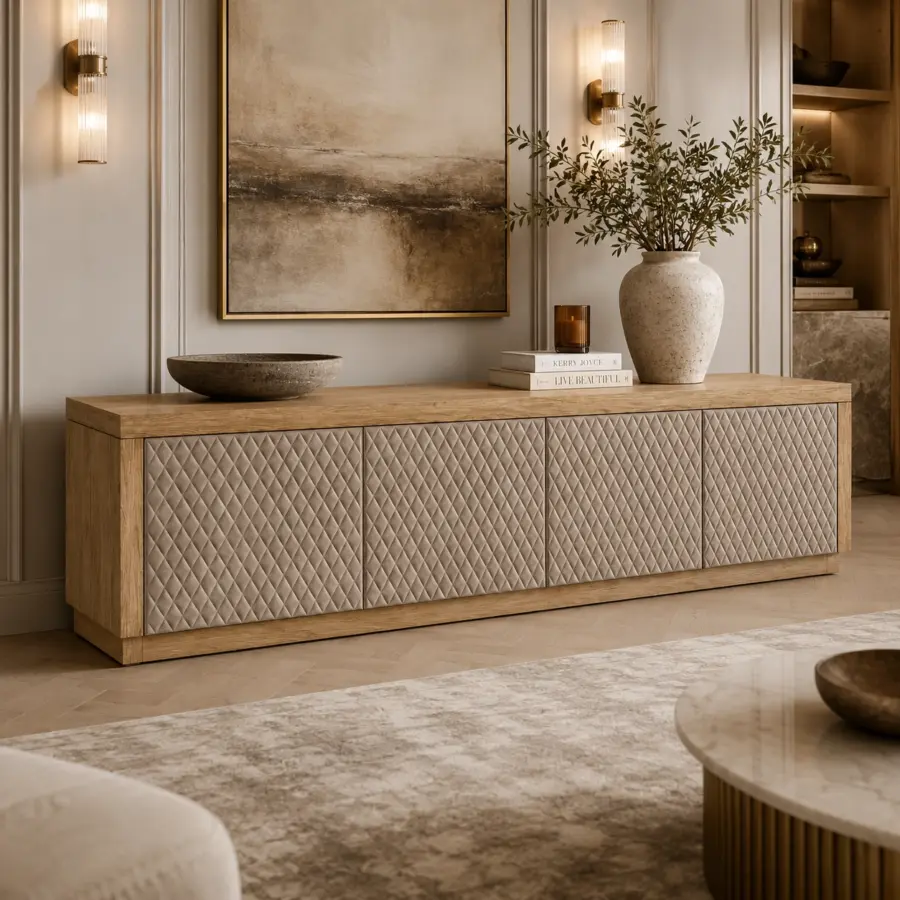
Not every finish is hard or reflective. Leather, nubuck and upholstery can soften the look of a cabinet or bed while adding texture at hand level. Quilting, embossing and stitching also change how light falls across a surface. They can bring a quiet pattern to a piece that might otherwise feel plain.
Our oak veneered sideboard with quilted nubuck leather brings together timber and a tactile door treatment. The pictured design shows how a soft finish can sit alongside a structured case. As with any fabric or leather option, ask which colours and detailing are available for the particular model, and how the surface should be cared for.
Putting bespoke furniture finishes together
There is no fixed rule that every finish in a room must match. Repeating one tone can provide continuity while the textures change. Wood furniture finishes can complement a stone-look table; the oak grain and veined surface may share a warm base colour without looking identical. Alternatively, a single reflective detail may be enough to lift a scheme of matt lacquer and upholstery.
Try limiting the most expressive surfaces to one or two pieces. An ornate gold-finish mirror already draws the eye, so a simpler console beneath it may give the design space. A ribbed lacquer front can add texture beside plain walls. When comparing bespoke furniture finishes, look at the whole scheme. Scale, light and the other furnishings matter just as much as the finish itself.
Confirm the finish before ordering
For bespoke furniture finishes, the final question is always about the individual piece. If you are considering wood furniture finishes, ask whether a sample can show the grain, tone and sheen. For any piece, check which materials, colours, dimensions and details are available or fixed, and how the chosen surface should be cared for in the room where it will live.
To discuss a particular design or request available samples, contact the Juliettes Interiors team. Share the product link and the finish you have in mind, and we can confirm the current specification and choices for that piece.
If you cannot find the piece or finish you have in mind, or would prefer something exclusive, ask us about our AI-assisted bespoke furniture design and manufacturing service. Share a sketch, an AI image or simply an idea; we can explore a unique concept with you, then work with skilled makers to assess the materials, dimensions and finishes before manufacture.