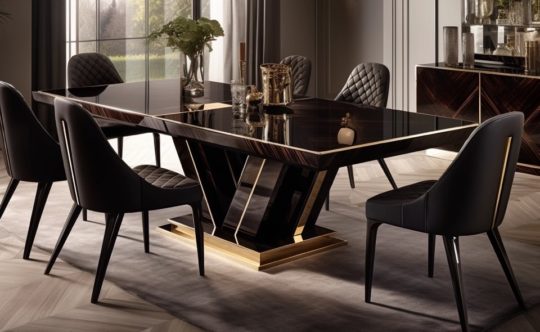
Luxury bedroom interior design guide
Creating a high-end bedroom design requires a balance between aesthetic beauty, comfort, and functionality. Every element, from colour palettes to bespoke furnishings, should work in harmony to craft a space that feels as exquisite as it looks. That’s why we have created this comprehensive luxury bedroom interior design guide—to help you navigate the complexities of designing the perfect bedroom and ensure every detail is meticulously curated to enhance both your lifestyle and your home’s aesthetic.
The bedroom is the most personal space in your home, a sanctuary where relaxation meets refinement. More than just a place to sleep, a well-designed luxury bedroom should exude serenity while offering an indulgent retreat from the outside world. Whether you’re seeking to create a sophisticated master suite or an opulent guest room, the key to achieving an exceptional bedroom lies in thoughtful planning and attention to detail.
A beautifully designed bedroom goes beyond aesthetics—it plays a crucial role in supporting your health and wellbeing. Good quality sleep is essential for cognitive function, emotional balance, and physical health. A serene, luxurious bedroom environment can dramatically improve sleep quality by minimising stress, reducing sensory distractions, and encouraging a deeper, more restorative rest. The design of your bedroom should have an intentional focus on wellbeing and promoting better sleep, enhancing your ability to relax, recharge, and face each day feeling revitalised.
Unlock the secrets to designing a tranquil yet luxurious bedroom that promotes the very best night’s sleep possible with our expert guide. From bespoke furniture to carefully considered details, discover how to curate a personal sanctuary that embodies elegance, comfort, and sophistication.
Jump to:
- Design inspiration
- Colour scheme
- Space planning
- Factors to be considered when planning your room layout
- Selecting the right furniture
- Selecting the right materials and finishes
- Why work with an interior designer?
- Luxury bedroom interior design, London, UK
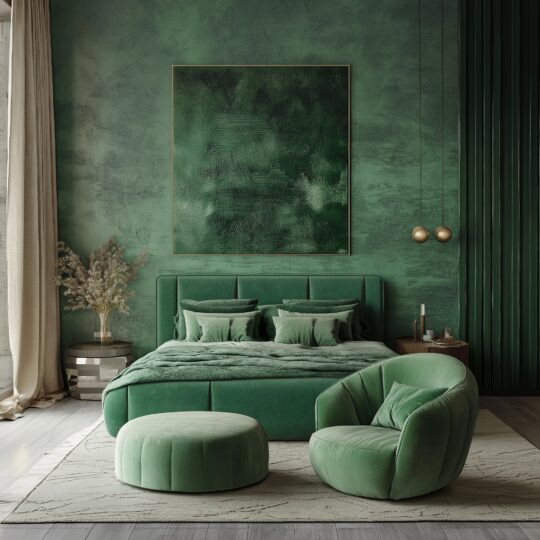
Bedroom design inspiration
Every interior design project starts with inspiration. Whether you are envisioning a classic boudoir with rich textures or a modern bedroom with contemporary shapes and clean lines, collecting ideas is the first step to refining your vision. Given the bedroom is your most personal and intimate room in your home, you can really indulge yourself, the only limit really is your imagination.
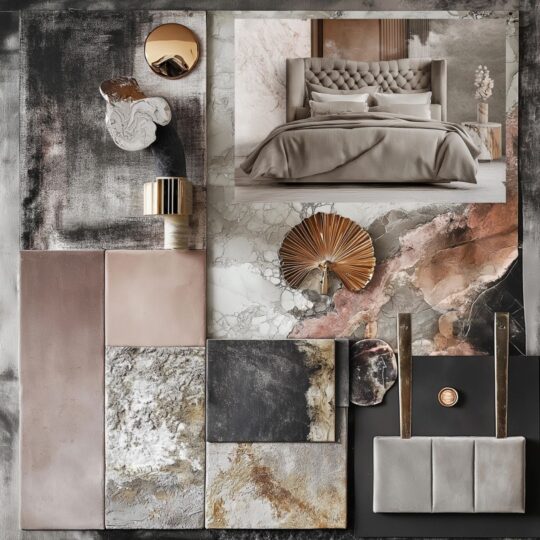
Creating mood boards helps to curate an aesthetic direction. When gathering ideas, consider these four key elements:
- Colour: Identify tones that evoke relaxation and sophistication for you
- Texture: Incorporate elements for plush tactile elements, inviting fabrics, finishes to add depth
- Material: Prioritise high-end materials like marble, wood, and glass, that will add to the aesthetic and the sensory experience
- Mood: Capture the overall ambience you desire—whether it’s warm, opulent, romantic, or minimalist
Using digital tools like Pinterest or creating physical mood boards if you prefer a more tactile experience will help refine your bedroom decor ideas. Abstract images, nature photography, haute couture fashion or any visual references can offer inspiration. Think beyond conventional interior sources, these can sometimes limit your ideas, where as more abstract ideas can help envoke a feeling or a style or a vibe.
When collaborating with an interior designer, the visualisation and mood-boarding process is a vital step in shaping your brief and co-creating the vision for your bedroom. This process helps translate the vision in your mind onto paper. Ultimately, it forms a clear plan for bringing your dream boudoir to life.
Colour scheme
A well-balanced colour scheme is essential in creating the perfect atmosphere for your bedroom. Colour influences mood, perception of space, and overall comfort. Understanding the four elements of colour value will help in selecting the right shades:
- Hue – colour at full saturation
- Tint – adding white to a colour
- Tone – adding grey to a colour
- Shade – adding black to a colour
Colour theory and physiology play a crucial role in your bedroom colour palette design, directly influencing mood, sleep quality, and emotional wellbeing. Soft, muted hues such as pale blues, gentle greens, and warm neutrals are known to promote calmness and relaxation—ideal for encouraging rest and reducing stress before sleep. Cooler tones can lower heart rate and blood pressure, helping the body wind down, while warmer shades like terracotta or blush create a cosy, cocooning effect. The right colour palette can transform your bedroom into a sanctuary that supports your circadian rhythm, promotes better sleep, and leaves you feeling refreshed and rebalanced each morning.
Understanding the eight key colour harmonies allows you to tailor your colour scheme to your unique style and the atmosphere you want to create:
- Monochromatic – different shades, tones, and tints of a single colour offer a serene, sophisticated look – colour drenching for your home is bang in trend
- Analogous – three colours that sit next to each other on the colour wheel create a restful, harmonious feel ideal for relaxation
- Complementary – colours opposite each other on the wheel, such as blue and orange, bring contrast and energy—best used with restraint in a bedroom setting
- Split Complementary – two hues adjacent to a complementary colour offer a lively yet balanced palette without overwhelming the senses
- Triadic – three evenly spaced colours create a vibrant, dynamic scheme; softened versions work well in more tranquil spaces
- Achromatic – a palette of black, white, and greys delivers timeless elegance and a minimalist feel
- Tetrad – using four complementary colours adds richness and complexity, requiring careful balancing to avoid overstimulation
- Square – four colours equally spaced on the wheel ensure vibrancy and balance, though best adapted with toned-down shades for bedroom use
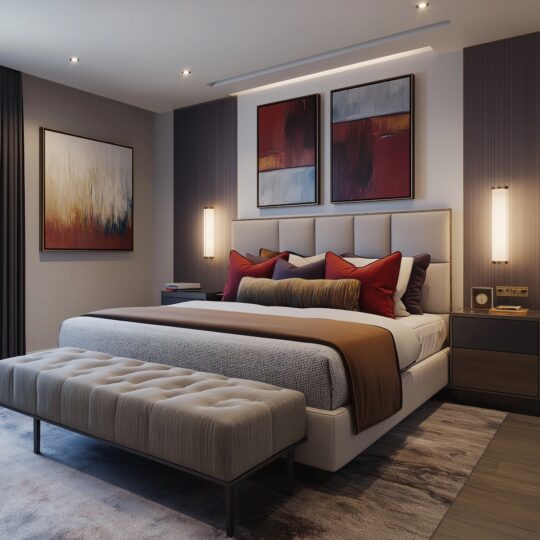
By selecting the right colour harmony and adapting it to your desired mood, you can create a luxury bedroom that soothes, uplifts, and supports deep, restorative sleep. There’s a huge amount to consider when it comes to choosing your colour palette, we have put together a comprehensive guide to colour theory for interior design to help you get the basics and build confidence.
Working with an experienced interior designer can elevate your ideas on the colour scheme from good to great, bringing their extensive experience to ensure colour harmony and enhance spatial perception, transforming your bedroom into an oasis. With in-depth knowledge of colour theory and how it impacts mood, sleep, and wellbeing, an experienced designer can turn what feels like a daunting decision into a creative and enjoyable process. Using a blend of professional tools and intuitive guidance, they’ll help transform your ideas into a refined, personalised colour scheme that enhances the serenity, style, and purpose of your bedroom.
Space planning for a luxury bedroom
Space planning is one of the most critical stages in designing a luxury bedroom. Unlike multifunctional spaces such as living rooms or dining rooms, the bedroom serves a more personal purpose—rest, retreat, and rejuvenation. However, achieving true luxury means more than just aesthetics; it’s about creating a space that feels effortless to live in, where every detail supports your lifestyle, routines, and comfort.
Start by asking the essential questions:
- What are the functions of the space? Is it purely a sleeping area, or will it include a dressing zone, a reading nook, a desk for journaling, or a glam station?
- How much storage do you need? Will wardrobes be part of the room or located separately in a walk-in wardrobe or dressing room?
- Who will use the space? Is it just you, or are you a couple? Does it need to accommodate children or pets?
Once you’ve defined the room’s purpose and who it’s for, space planning becomes easier and will help define layout, flow, furniture sizing and lighting requirements.
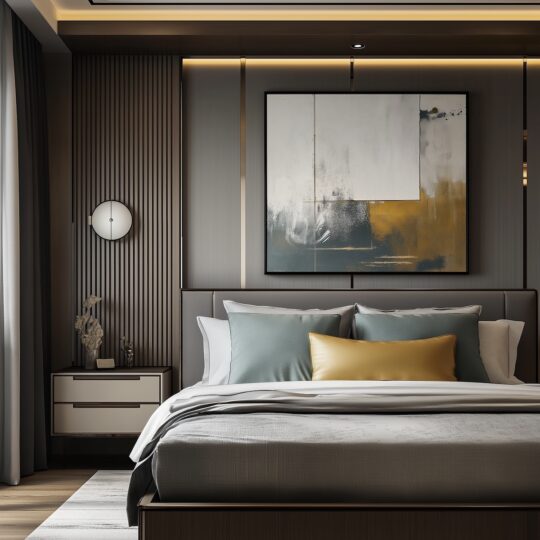
Here are some of the key considerations when planning your bedroom layout:
Fixed bedroom features
What fixed elements are present in your bedroom? These might include windows, doors, ensuite access, architectural details like columns, or even built-in shelving. Identifying these fixed features will help determine how to arrange furniture and design the flow of the room around them.
Focal points
Take into account any existing focal points such as large windows, a fireplace, ceiling beams, alcoves, panelled or feature walls. These elements can help define the character of the room and you want to celebrate rather than hide. Positioning your bed to face a statement fireplace or orienting a seating nook around a bay window can create balance, symmetry, and an effortlessly elegant flow. If your bedroom lacks natural focal points, they can be created through clever lighting, artwork, or feature headboards.
Natural light
Window height and orientation will affect your bedroom furniture placement and how you layer window treatments. For example, beds positioned directly opposite large windows benefit from blackout options when considering your window treatments, while dressing areas near windows may need both daylight, task lighting and privacy control. How the natural light transitions through the room throughout the day to the evening is also a key consideration, affecting how the colours are perceived, and how the space is used at different times of day will affect your lighting plan and requirements.
Room flow and circulation
Think about how you enter and move through the room—what are your daily rituals? Do you need to go from bed to bathroom without obstruction? Is there a direct flow from the bed to the dressing area? Mapping the flow helps you plan furniture positioning and avoid awkward pinch points.
Bed positioning and clearance
The bed is the centrepiece of any bedroom and dictates the flow of the entire layout. Ideally, there should be at least 75–90cm of clearance on either side of the bed to allow easy access, particularly for a double, king or super king. If you have bedside tables, make sure their size is proportionate to the bed and that they don’t obstruct pathways but also have easy access when sitting or lying down in bed.
Bed height and mattress depth
The overall height of your bed should harmonise with the height of your bedside tables and accommodate your own comfort preferences. A luxury bed shouldn’t just look stunning—it should be effortless to get in and out of, especially if you’re using a plush mattress or an upholstered bed frame with deep padding.
Wardrobe and storage access
If wardrobes are in the bedroom, allow at least 60–75cm clearance in front for doors to open comfortably—more if they are hinged rather than sliding. Consider internal lighting within wardrobes and bespoke storage solutions to maximise function without sacrificing aesthetics. For walk-in wardrobes or dressing rooms, ensure there is a seamless visual and functional transition between the sleeping space and the dressing zone.
Existing bedroom furniture
Unless you’re designing your bedroom entirely from scratch—perhaps as part of a new build or full renovation—it’s likely you’ll have existing furniture pieces that need to be considered in your design. These may include a cherished bed frame, heirloom dresser, bespoke wardrobe, or an upholstered chair that holds sentimental or stylistic value. Working around these key items doesn’t have to limit your design; in fact, it can serve as a beautiful foundation to build upon.
Start by assessing each piece for its style, scale, and condition. Does it align with your new design vision? Can it be reupholstered, refinished, or repositioned to better suit the space? High-value or bespoke items may warrant adaptation rather than replacement. For example, an antique chest of drawers can be paired with contemporary wall lights and layered textures to seamlessly blend old and new. Or that beloved bedside table that you only have one of, recreated to make a matching pair.
This is where an interior designer can really add value, they will take precise measurements of each piece and incorporate them into your floor plans to ensure they fit harmoniously within the layout. They’ll also help you determine which items truly serve the space—both practically and aesthetically—and where new, custom-designed furniture might be introduced to elevate and complete the room. By thoughtfully integrating existing pieces, your luxury bedroom becomes more than just beautifully styled—it tells a story, full of personal touches that make the space uniquely yours.
Vanity or glam area
Will you have a dedicated glam station in the bedroom, or is this located in your ensuite bathroom or dressing room? If included in the bedroom, consider natural lighting, mirror positioning, task lighting and stool height. A glam area should feel elegant yet functional, with drawers or trays to keep products organised and out of sight when not in use.
Lighting
When designing a luxury bedroom, lighting should never be an afterthought. Think carefully about how you’ll use the space throughout the day—waking up gently, getting dressed, daily rituals, skincare and grooming routines, reading in bed, winding down in the evening—and plan your lighting accordingly. Ask yourself: what activities will happen here, and what type of light will best support each moment?
Rather than relying on a single ceiling fixture, aim to layer your lighting for both function and atmosphere. The main types of bedroom lighting you’ll likely need are:
- Ambient lighting for general illumination
- Task lighting for specific zones, like reading, dressing and doing your make-up
- Softer mood lighting to create a calm, cocooning feel
- Accent lighting can also be used to highlight beautiful features, architectural details, or statement furniture
A well-thought-out scheme transforms your bedroom from purely practical to effortlessly elegant—adapting to your needs while elevating your space. There are so many factors to consider when it comes to lighting, so check out our guide to creating a luxury lighting plan with everything you need to know.
Seating and zones
Luxury bedrooms often benefit from additional zones—a chaise longue at the end of the bed, a reading nook by the window, or a statement armchair and side table for morning rituals. These require thoughtful space allocation so the room feels expansive and intentional rather than crowded.
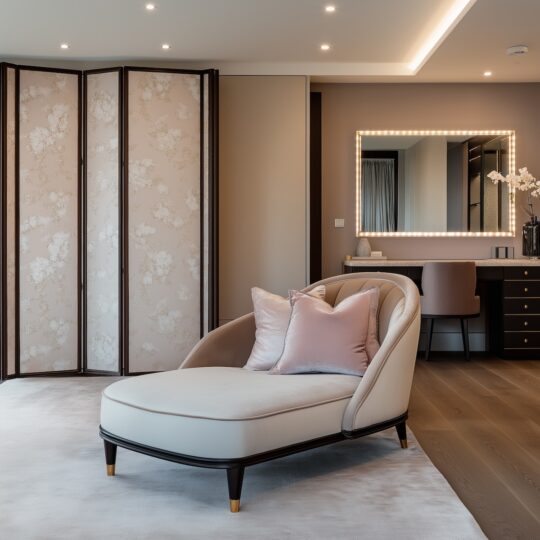
Bedroom floor planning
Using a measured floor plan and exploring different layout options on paper—or digitally—is a powerful way to visualise how your bedroom will function and flow. This process allows you to test various furniture arrangements and zone allocations, helping you make confident decisions before any physical changes are made. Once you’ve narrowed it down to one or two potential layouts, start mapping out the key areas: sleeping zone, storage, seating, vanity, and circulation.
At this stage, you may not have selected all of your final furniture pieces, so not every measurement will be exact. However, for any existing items you intend to keep—like a bed, chest of drawers, or bedside tables—it’s essential to be as accurate as possible with dimensions. For new items, use estimated measurements based on typical luxury bedroom furniture sizes. This allows you to assess clearances and circulation paths, ensuring your space remains open, functional, and visually balanced.
Creating a precise and practical bedroom layout is a skill that goes beyond simply placing furniture. It requires a keen eye for flow, proportion, and scale. This is where working with an interior designer can make all the difference. Not only will they handle the technical aspects of scaled drawings and accurate planning, but they’ll also bring a depth of experience in shaping layouts that feel luxurious, harmonious, and perfectly suited to your lifestyle. From elegant focal points to seamless transitions between zones, they ensure every square metre of your bedroom is both beautiful and intentional.

Selecting your bedroom furniture
When choosing luxury bedroom furniture, every piece should be thoughtfully selected to balance beauty, comfort, and function. These key considerations will help guide your choices:
- Style and colour
- Use and user
- Size and scale
- Materials and finishes
- Cost and value
- Durability
- Comfort
- Fit for purpose
Your bedroom should be a reflection of your personal style and be a sanctuary tailored to your lifestyle, so practicality must be as refined as the aesthetic. Consider how you’ll use the space—from sleeping and dressing to relaxing or reading—and ensure each piece supports those rituals.
Refer back to your mood board
Now is the ideal moment to revisit the mood board you created at the start of your design journey. This visual reference will help you refine the tone and direction of your bedroom scheme. Pay close attention to the shapes and silhouettes within your inspiration—are they soft and organic, or more structured and architectural? Does your bedroom vision lean toward serene and minimalist, or plush and layered?
Examine the balance of colour, texture, and material. Are you leaning towards warm neutrals and tactile fabrics like velvet and boucle, or sleek lacquers and metallic accents? These visual cues offer vital guidance in selecting bed frames, bedside tables, wardrobes, and accent seating that align with your aesthetic.
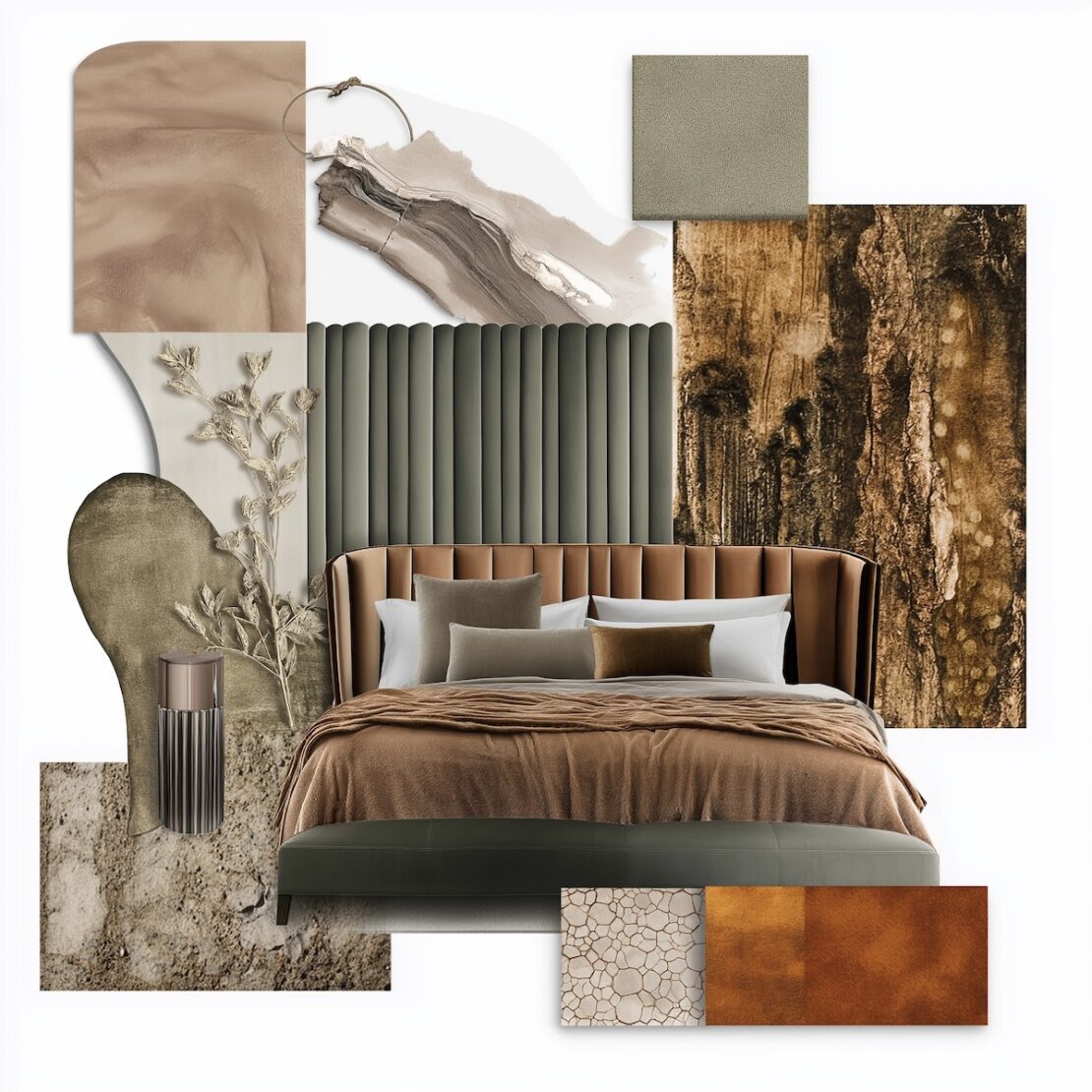
To distil your vision, write down 3–5 descriptive words that sum up your mood board—words like tranquil, romantic, tailored, or opulent. This exercise helps create a clear framework for your furniture selections and ensures each piece contributes meaningfully to the overall design.
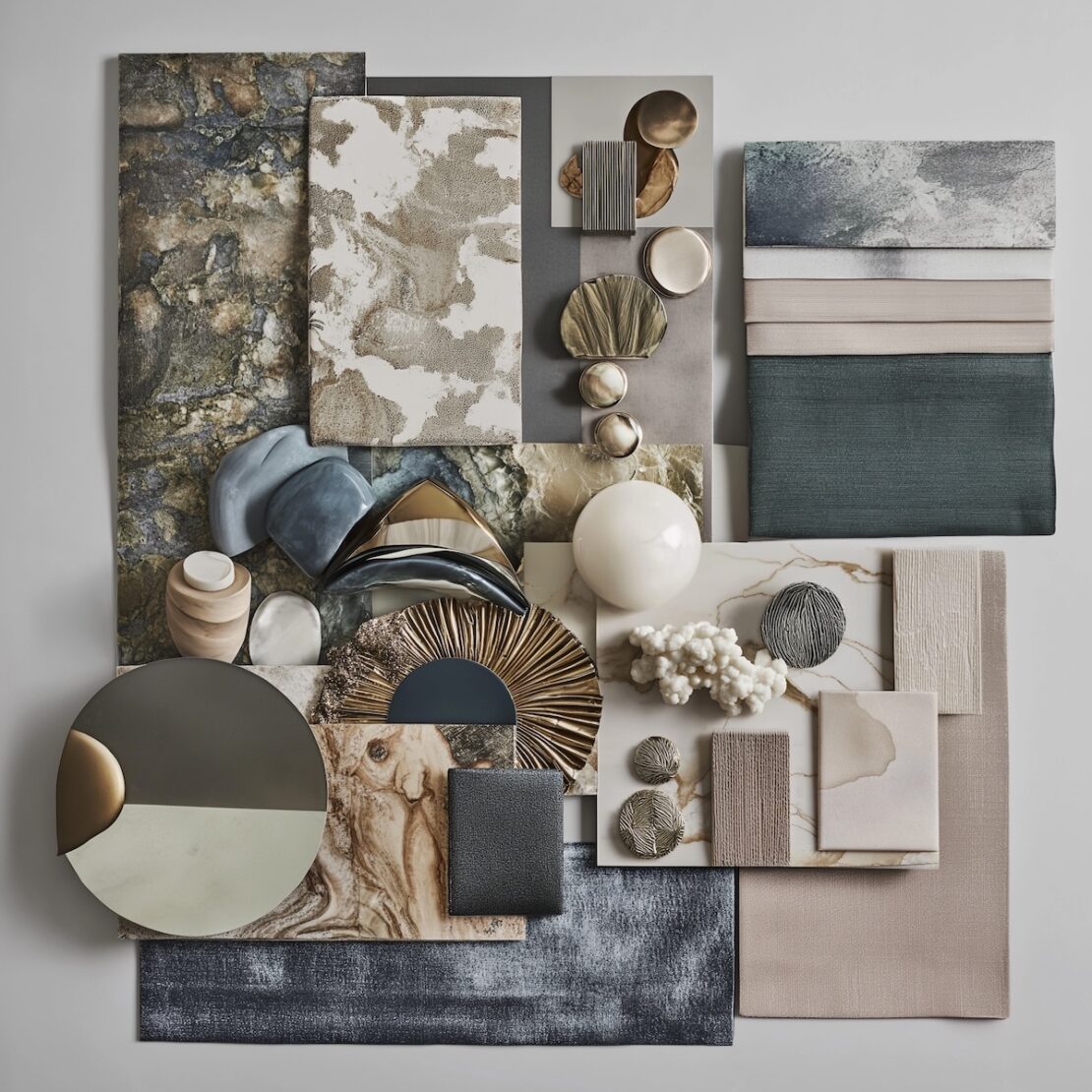
This is also where a physical sample board can be especially useful. Seeing fabrics, finishes, wood tones and metals together allows you to assess how they interact and ensures a harmonious, luxurious bedroom that feels as good as it looks.
Planning for access
While selecting bedroom furniture is often driven by style, functionality and comfort, one crucial aspect that’s frequently overlooked is access. No matter how beautifully a bed or wardrobe fits your design plan, it also needs to fit through your home. Before placing an order, it’s essential to consider the practical logistics of delivery and installation.
Here’s what to keep in mind:
- Getting the piece to the bedroom: Assess the best delivery and installation routes from the entranceway to the final placement.
- Measuring access points: Take precise measurements of doorways, stairwells, ceiling heights, and corridor widths.
- Navigating tight spaces: Consider any narrow hallways, low ceilings, lifts, or sharp corners that may hinder larger pieces like bed frames, headboards, wardrobes, or chaise longues.
Overlooking access can result in frustrating and costly mistakes—your statement bed may look perfect on paper, but it won’t matter if it can’t get up the stairs.
This is where working with an experienced interior designer becomes invaluable. They will factor in all access points and delivery routes from the outset, ensuring every piece you choose not only suits your room beautifully but also arrives and fits seamlessly into place—without compromise or stress.
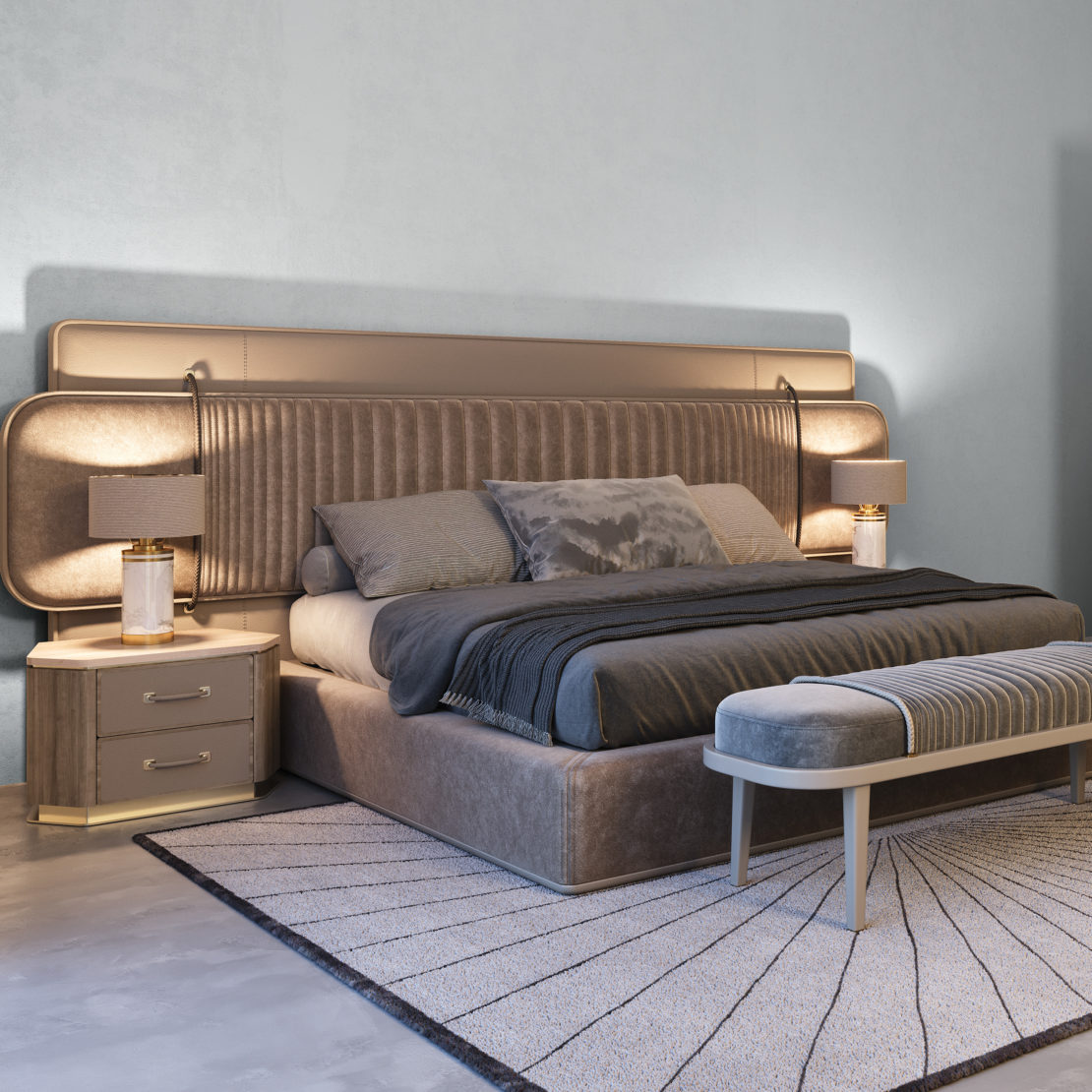
Bedroom interior design: Selecting the right materials and finishes
When it comes to designing a luxury bedroom, selecting the right materials and finishes is key to achieving both style and long-term comfort. With so many options available—wood, metal, stone, fabric, leather, and mirrored finishes—it can be difficult to know where to begin. Understanding the unique characteristics of each material helps you make informed choices that reflect your aesthetic while meeting your practical needs.
Below are some of the most common materials used in high-end bedroom furniture, along with the benefits and challenges each brings, with expert tips and considerations for selecting the perfect pieces.
Solid Wood
Properties:
Durable, long-lasting, and full of natural character. Available in a range of high-end finishes including walnut, oak, mahogany, and ash.
Benefits:
- Timeless and versatile—equally suited to classic or contemporary bedrooms.
- Develops a beautiful patina over time.
- Ideal for bed frames, nightstands, dressers, and armoires.
- Can be custom-stained or carved for a bespoke finish.
- Can be refinished or repaired to extend its life.
Challenges:
- Susceptible to scratching and humidity changes.
- Heavy and less portable.
- Requires regular care to maintain its appearance.
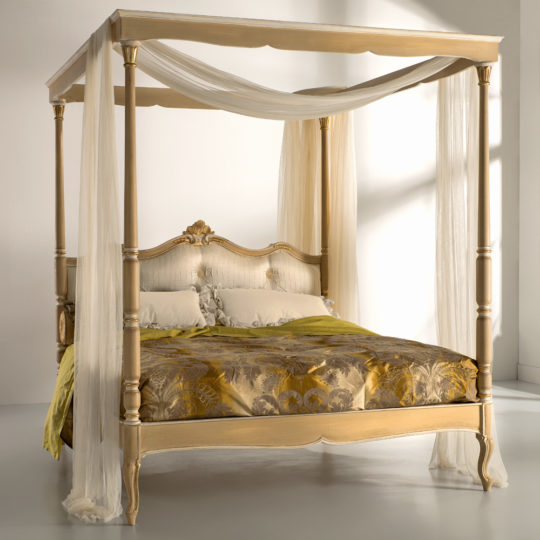
Designer tip: Choose solid wood for statement pieces like a four-poster bed or bespoke headboard. Look for sustainably sourced timber with expert craftsmanship for long-term value.
-
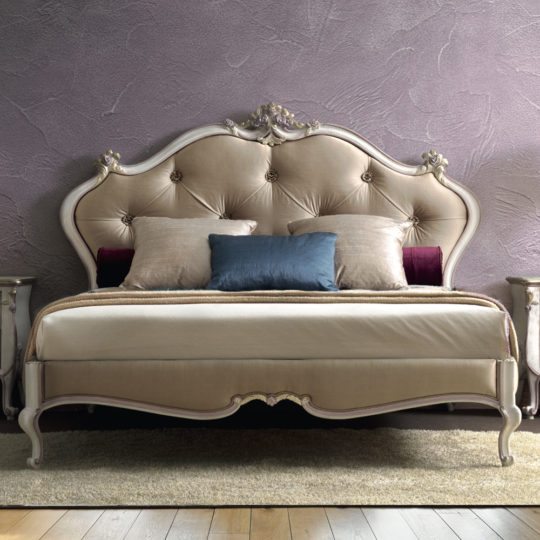
 Rococo Style Button Upholstered Bed£12,276.00
 -
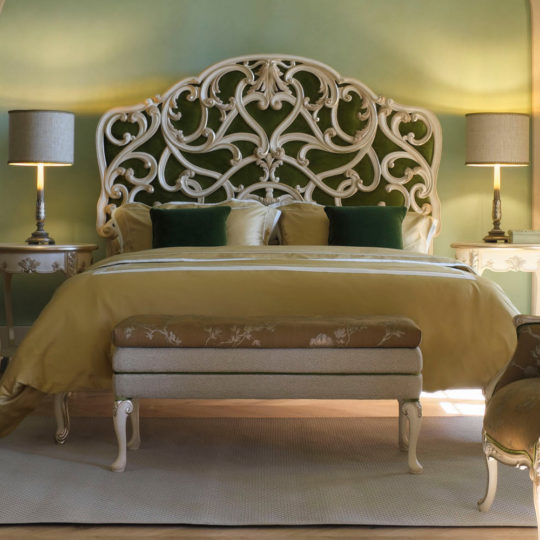
Carved Rococo Style Bed With Tall HeadboardPrice range: £18,804.00 through £21,295.00
-
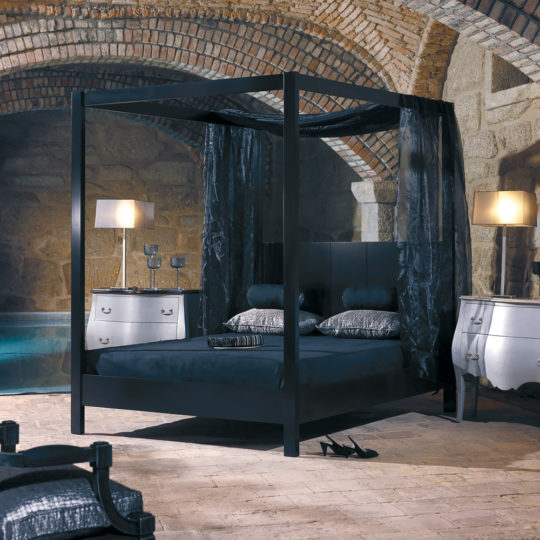
Modern Black Four Poster BedPrice range: £5,177.00 through £6,215.00
-
Italian Button Upholstered Four Poster BedPrice range: £21,004.00 through £23,098.00
Veneered Wood
Properties:
Thin wood slices applied over MDF or plywood core—often used in wardrobes, bedside tables, and headboards.
Benefits:
- Lightweight and more affordable than solid wood.
- Allows for stunning finishes like book-matched grain or high-gloss lacquer.
- Resistant to warping and ideal for sleek, modern designs.
Challenges:
- Cannot be sanded or refinished.
- May chip or peel over time with poor-quality manufacturing.
- Lower durability compared to solid wood.
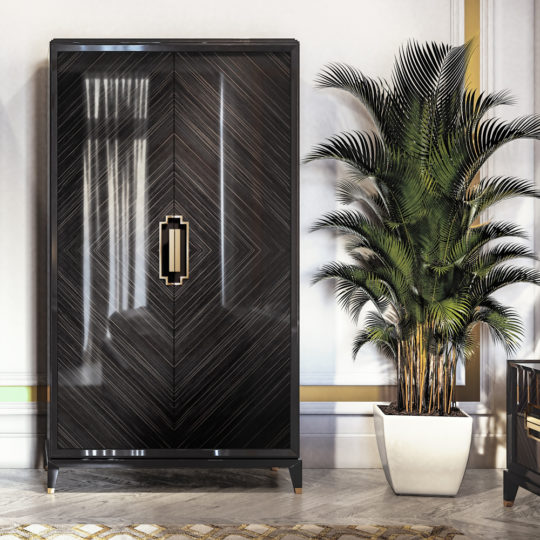
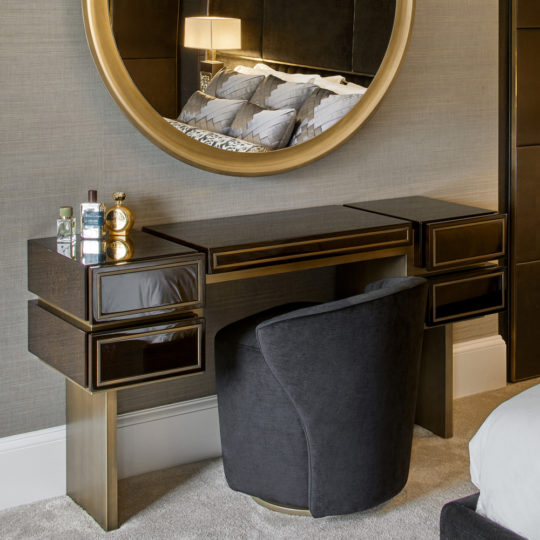
Designer tip: High-quality veneers can be indistinguishable from solid wood when expertly crafted—perfect for statement headboards, wardrobes and armoires or elegant dressing tables.
-
High End Veneer Wardrobe Cabinet£16,065.00
-
High End Contemporary Dressing Table£18,819.00
Metal (Brass, Stainless Steel, Iron, Bronze)
Properties:
Used in bed frames, handles, trims, mirrors, and accent detailing. Resistant to corrosion with proper finishes and can offer a sleek modern look or a touch of glamour (think Art Deco opulence).
Benefits:
- Adds sophistication and shine—perfect for glam, Art Deco, or industrial-inspired bedrooms.
- Sturdy and long-lasting with the right finish.
- Complements other materials beautifully.
Challenges:
- It may feel cold or too stark if overused.
- Certain finishes (like untreated brass) can tarnish without care.
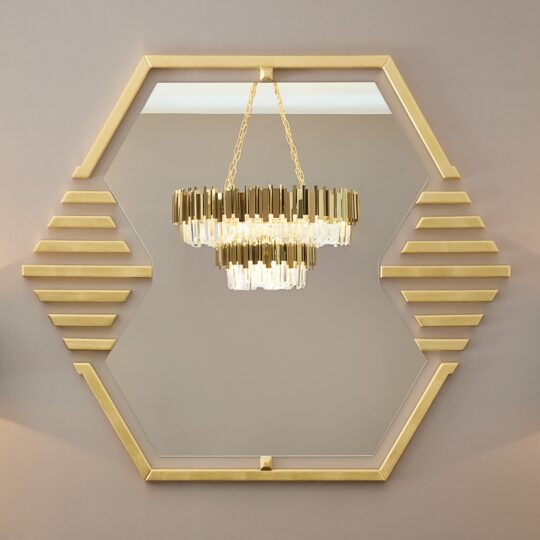
Designer tip: Use metal selectively—brass inlays on a dresser or a gold-trimmed mirror can elevate the whole scheme without overpowering it.
-
Art Deco Inspired Hexagonal Mirror£6,995.00
-
Art Deco Style Chest of Drawers£11,445.00
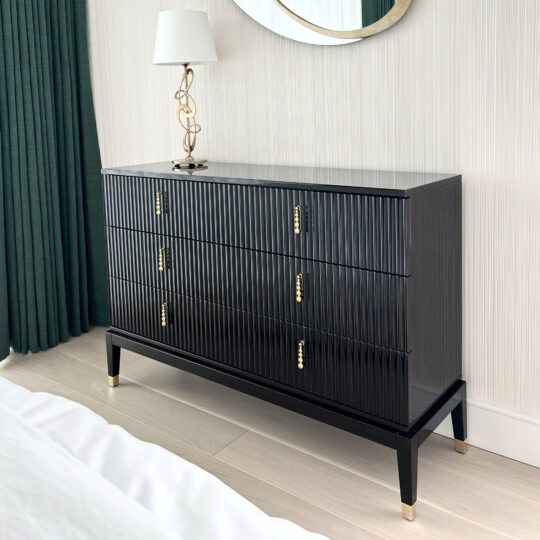
Marble, Stone, and High-Gloss Lacquer
Properties:
Found in bedside tables, vanity tops, accent furniture, and decorative surfaces. These natural materials have organic and unique veining and patterns.
Benefits:
- Visually striking and opulent
- Durable and easy to wipe clean
- Ideal for creating contrast in a softer, fabric-heavy room
Challenges:
- Heavy and difficult to move
- Stone surfaces can stain or etch if not sealed
- High-gloss lacquers can show fingerprints
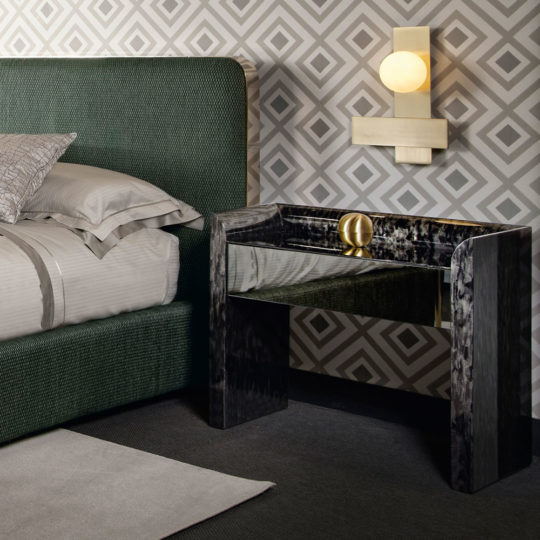
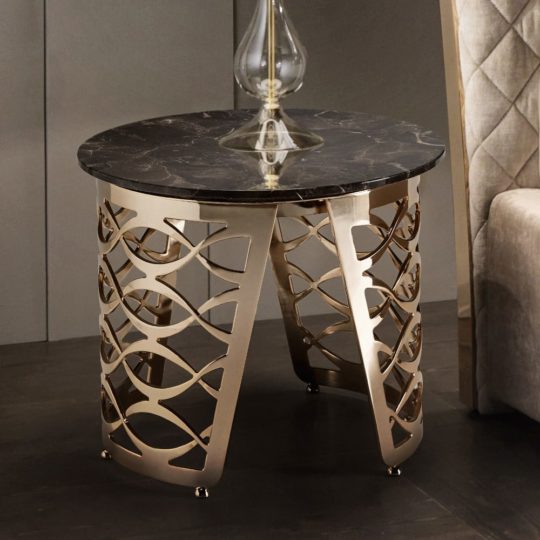
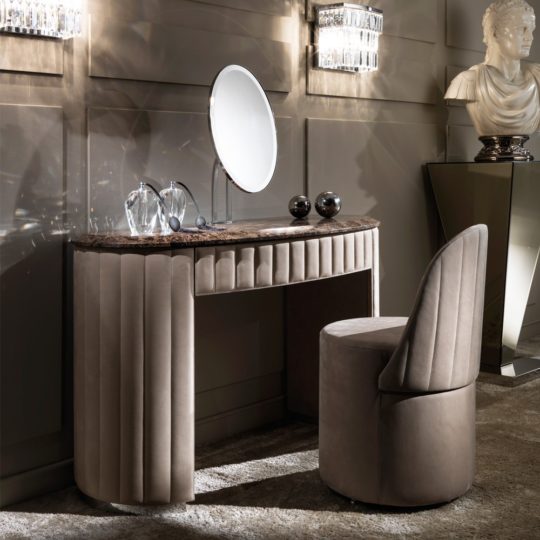
Designer tip: Use marble or high-gloss finishes as a statement—perhaps in a bedside table or console—but balance with softer textures to avoid a space feeling overly ‘hard’ or clinical.
-
Black Mother Of Pearl Bedside Cabinet£4,240.00
-
Italian Gold Plated Marble Designer Bedside Table£7,201.00
-
Curved Designer Nubuck Leather Marble Dressing TablePrice range: £3,644.00 through £17,558.00
Mirrored and Glass Finishes
Properties:
Commonly used in wardrobes, bedside tables, decorative panels and of course statement mirrors, for dressing and decoration (more on mirrors to come).
Benefits:
- Reflects light and enhances the sense of space—perfect for smaller or darker bedrooms
- Adds glamour and a high-end finish
- Resistant to staining and water damage
- Easy to wipe clean
Challenges:
- Shows smudges and dust easily
- Can feel fragile or overly formal if not styled well
Designer tip: Mirrored furniture pairs beautifully with plush textiles like velvet curtains or a tufted bed, softening the overall effect while adding depth.
-
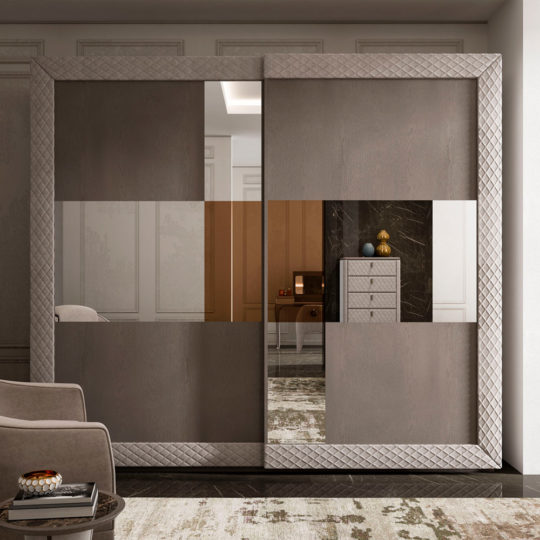
Italian Designer Upholstered Wardrobe With Sliding Doors£25,611.96
-
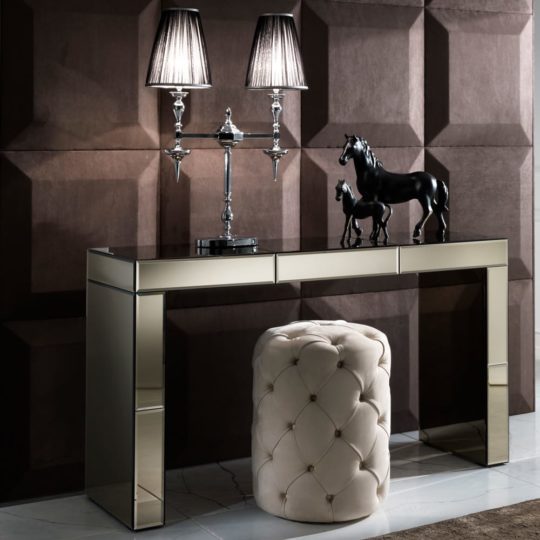
Modern Designer Bronze Mirrored Console Table With DrawerPrice range: £6,680.04 through £6,923.04
-
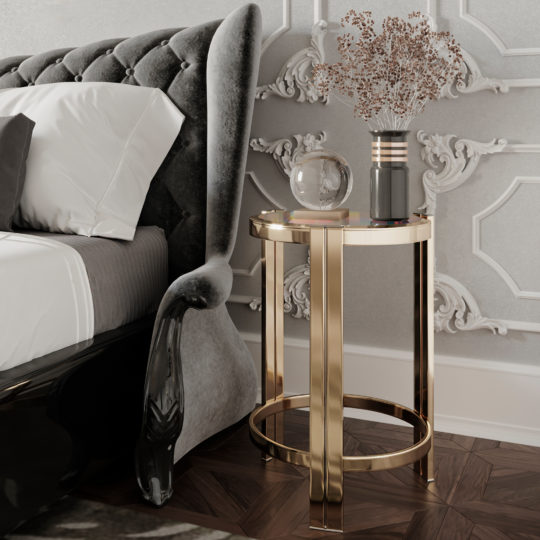
Art Deco Inspired Designer Contemporary Luxury Side Table£2,126.04
-
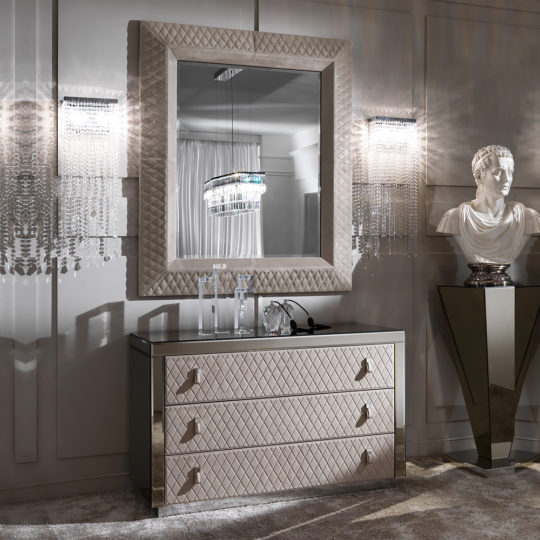
High End Italian Mirrored Nubuck Drawers And Mirror SetPrice range: £6,801.00 through £15,293.00
Mixed Materials
Properties:
Mixed materials combine two or more finishes—such as wood with metal, leather with marble, or mirrored glass with lacquered veneer—into a single furniture piece or design scheme. This approach is often used in beds, bedside tables, dressers, wardrobes, dressing tables, and accent seating.
Benefits:
- Creates a rich, layered aesthetic that adds depth and dimension to the space
- Combines the best characteristics of each material—like the warmth of wood with the sophistication of brass, or the softness of fabric with the polish of mirrored glass
- Enhances visual interest and brings a custom, curated feel to your bedroom
Challenges:
- Typically comes at a higher price point due to the complexity of craftsmanship and the use of premium finishes
- Requires a careful eye to ensure materials complement—rather than compete with—each other, especially when mixing textures, tones, or sheens
Designer Tip: Use mixed materials intentionally. Let one material lead (e.g., plush upholstery on a headboard), while others play supporting roles (brass legs or a marble-topped bedside). This creates harmony and avoids visual overload.
Tips for choosing the right bedroom materials by function
- For bed frames: Choose solid or veneered wood or metal for structure for its durability, and upholstered finishes for comfort and style
- For wardrobes and dressers: Opt for veneer or lacquered finishes with metal or mirrored accents. Internal fittings should be fully bespoke for your lifestyle needs
- For bedside tables: Mix practicality and luxury—stone or lacquered tops resist wear, while soft-close drawers lined with velvet add refinement
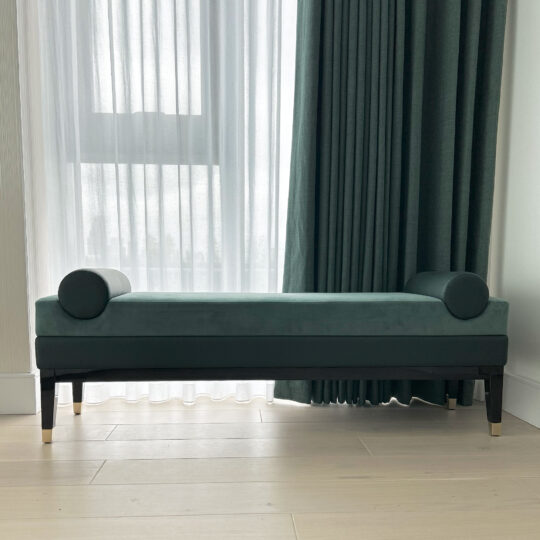
- For seating: Upholstered benches, occasional chairs, or a chaise longue in high-quality fabric or leather create both comfort and visual softness. Prioritise high rub-count upholstery for durability and stain resistance
- For dressing tables and vanities: High-gloss lacquer, mirrored finishes, or stone tops give a glamorous look. Add soft-close drawers with lined interiors for a refined user experience
By understanding the properties, strengths, and challenges of each material, you can make refined and intentional choices that not only enhance your bedroom’s design, but also align with the way you live. Working with an experienced interior designer ensures every material is carefully selected to harmonise both aesthetically and functionally—delivering a bedroom that feels as exquisite as it looks. Interior designers also often have access to materials and finishes not available directly to consumers, reserved only for trade professionals.
Fabric
Fabric plays a vital role in luxury bedroom design, not just in terms of comfort, but also for setting the tone and texture of the space. From upholstered beds and headboards to accent chairs, window treatments, and soft furnishings, the choice of fabric can dramatically influence the atmosphere—whether you’re aiming for serene and calming, rich and dramatic, or soft and romantic.
There are two main fabric categories to consider, natural and synthetic. Whilst there is a huge array, these are the most common characteristics:
Natural fabrics – Derived from nature, these include cotton, linen, silk, and leather.
- Known for their luxurious textures and breathability
- Ideal for creating a relaxed, organic feel or an elegant, tactile experience
- More prone to creasing and typically slower to dry
Synthetic fabrics – Man-made fibres such as polyester, nylon, and rayon.
- Dry quickly and are generally easier to clean and maintain
- More resistant to creasing and often more durable
- Can mimic the appearance of natural fibres at a more accessible price point, though may lack the same tactile richness
Rub count and fabric durability
An important consideration for bedroom fabrics—especially upholstered furniture and headboards—is the rub count, a measure of durability. The higher the rub count, the more resistant the fabric is to wear and tear.
- Lower rub-count fabrics can be used for decorative cushions, drapery, or wall panels where less abrasion occurs
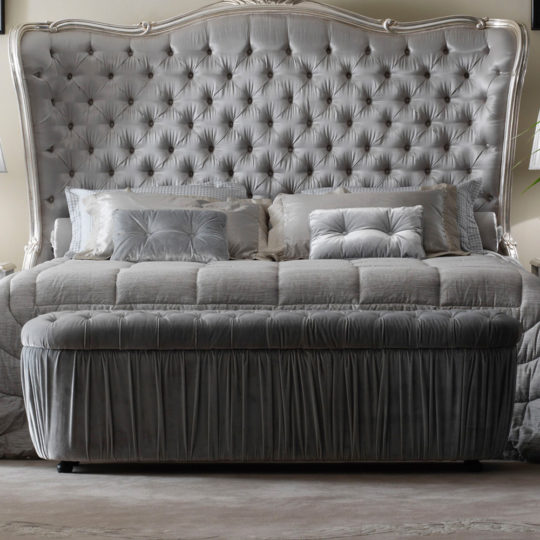
- High rub-count fabrics are essential for frequently used items like chaise longues, ottomans, benches and upholstered bed frames
-
Mid-Century Style Bench£4,554.00
-
Ottoman Style Button Upholstered Storage Bench£7,309.00
Flooring
Selecting the right flooring for your bedroom is a crucial design decision—one that affects not just the look of the space, but also how it feels underfoot and functions day-to-day. In a room designed for rest and relaxation, flooring must strike a balance between comfort, elegance, and practicality.
Unlike high-traffic spaces such as kitchens or dining rooms, bedrooms tend to experience gentler wear. This opens up more opportunities for indulgent materials like plush carpets, hardwood with soft rugs, or even underfloor heating beneath stone or timber flooring. Still, durability, ease of maintenance, and how a material pairs with your overall scheme should all be carefully considered.
Common flooring options for luxury bedrooms include:
- Hardwood: Timeless and elegant, offering warmth and character. Works beautifully with layered rugs for softness and acoustic balance
- Engineered wood: A more stable alternative to solid wood, especially suitable for rooms with underfloor heating
- Luxury carpet: Adds a sense of comfort and cosiness underfoot, perfect for creating a sanctuary-like atmosphere
- Stone or marble: Sleek and sophisticated—often used in master suites or bedrooms with open-plan dressing or ensuite areas. Best paired with rugs and warmth for comfort
- Parquet or herringbone floors: A high-end design choice that adds pattern, depth, and visual appeal
Before committing, it’s advisable to view samples in your space and under your lighting conditions to get a true sense of colour, texture, and finish. A common oversight in bedroom renovations is not accounting for the thickness of new flooring, which can impact door clearances, skirting transitions, and furniture placement.
While interior designers may not be versed in every type of flooring, they work closely with trusted flooring specialists and suppliers. Their expertise ensures your chosen material not only complements your design vision but also performs beautifully in the context of your lifestyle—delivering a bedroom that feels luxurious from the ground up.
Wall finishes
The walls of your bedroom play a fundamental role in shaping the overall atmosphere of the space. Covering a large surface area, your wall finishes act as the backdrop to your entire design scheme—setting the tone, defining the mood, and framing your furniture, artwork, and lighting.
Thoughtfully selected wall treatments can transform a bedroom from simple to sublime. Whether you want to create a serene, minimalist retreat or a richly layered, romantic sanctuary, the right colours, textures, and finishes will bring your vision to life.
Consider how your chosen wall finishes, textures and tones interact with other key elements in the room—such as the bed, artwork, mirrors, or lighting. Will the walls be a subtle canvas, or are you planning to make a statement with dramatic paint, textured plaster, or luxurious wallpaper? Also, think about practical considerations: are you using fabric wall panels to improve acoustics, or do you require washable finishes in areas near a dressing table or glam station?
Common wall finish options for luxury bedrooms include:
- Silk or linen-effect wallpapers for a tactile, elegant surface
- Textured plaster or Venetian render for a soft, tonal richness
- Panelled or upholstered walls behind the bed to create a dramatic feature
- Matte or satin paints in calming tones for a soothing ambience
Bedrooms don’t endure the same wear as dining or living areas, so you can be more adventurous with delicate or decorative finishes. However, natural light, artificial lighting, and focal points such as the bed or fireplace should all be considered to ensure the finish enhances—rather than competes with—the overall design.
Working with an interior designer ensures every surface is selected with intent, expertly balancing aesthetic appeal, practicality, and the atmosphere you wish to create. The result? A bedroom that feels as refined and personal as it is visually breathtaking.
Designer tip: Don’t forget the ceiling
In bedroom design, the ceiling is often overlooked—but it’s one of the few rooms where you spend a significant amount of time lying down and looking up. Treat it as the fifth wall. Whether it’s a soft paint shade, a statement chandelier, decorative plasterwork, or even a wallpapered ceiling, this surface offers a unique opportunity to add depth, elegance, and a sense of completion to your space. A beautifully finished ceiling elevates the room from ordinary to extraordinary—quite literally.
Selecting the right bed
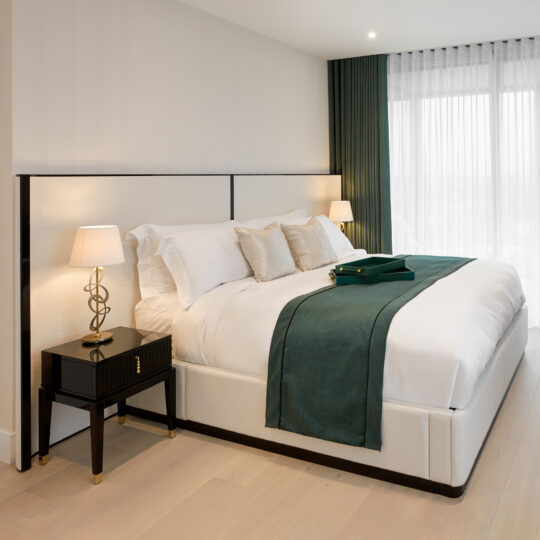
Selecting the right bed is the single most important decision in your bedroom design. As the focal point of the space and the place where you begin and end each day, your bed should balance exceptional comfort, visual impact, and timeless style. In luxury bedrooms, the bed is more than just a piece of furniture—it’s the centrepiece that defines the mood and anchors the entire room. This is a good time to refer back to your earlier planning around how and who uses the room. Accurate floor plans and careful space planning are key to getting this right.
Also, and we can’t stress it enough, do not forget about access. A common and costly interior design mistake is getting a bed or headboard that is too large to fit up the stairs, or through an access point.
Here are some important considerations when selecting your bed:
- Scale: Choose a bed that is proportionate to the size of the room and works harmoniously with other key furniture pieces. For larger spaces, consider a super king or even an emperor-size bed. In more compact rooms, a bespoke bed made to exact dimensions can offer a more tailored fit without sacrificing impact.
- Fit and flow: Ensure there’s sufficient clearance around the bed—ideally 75–90 cm on each side—to allow easy movement and access to bedside tables or built-in wardrobes. Consider sightlines from the doorway to the ensuite or dressing room, and how the bed interacts with windows, focal points, and lighting.
- Height: The overall height of your bed—including the frame, base, and mattress—should feel comfortable and visually balanced within the space. Higher beds can feel more traditional and regal, while lower profiles offer a more contemporary, grounded aesthetic. This is a key consideration if there are children or pets that need access to the bed also. Headboard height is also key for visual impact and can be customised for a statement style.
Use and lifestyle:
Think beyond sleep. Will the bed be used for reading, watching TV, or relaxing with a morning coffee? Upholstered headboards and integrated lighting can add both comfort and convenience.
Storage options:
If space is at a premium, consider a bed with built-in storage—such as ottoman bases or under-bed drawers. These are ideal for discreetly stowing away extra bedding, seasonal clothes, or accessories, while maintaining a sleek and clutter-free bedroom.
Bespoke potential:
A custom-designed bed allows you to tailor every detail—from headboard shape and fabric to integrated features like lighting, charging points, or hidden compartments. This is the ultimate option for creating a one-of-a-kind centrepiece that perfectly suits your room and lifestyle.
Once that has been considered, then look at the style:
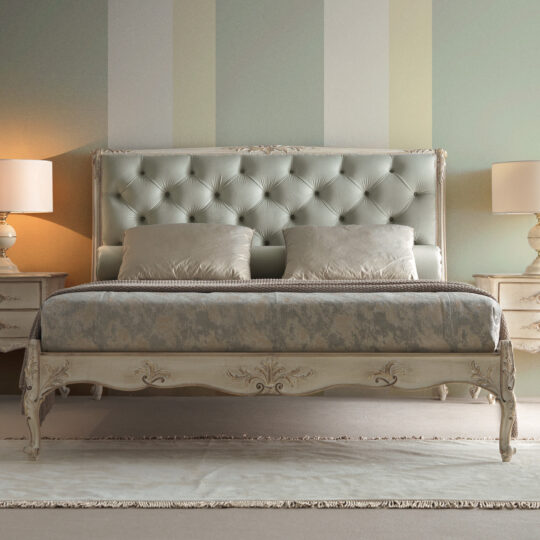
- Upholstered beds offer softness, comfort, and a cocooning feel, perfect for creating a serene retreat
- Four-poster or canopy beds add drama and elegance, ideal for traditional or boutique-style bedrooms
- Low profile beds with sleek lines work beautifully in contemporary or minimalist interiors
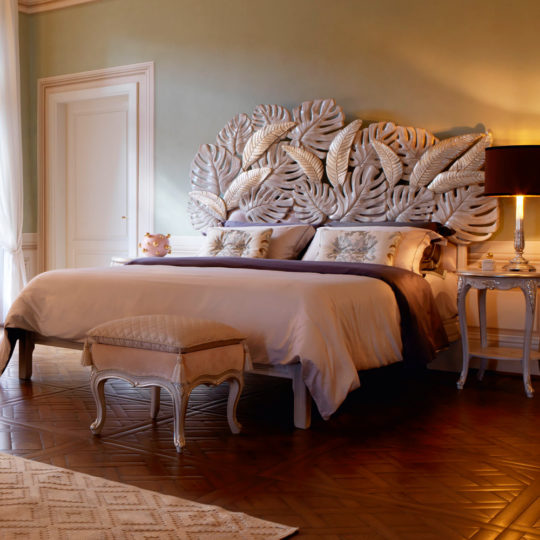
- Carved wood or lacquered finishes can create a classic, structured aesthetic with architectural depth
- Storage beds offer tucked-away storage to ensure your bedroom doesn’t feel cluttered or chaotic
Always opt for quality
When it comes to comfort, never compromise. Your bed is an investment piece, not just in your home, but in your wellbeing. A beautifully made bed, paired with a high-performance mattress tailored to your sleep preferences, can significantly improve the quality of your sleep. Bespoke options offer the ability to integrate functional elements such as built-in storage, hidden lighting, or custom headboards in your choice of fabric and finish.
Designer tip: Make the bed fit the room—not the other way around. A custom-designed bed, built to your specifications and aesthetic, ensures a perfect fit that enhances the overall design. And don’t underestimate the importance of layering—luxurious bedding, tailored cushions, and throws are essential to achieving that refined, boutique-hotel look.
Your bed is not just a place to sleep—it’s the heart of your sanctuary. So always choose the highest-quality piece you can to ensure long-lasting comfort, exquisite craftsmanship, and daily joy for years to come.
-
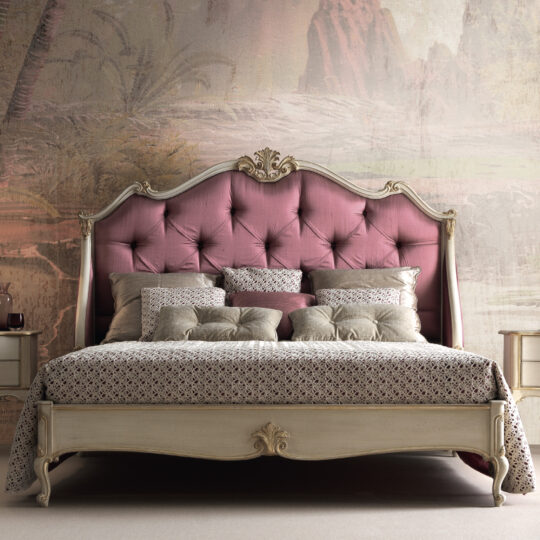
Ornate Classic Style Winged Bed£15,028.00
-
Classic Louis Style Button Upholstered Bed£12,782.00
-
Storage Bed With Curved Wide Headboard£11,614.00
-
Luxury Bed With Tropical Palm Leaf HeadboardPrice range: £30,609.00 through £34,570.00
-
Gold Finish Four Poster Bed£38,913.00

Mirrors in luxury bedroom design: Decoration and practicality
Mirrors are among the most powerful—and often underrated—tools in luxury bedroom design. Far more than simply functional, they serve as statement pieces, light enhancers, space amplifiers, and elegant focal points. When used thoughtfully, mirrors can completely transform the look and feel of a bedroom, adding layers of sophistication and depth. But mirrors also play a particularly important role in the bedroom—arguably more so than in many other rooms—because of their everyday practicality. This is where you get dressed, prepare for the day, and unwind in the evening. For many, the bedroom is where they do their skincare, makeup, or hair routines. Beyond their decorative appeal, mirrors in the bedroom need to support daily rituals, helping the space serve not just as a place for rest, but as a place where you begin and end each day with ease.
The decorative influence of mirrors
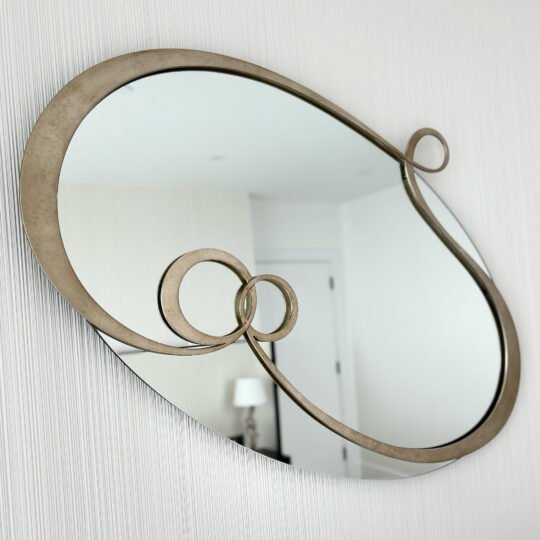
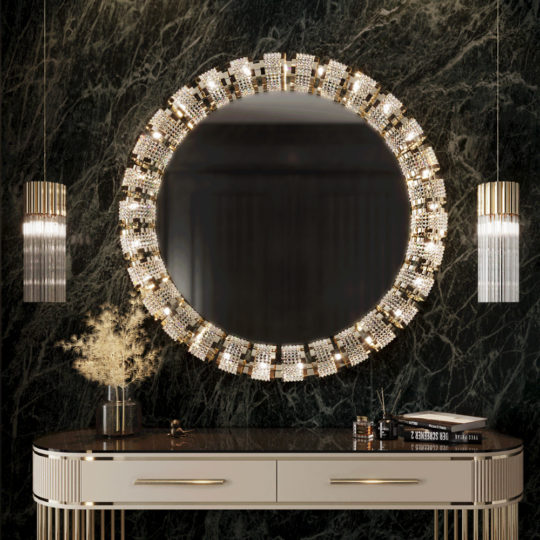
Mirrors act as artwork in their own right, offering endless versatility in both form and finish. From ornately framed antique-style mirrors to sleek, minimalist designs, they can complement any style—from classic French to modern glamour.
- Create a focal point: A large mirror above a headboard, fireplace, or console table instantly draws the eye and adds grandeur to the space. In smaller bedrooms, this can act as an alternative to traditional wall art, offering impact without visual heaviness.
- Add texture and elegance: Mirrors framed in gold, bronze, with smoked glass, or faceted finishes can bring a touch of opulence to the bedroom. Mirrored furniture—such as bedside tables, dressing tables, or wardrobe panels—can elevate the overall aesthetic while reflecting soft textures and lighting for a beautifully layered look.
- Reflect beauty: Strategically placed mirrors can reflect architectural details, stunning light fixtures, statement beds, or curated vignettes.
- Enhancing light: Mirrors are particularly useful in bedrooms where natural light may be limited. By reflecting both natural and artificial light sources, they brighten up the space and make it feel more expansive. Place mirrors opposite or adjacent to windows to bounce daylight around the room. This makes the space feel airier and more uplifting—ideal for bedrooms that lack strong natural light.
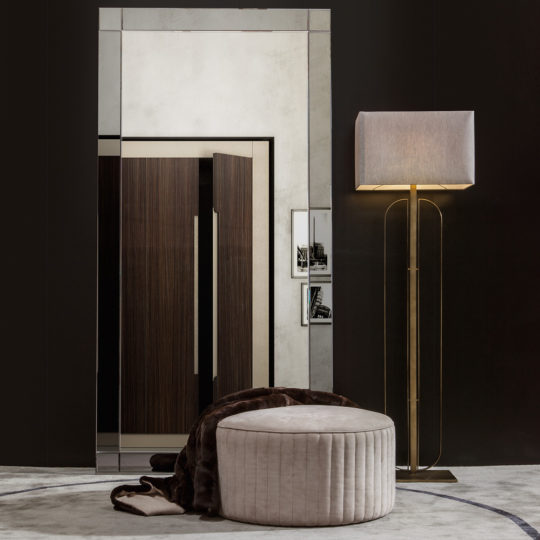
- Create the illusion of space: In compact bedrooms, large mirrors or mirrored panels can visually expand the room, making it feel more open and luxurious. Floor-length mirrors or mirrored wardrobe doors are especially effective for this.
- Use mirrored surfaces subtly: If a full mirrored wall feels overwhelming, consider incorporating mirrored accents—on wardrobes, dressing tables, or side tables—for a more refined, understated approach. Too many mirrored surfaces can leave the room feeling overwhelming or a bit Big Brother, with your every move being reflected!
Practical considerations for mirrors in the bedroom
While mirrors add undeniable style, they also serve an important practical function in the bedroom.
Dressing and grooming:
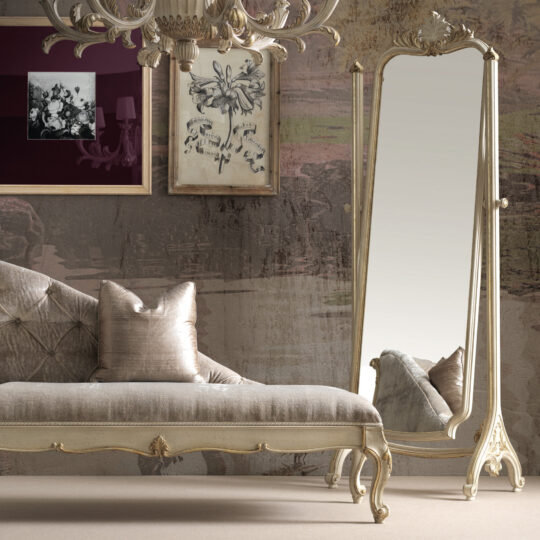
Full-length mirrors are essential in any bedroom with a dressing area. Whether wall-mounted or freestanding, they provide functionality without compromising elegance. Consider backlit options for added luxury and visibility.
Designer tip: When it comes to mirror placement in the bedroom, practicality is just as important as aesthetics. For dressing purposes, a full-length mirror should ideally be at least 120–150cm in height to reflect the entire body, and the bottom of the mirror should sit no more than 30–40cm from the floor to ensure a true head-to-toe view. Freestanding mirrors are a flexible option, but wall-mounted versions are excellent for saving space—just ensure they’re installed at the correct height for the primary user. Allow at least 90cm of clear space in front of the mirror for comfortable dressing and movement.
Vanity and glam zones:
Mirrors are a must above dressing tables or glam stations. Choose designs with integrated lighting or pair with stylish wall lights or directional lighting to ensure proper illumination for skincare and makeup application.
Designer tip: If placing a mirror above a dressing table or console, ensure it’s positioned at eye level when seated, typically 75–90cm from the tabletop to the centre of the mirror. Good lighting—either natural or through well-placed sconces or integrated LEDs—is essential to make mirrors functional for grooming and dressing tasks.
Wardrobes and storage solutions:
Mirrored wardrobe doors combine practicality with elegance, making your space feel larger while offering a convenient reflective surface. For a seamless finish, opt for bespoke designs that integrate mirrors into your cabinetry with clean lines or decorative trim.
Designer tip:
Use mirrors with intention—not just as fillers. Think about what the mirror will reflect, how it enhances the light, and where it fits within the visual rhythm of the room. Avoid placing mirrors directly opposite the bed if it disrupts your sense of calm, and always consider how reflections may impact mood and spatial balance. Thoughtful mirror placement goes beyond style, it ensures your bedroom not only looks beautiful but also works seamlessly with your daily routine.
-
Rococo Style Freestanding Full-Length Mirror£3,890.00
-
Contemporary Twisted Oval Mirror£4,055.00
-
Contemporary Round Crystal Mirror£12,899.00
-
High End Large Designer Geometric Multi Layered Wall Mirror with LEDPrice range: £11,760.00 through £14,793.00
-
Contemporary Large Floor Standing Venetian Smoked Glass Mirror£3,707.00

Choosing or designing the perfect wardrobe
After your bed, your wardrobe is likely the largest and most dominant piece of furniture in the bedroom—so it deserves as much thought in both design and practicality. A well-designed wardrobe should enhance the overall aesthetic of the room while offering flawless organisation tailored to your lifestyle. For those with separate dressing areas or walk-in closets, the following advice can also apply.
Key considerations when choosing or designing a wardrobe
Size and scale:
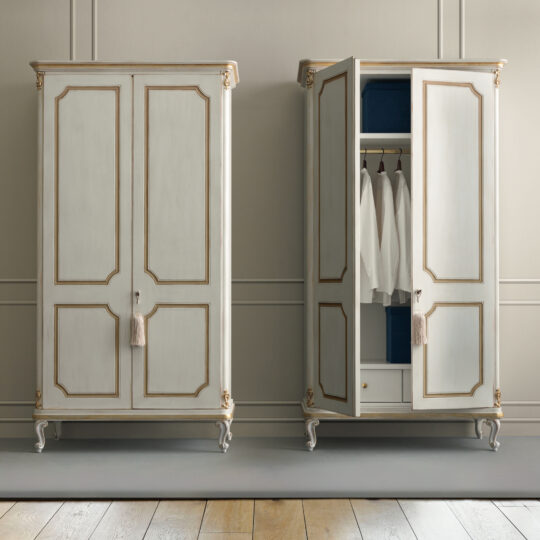
The wardrobe should feel balanced within the space—neither dominating the room nor underserving your storage needs. Consider ceiling height and available wall width. Full-height wardrobes maximise storage and create a seamless, built-in look, while freestanding designs can offer more flexibility and sculptural presence if space allows.
Internal layout:
A well-planned interior is essential for everyday functionality of your closet. Consider:
- Double and single hanging rails for short and long garments
- Deep drawers for knitwear and casual items
- Shelves for folded clothes or handbags
- Pull-out trays or shallow drawers for jewellery, watches, and accessories
- Integrated shoe racks or angled shelving for footwear
- LED-lit compartments for added visibility and luxury appeal
Designer tip: Take inventory of what you actually need to store before finalising the design. Tailoring the internal layout to your wardrobe habits and storage needs ensures every inch of space works hard for you. Plus, always aim on the larger side of what you think you need. Your wardrobe is also an investment piece, so you don’t want to outgrow its space.
Door style and finish:
Wardrobe doors present a major opportunity to enhance your bedroom’s style.
- Mirrored doors visually enlarge the room and provide dressing functionality
- Textured or upholstered panels add softness and elegance
- Fluted or ribbed wood offers architectural depth and a bespoke feel
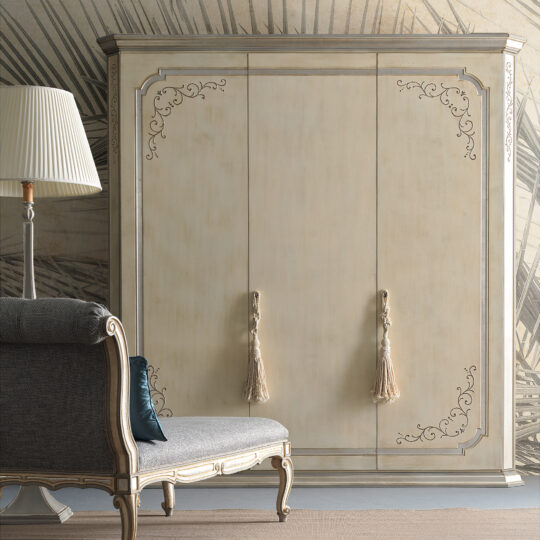
- Matte lacquers, veneers, and metallic inlays can create a sleek, modern look or a richly layered traditional style
Hinged vs sliding:
- Hinged doors allow full visibility and easier access to internal compartments but require more clearance
- Sliding doors save space and are ideal for smaller rooms, though internal access may be more restricted. Sliding doors offer a more minimalistic style choice, perfect for contemporary-designed bedrooms
- For walk-in wardrobes, open shelving or glass-fronted doors can elevate visibility and presentation. Under-lit LED shelves offer a floating look and provide additional lighting
Integration and customisation:
Bespoke wardrobes offer unmatched flexibility, allowing you to work around awkward ceiling angles, alcoves, or architectural quirks. They also ensure materials and finishes are coordinated with the rest of the bedroom for a cohesive look.
Designer Tip: Incorporate lighting—either internally with motion-sensor LEDs. It’s a small detail that makes a big difference in luxury and usability.
Handles and hardware:
Don’t underestimate the impact of handles—they’re the jewellery of your wardrobe. From brushed brass and antique gold to leather-wrapped pulls or inset finger grooves, the hardware you choose will reinforce your design style and elevate the entire piece. More than the finishing touch, these are what you will be using day in day out to access your closet, so the tactile experience—the touch and feel—is just as important as the visual aesthetic.
-
Narrow Classic Style Wardrobe£10,031.00
-
Large Classic Style Wardrobe£13,383.00
-
Large High End Integrated Wardrobe£51,880.00
-
Modern Armoire With Brass Accents£11,770.00
-
Large Art Deco Inspired High End Italian Designer WardrobePrice range: £28,980.00 through £57,959.00
-
Large Embossed Leather Sliding Door Fitted WardrobeCall For Price

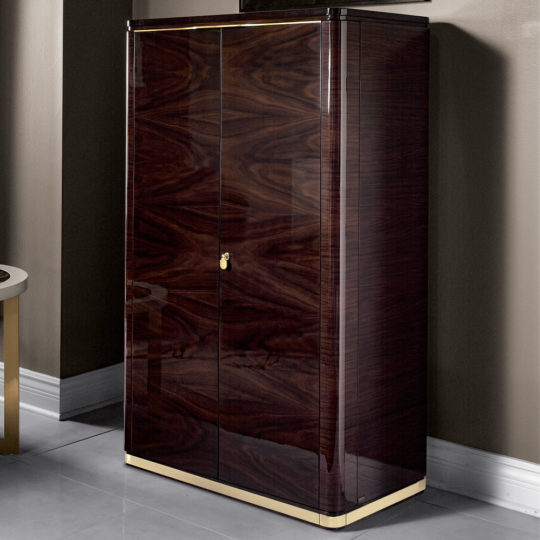
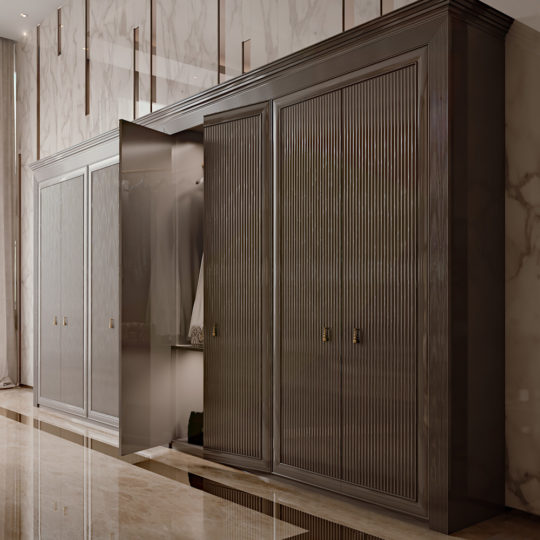
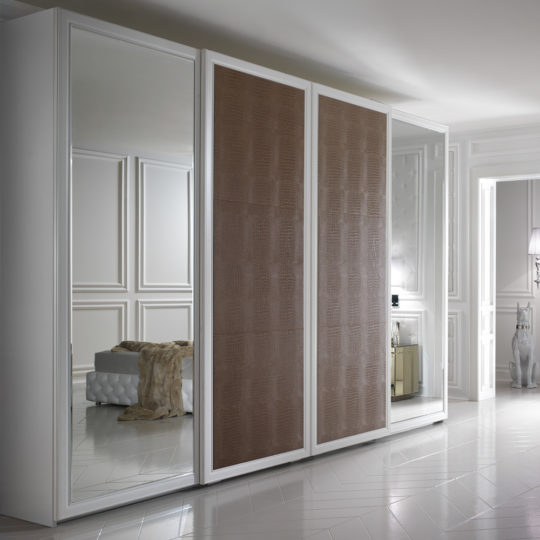
A well-designed wardrobe should feel like a personal boutique—tailored to your routine, beautifully organised, and visually seamless. Whether built-in or freestanding, it should contribute to the flow of the room and reflect the same level of craftsmanship and aesthetic consideration as your bed. In a luxury bedroom, storage should never be an afterthought—it should be a statement.
Bedside tables
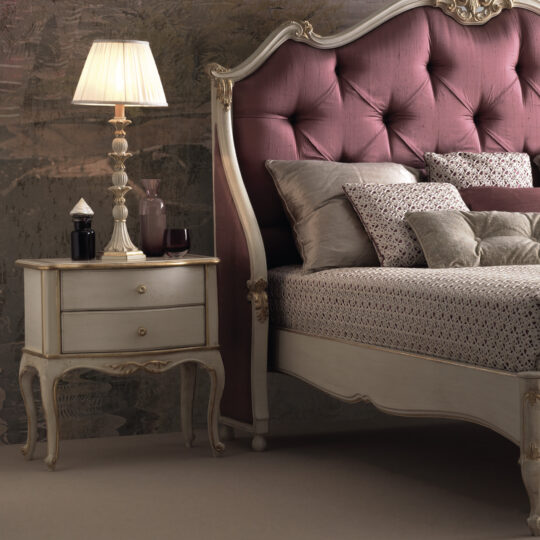
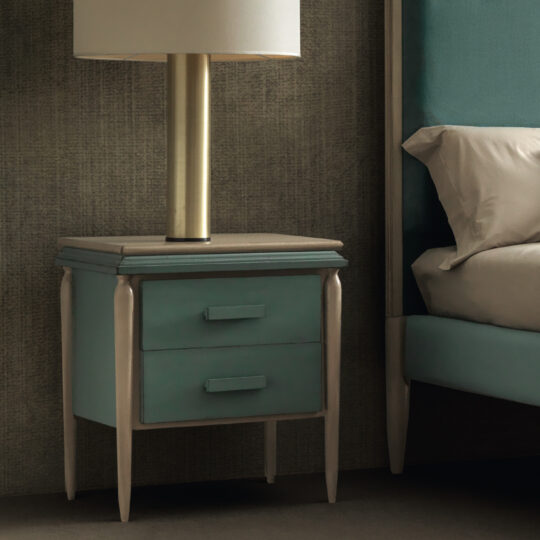
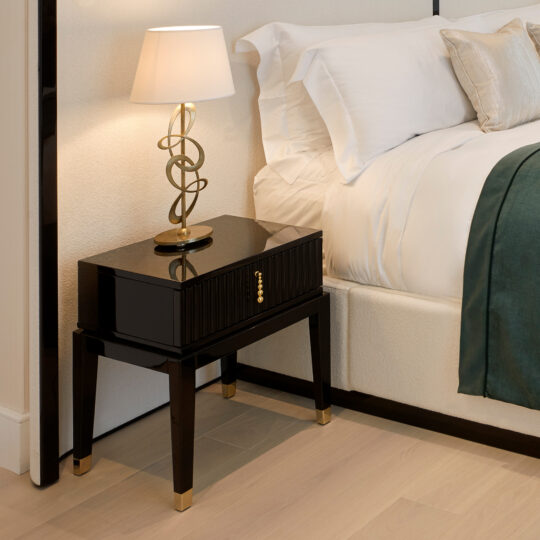
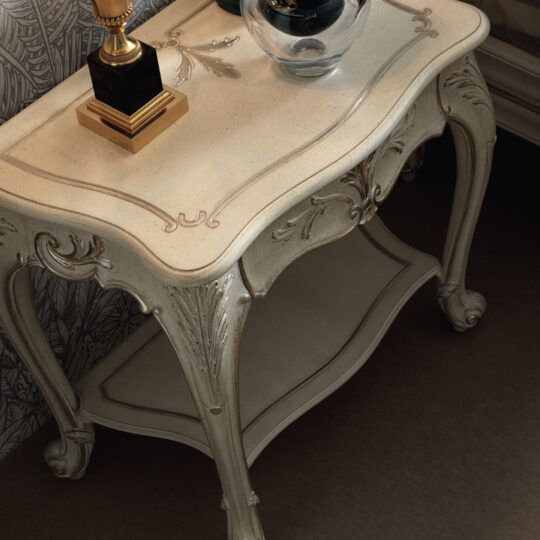
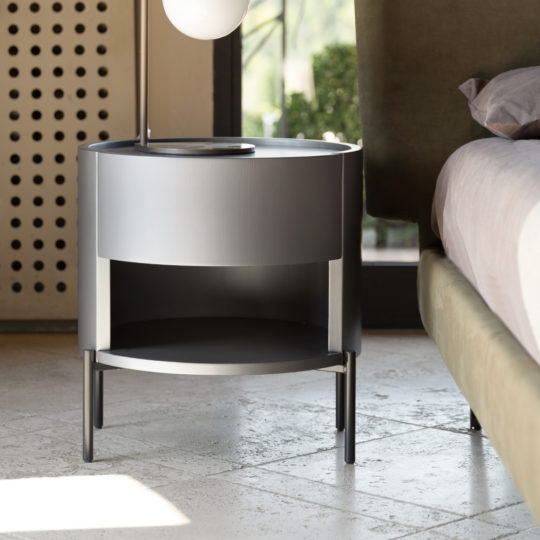
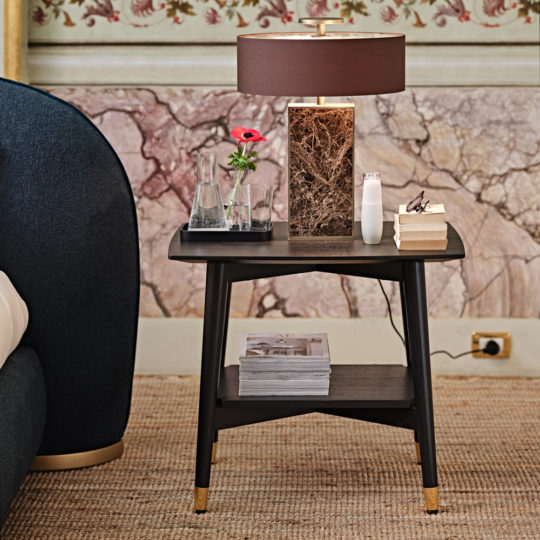
Your bedside table or cabinet should complement your bed in both scale and style. Ensure they’re the right height—ideally level with the top of your mattress—for ease of use, consider both sitting and lying down positions. Look for soft-close drawers or discreet shelves to keep essentials hidden but accessible. Materials like lacquer, marble, glass, or wood with metallic accents add interest and texture, while built-in lighting or charging ports can add extra convenience in a discreet way. Consider what you need by the bed and therefore the amount of storage required. Is a table enough, or would a bedside cabinet be better?
-
Classic Style 2 Drawer Bedside Cabinet£3,162.00
-
Luxury Art Deco Style Bedside Cabinet£3,162.00
-
Art Deco Style Bedside Table£4,192.00
-
Ornate Classic Style Bedside Table£3,330.00
-
Modern Minimal Round Bedside Cabinet£4,212.00
-
Contemporary Mocha Ash Bedside Table£3,016.00
Chest of drawers
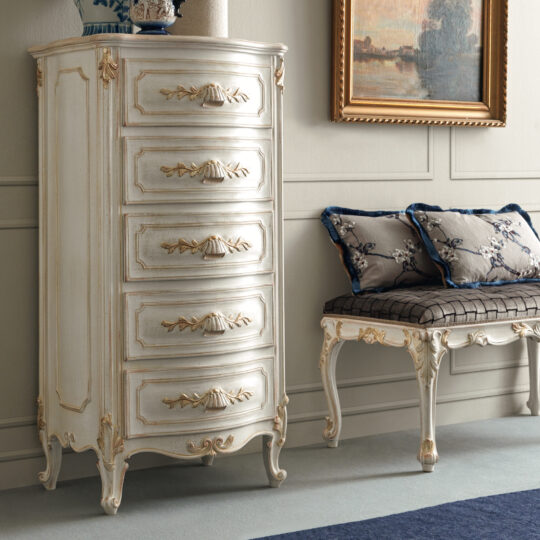
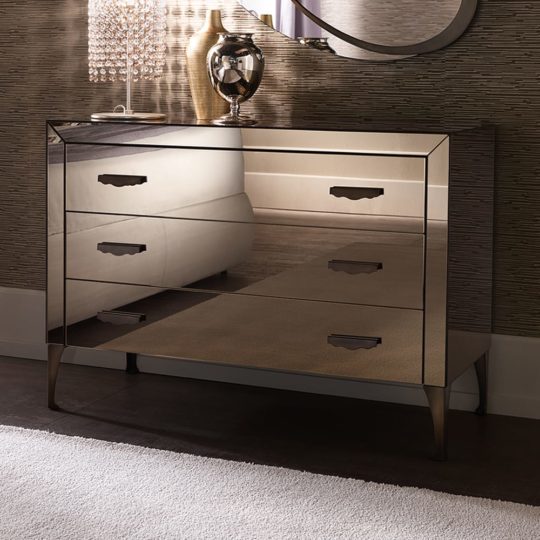
A chest of drawers offers both essential storage and visual impact. Whether you choose a wide, low piece that doubles as a styling surface or a tall, narrow option or as it’s often described, a ‘tallboy‘, to maximise space, ensure drawer glides are smooth and sturdy. This is a great opportunity to introduce texture into your bedroom design, whether through high-gloss lacquer, natural wood grain, or hand-finished details.
-
Ornate Classic Style Tallboy£9,438.00
-
Classic Feather Design Chest Of Drawers£7,076.00
-
Italian Designer Bronzed Mirrored 3 drawer ChestPrice range: £7,713.00 through £8,577.00

Occasional seating
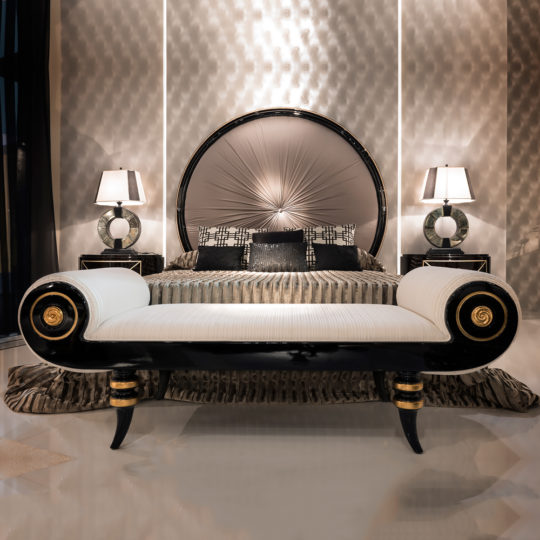
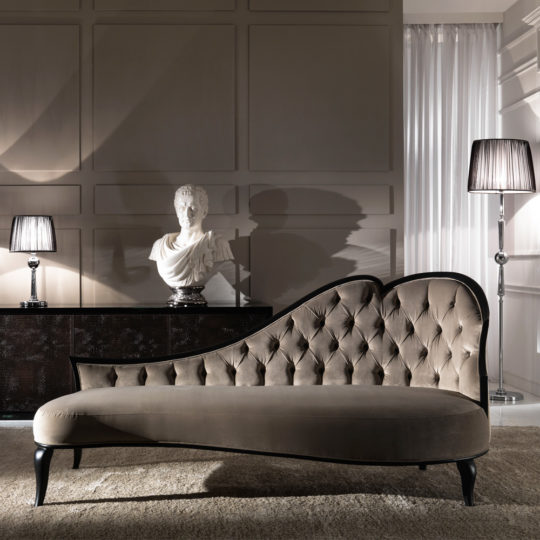
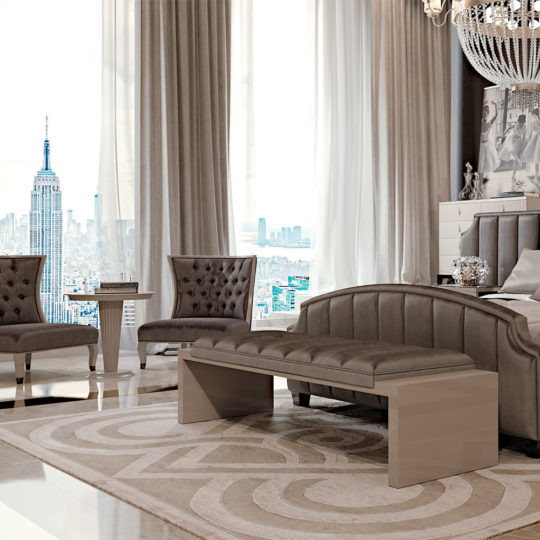
Luxury bedrooms benefit greatly from a seating area, whether it’s for winding down, reading, or getting dressed. When in the bedroom, we don’t always want to be actually in or on the bed, so curated seating options add a new dimension to the bedroom. The chaise longue has always been synonymous with opulence and luxury. Adding a chaise to your bedroom offers drama and indulgence, while a pair of armchairs with a side table creates an inviting nook. Benches or ottomans offer flexibility and often storage—perfect for placing clothes, setting down a handbag, or simply adding balance to the room’s layout. Upholstery should feel sumptuous but durable.
-
Rococo Style Chaise Longue£7,410.00
-
Black And Gold Neoclassical Bench£8,605.00
-
Designer Italian Button Upholstered Modern Chaise Longue£8,832.96

Dressing tables, vanity unit & chairs
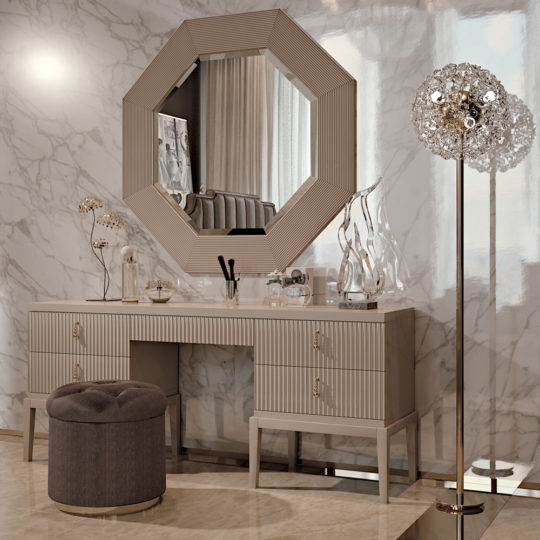
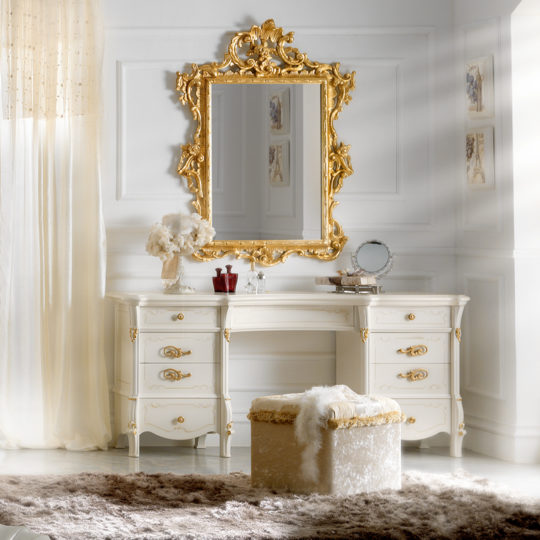
A dressing table should be as practical as it is beautiful. Choose one with ample surface space and soft-close drawers to keep your essentials organised. Opt for high-quality materials like lacquered finishes, wood veneers, or marble tops for durability and elegance. Pair it with a comfortable, upholstered chair or stool that fits neatly underneath.
Key considerations when planning your glam station:
- Prioritise natural light: Place your dressing table near a window whenever possible—natural daylight is ideal for makeup and grooming. Pair with layered lighting for evenings, such as wall sconces or backlit mirrors.
- Choose the right seat height: Make sure your stool or chair fits comfortably under the table. Standard vanity height is around 75cm, so your seat should be around 45cm high for ergonomic ease.
- Opt for drawers with purpose: Look for soft-close drawers and internal dividers to keep cosmetics, jewellery, and skincare beautifully organised. A clutter-free surface enhances both function and elegance.
- Think about tech: Integrate power outlets or USB / USBC ports into your vanity for hair tools, lighting, or charging devices—discreet functionality adds everyday luxury.
-
High End Contemporary Dressing Table£18,819.00
-
High End 5 Drawer Art Deco Inspired Dressing TablePrice range: £2,435.00 through £19,724.00
-
Designer Ivory and Gold Leaf Dressing Table And Mirror SetPrice range: £2,320.00 through £8,334.00
Designing your bedroom lighting scheme
A well-designed bedroom lighting scheme goes far beyond a single ceiling fixture. To create a truly luxurious and functional space, it’s important to incorporate multiple layers of light—each serving a distinct purpose while working together to enhance the ambience, comfort, and elegance of the room. The four key layers of bedroom lighting include:
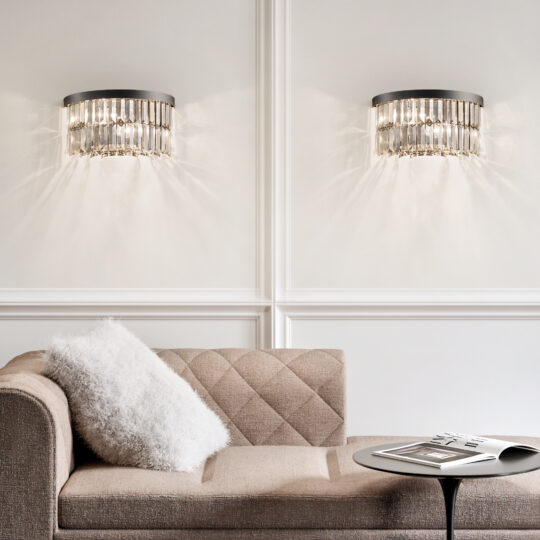
- Ambient lighting – This is your primary source of illumination, typically provided by ceiling lights, recessed fixtures, or a central chandelier. It sets the overall tone of the room and ensures a well-lit space for general use.
- Task and functional lighting – Designed for specific activities, task lighting is essential in a bedroom setting for areas like bedside reading, dressing tables, or built into wardrobes. Think directional floor lamps, wall lights over nightstands, or integrated lighting in wardrobes and vanities.
- Accent lighting – Used to highlight architectural details, artwork, or statement furniture, accent lighting adds a curated and refined touch. Wall sconces, picture lights, or LED strips beneath floating shelves or behind headboards help layer depth and visual interest.
- Mood lighting – The final layer that brings atmosphere and intimacy. Dimmable fixtures, table lamps, and soft-glow floor lamps allow you to adjust the lighting to suit different times of day and states of mind—from winding down in the evening to setting a relaxed morning tone.
Together, these four layers transform a bedroom from simply functional to deeply luxurious—a space that adapts to your lifestyle while always feeling calm, cocooning, and considered.
With so many factors to consider when it comes to lighting, we’ve put together a guide to creating a luxury lighting plan with everything from understanding colour temperatures to choosing the right light fixtures, to creating visual illusions with lighting.
-
Modern Smoked Cut Crystal Wall LightPrice range: £1,440.00 through £1,530.00
-
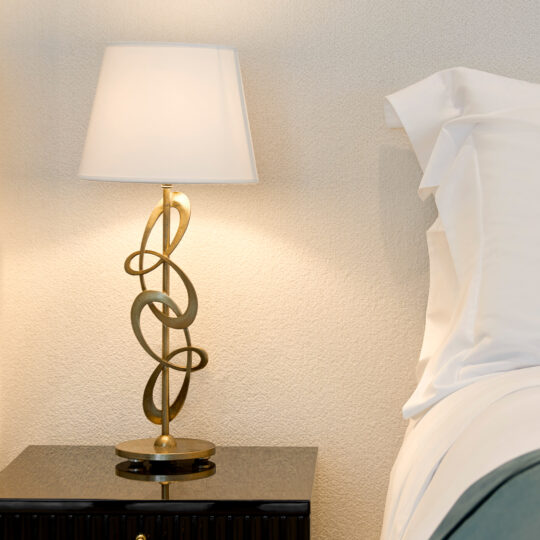
Contemporary Twisted Table Lamp£3,113.00
-
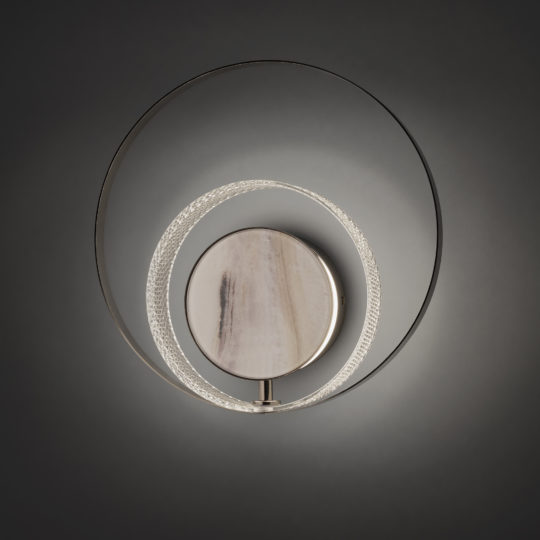
Contemporary Round Wall Light With Marble Effect£1,370.04
-
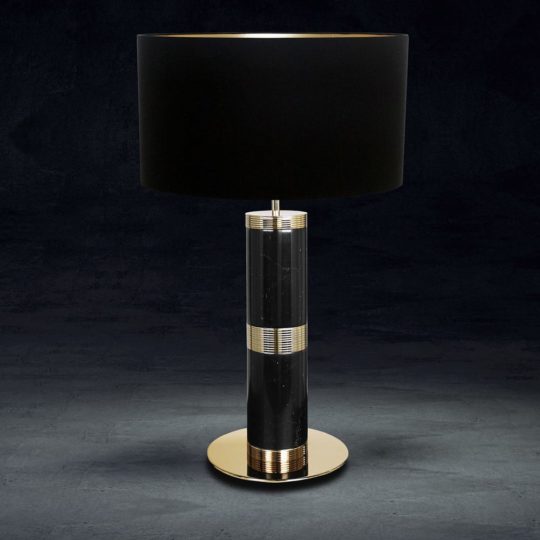
Designer Black Marquina Marble Table Lamp£1,802.00
-
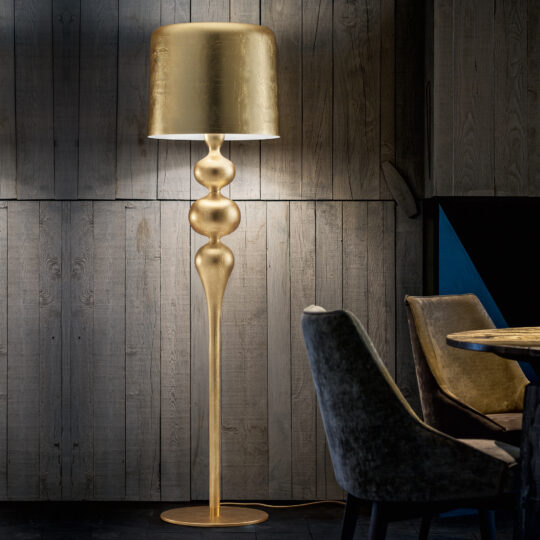
Designer Modern Gold Leaf Floor Lamp£3,140.00
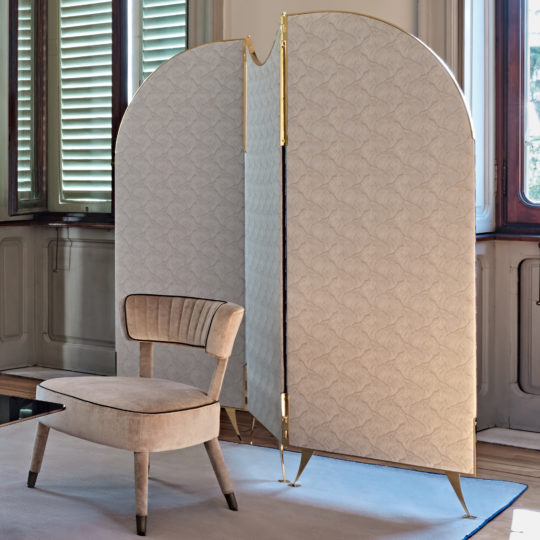
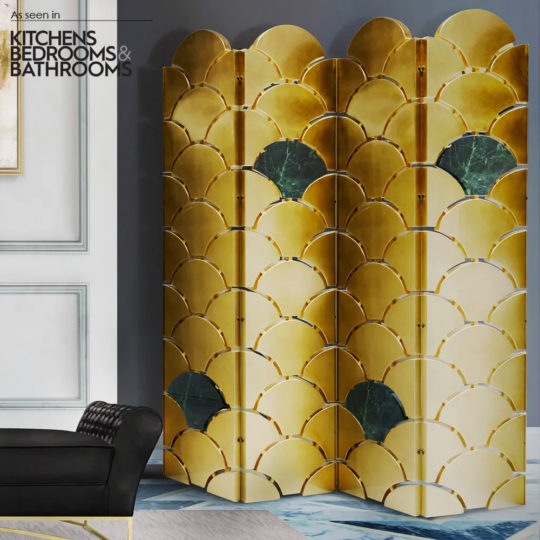
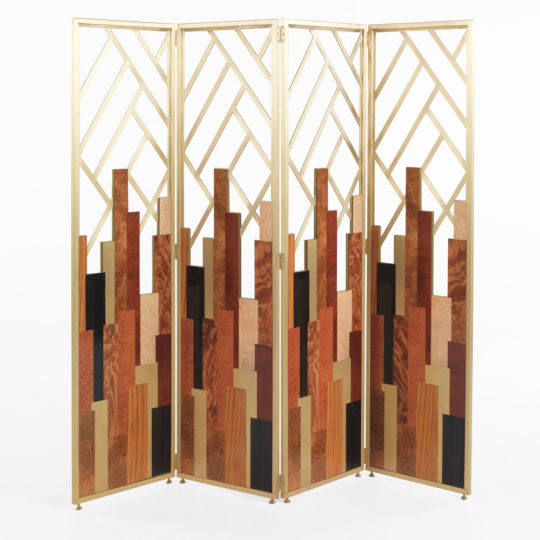
Dressing screens
Dressing screens are a beautiful and practical addition to any luxury bedroom. Once a staple in classical interiors, they’ve made a stylish comeback—offering both functional privacy and decorative flair. Whether used to discreetly divide space, create a dedicated dressing area, or simply add sculptural interest to a corner, a well-chosen screen adds instant sophistication.
Available in everything from upholstered panels and lacquered wood to mirrored finishes and hand-painted designs, dressing screens can complement your bedroom’s aesthetic while introducing texture, colour, or pattern. They’re especially useful in open-plan master suites, dressing zones, or bedrooms without a separate wardrobe space.
Designer tip: Use a dressing screen to subtly hide open clothing rails, soften awkward corners, or serve as a backdrop for a chaise longue or reading nook—bringing structure and refinement to the room.
Luxury bedroom room interior design: Finishing touches
Once your key pieces of bedroom furniture are in place and your lighting and layout are perfectly balanced, it’s time to elevate your bedroom with those all-important finishing touches. These are the details that bring personality, warmth, and depth—transforming a beautifully designed space into a truly luxurious sanctuary.
Soft furnishings such as cushions, throws, and layered bedding introduce texture and tone, softening the room and creating a sense of indulgence. Opt for rich, tactile fabrics like velvet, silk, faux fur, or boucle in a refined, cohesive palette. Rugs—whether placed under the bed, beside a reading chair, or used to zone a dressing area—anchor the room and add both comfort and visual structure.
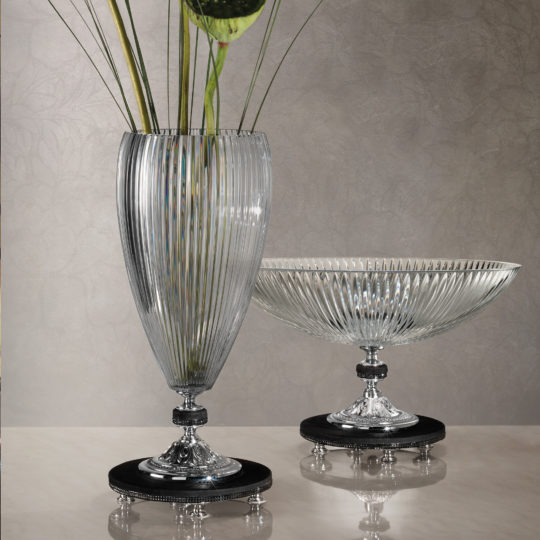
Artwork and decorative objects bring character and individuality. Choose pieces that resonate with your personal style—whether that’s large-scale contemporary art, elegant photography, or sculptural ornaments and urns. Styling surfaces such as bedside tables, dressing tables, and consoles with trays, candles, books, or floral arrangements adds polish without cluttering the space.
Designer tip: Every accessory should feel intentional—curated, not crowded. The most luxurious bedrooms feel effortlessly elegant, with layers that reveal themselves subtly rather than shouting for attention.
With thoughtfully chosen finishing touches, your bedroom becomes more than just a place to sleep—it becomes a retreat of calm, character, and pure indulgence.
-
Cut Crystal Centrepiece and VasePrice range: £2,021.00 through £2,704.00
-
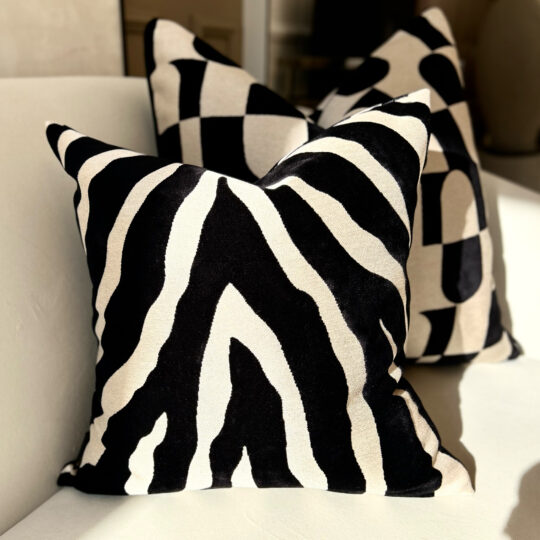
Luxury Velvet Zebra Pattern Scatter Cushion£86.00
-
High End Italian Art Deco Inspired Handmade Rug£18,136.00
And there you have it—a complete guide to designing a luxury bedroom, filled with inspiration, expert insights, and practical advice to support you at every stage of the process. With so many elements to balance—function, flow, style, and comfort—it’s well worth considering the value of working with a professional interior designer to bring your vision to life with precision and ease. Making the whole process a joyful experience.
Why work with an interior designer?
A skilled interior designer does more than make a room look beautiful—they bring clarity, creativity, and calm to what can often be an overwhelming process. From avoiding costly mistakes to ensuring your project stays on time and within budget, their role is both aesthetic and strategic. Whether it’s sourcing luxury products, customising and designing from scratch bespoke furniture, or managing spatial planning, a designer translates your ideas into a cohesive and effortlessly elegant result.
Our award-winning design team works closely with clients through a collaborative, tailored approach—combining technical expertise, refined taste, and access to a trusted network of craftspeople and artisans. The result? A bedroom that not only reflects your lifestyle and personal style, but one that feels truly unique and exceptional in both form and function. Let us help you create a space where every detail is considered, and every moment feels indulgent.
If you’re curious about what it’s like to work with an interior designer, take a look at our Interior Design FAQs for answers to common questions and insights into the process.
Luxury bedroom interior design, London UK
If you’re ready to explore the possibilities for your bedroom, book an appointment at our London design studio. Or give us a call and speak with one of our designers to discuss your vision +44 (0) 203 131 4515 or email us at sales@juliettesinteriors.co.uk.