Curtains designed for a palace are not ordinary window dressings. They are architectural features, textile installations and decorative statements that must respect the scale, history and purpose of the room.
At Juliettes Interiors, we are often asked through our luxury interior design service to design grand window treatments for remarkable homes, period properties and important buildings around the world. Many of these interiors have a historical or architectural requirement, where the curtain design must feel appropriate to the building rather than simply decorative.
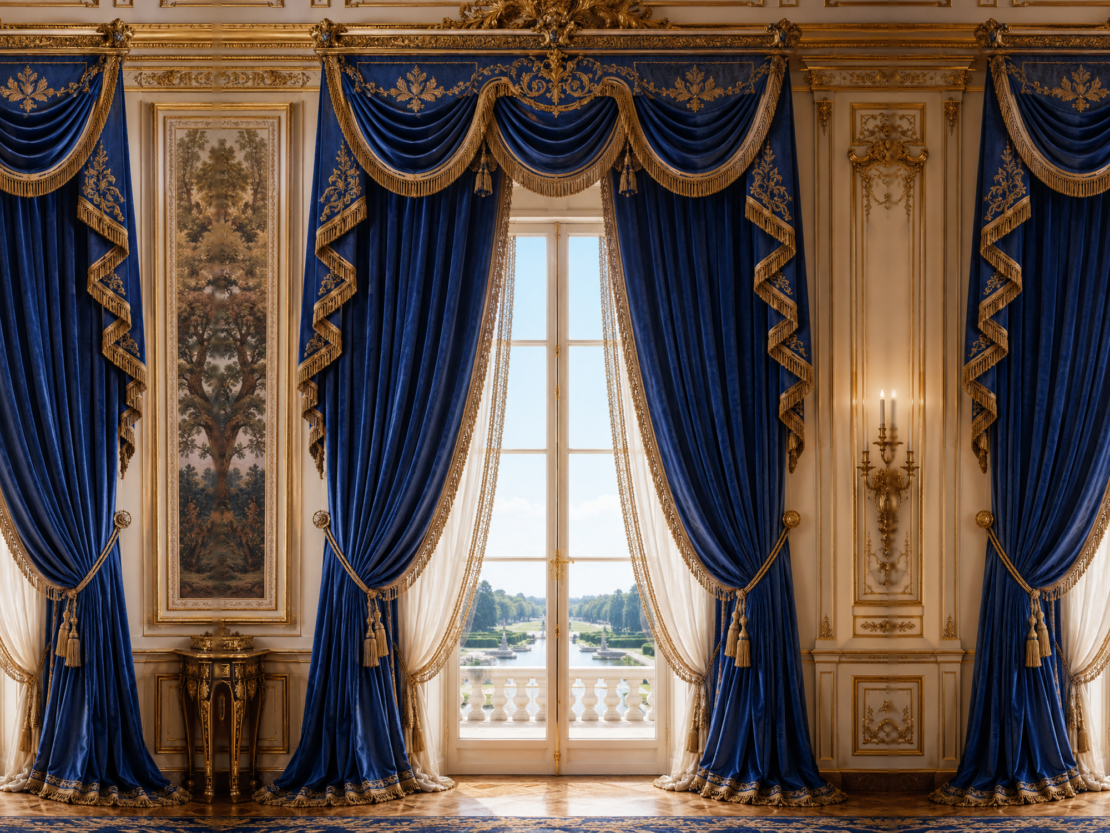
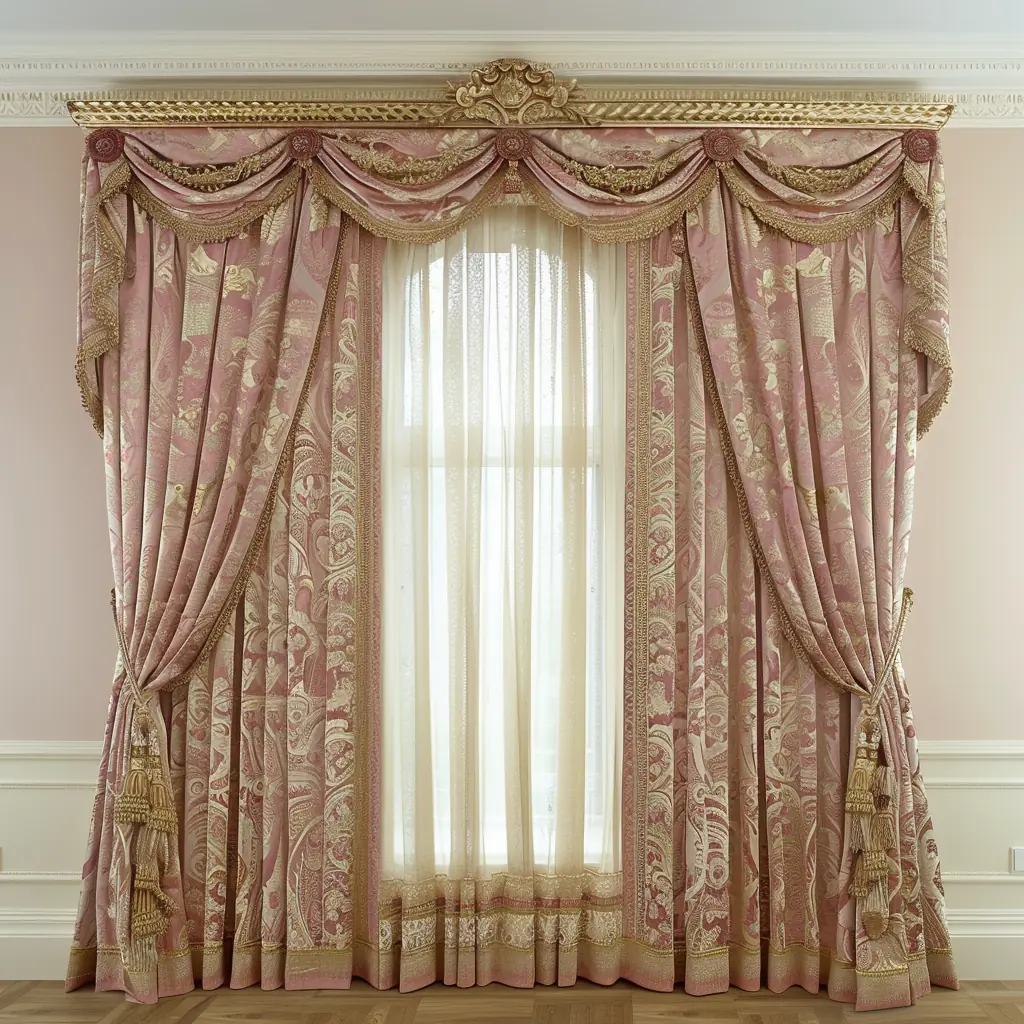
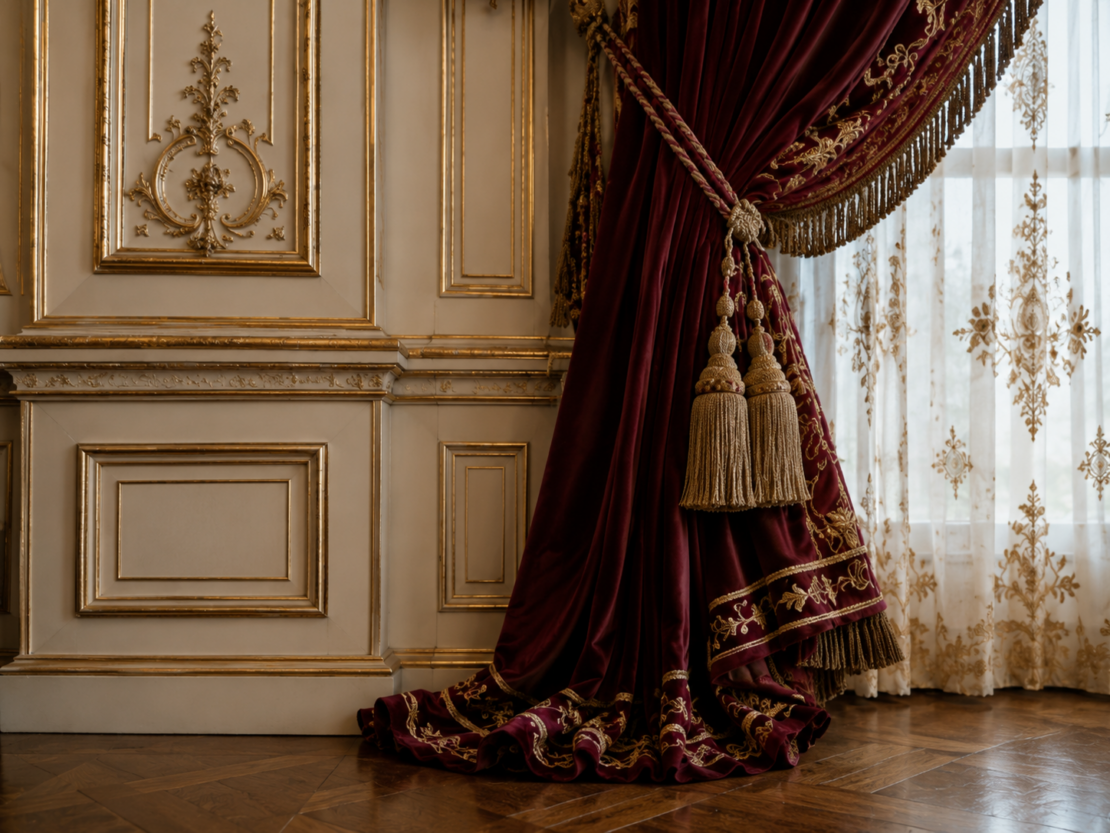
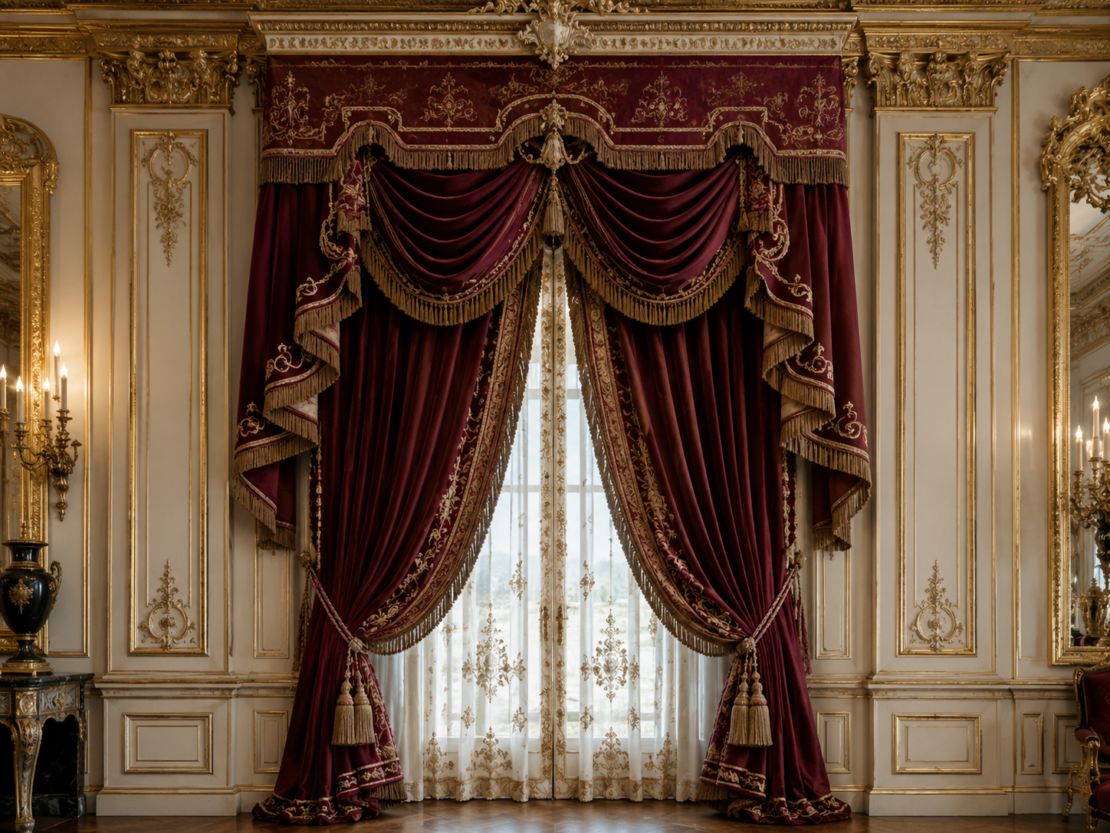
For confidentiality reasons, we cannot always show completed projects. However, our inspiration imagery shows the scale, detailing, craftsmanship and visual drama that bespoke curtain design can create.
Why palace curtains require a different design approach
Palace-style curtains are about proportion first. In a grand interior, the windows are often tall, arched, deeply recessed or set within ornate plasterwork. A standard curtain heading or simple pole will usually look under-designed.
Instead, the designer must shape the treatment around the architecture. The position of the window, ceiling height, wall panelling, cornicing, mouldings, flooring and furniture layout all affect the final design.
A successful scheme may include layered curtains, swags, tails, pelmets, tassels, trims, embroidery, sheers and decorative tiebacks. However, the designer must control these details carefully. If the designer adds too many elements without balance, the result can become theatrical rather than elegant.
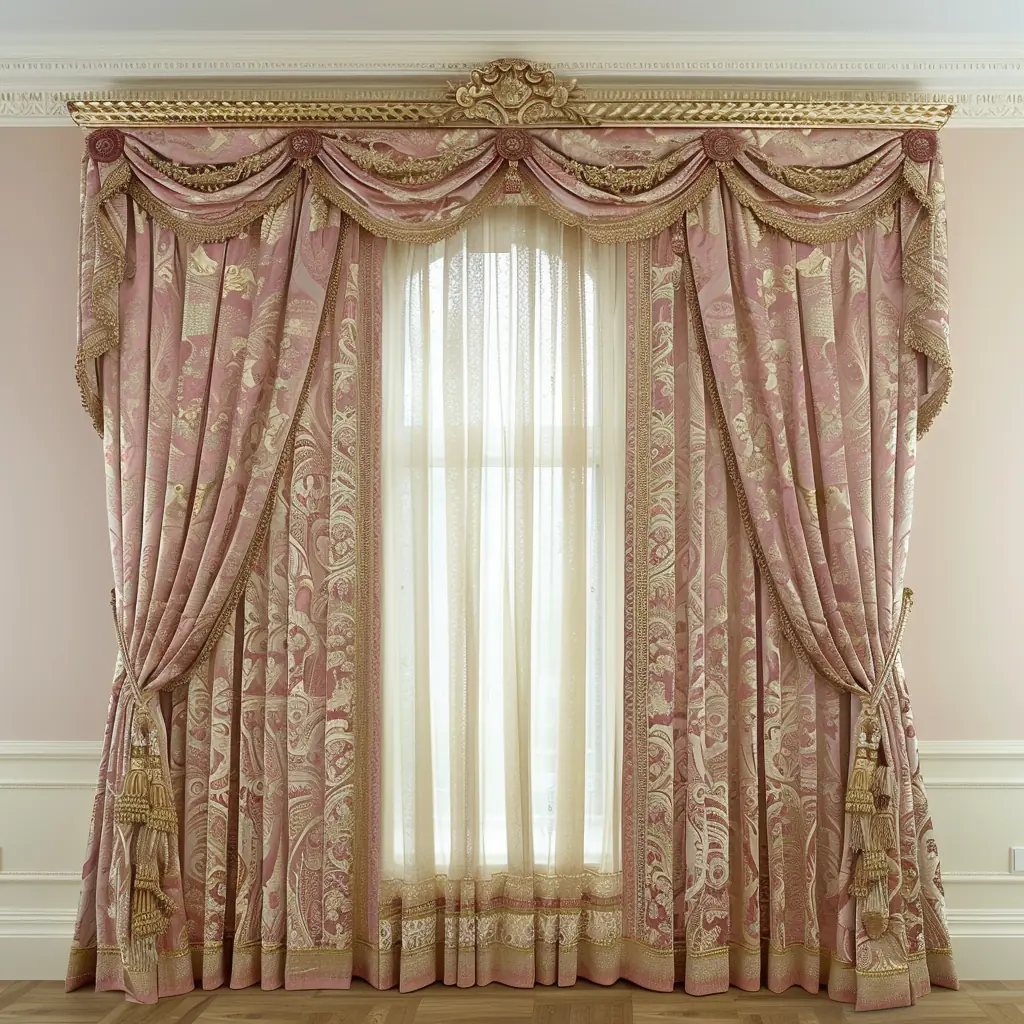
One of the most important decisions is whether the curtains should be historically accurate, historically sympathetic or simply inspired by traditional palace interiors.
Some properties require a faithful approach. This is often the case where the building has architectural or conservation significance, where the wider principles of design in the historic environment the design team may need to consider the wider principles of design in the historic environment. In other homes, the client may want the grandeur of a palace-style treatment, but with a cleaner and more contemporary finish.
This is where bespoke furniture design and made-to-measure interior detailing become essential. The aim is not to copy the past blindly. The aim is to understand the room, the period, the client’s lifestyle and the decorative language of the building, then create a curtain treatment that feels intentional.
For example, a formal reception room may suit deep velvet curtains with bullion fringe and tassel tiebacks. A lighter salon may need ivory silk curtains with soft swags and a more restrained gold trim. A ceremonial dining room may justify richer damask, embroidered borders and a shaped pelmet.
The main features of palace-style curtain design
Grand window treatments usually combine several decorative and technical elements.
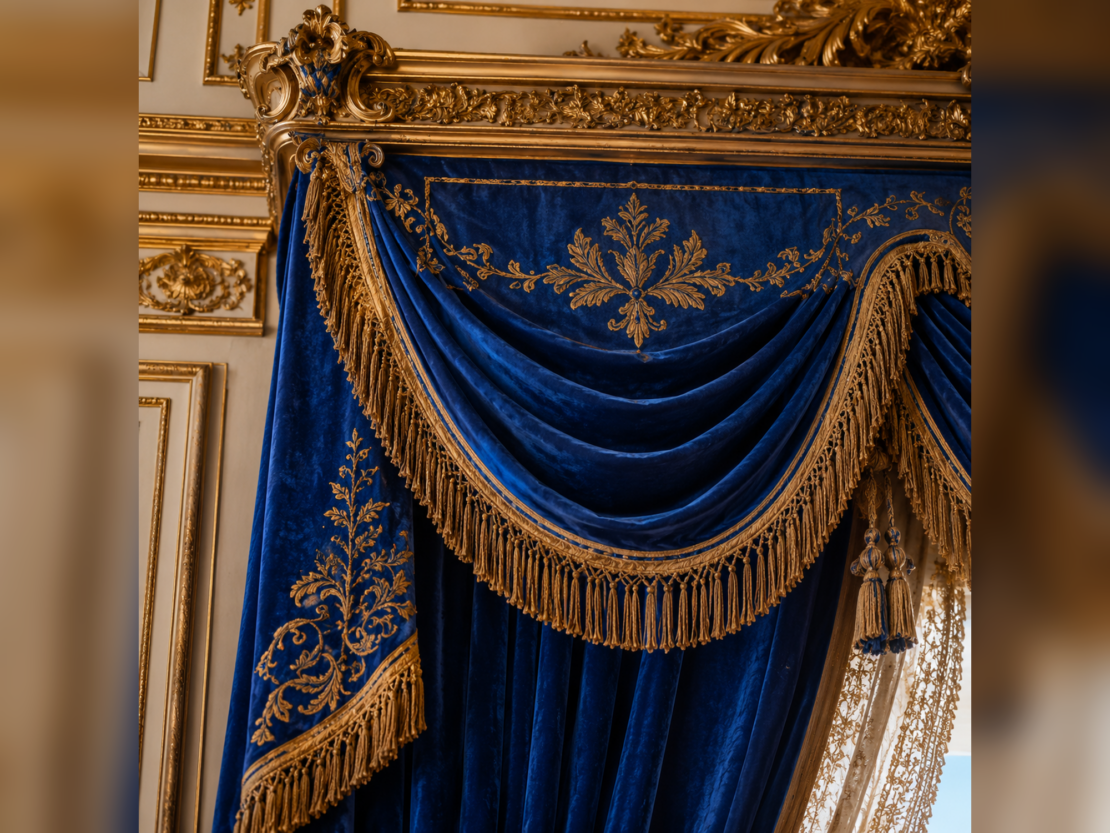
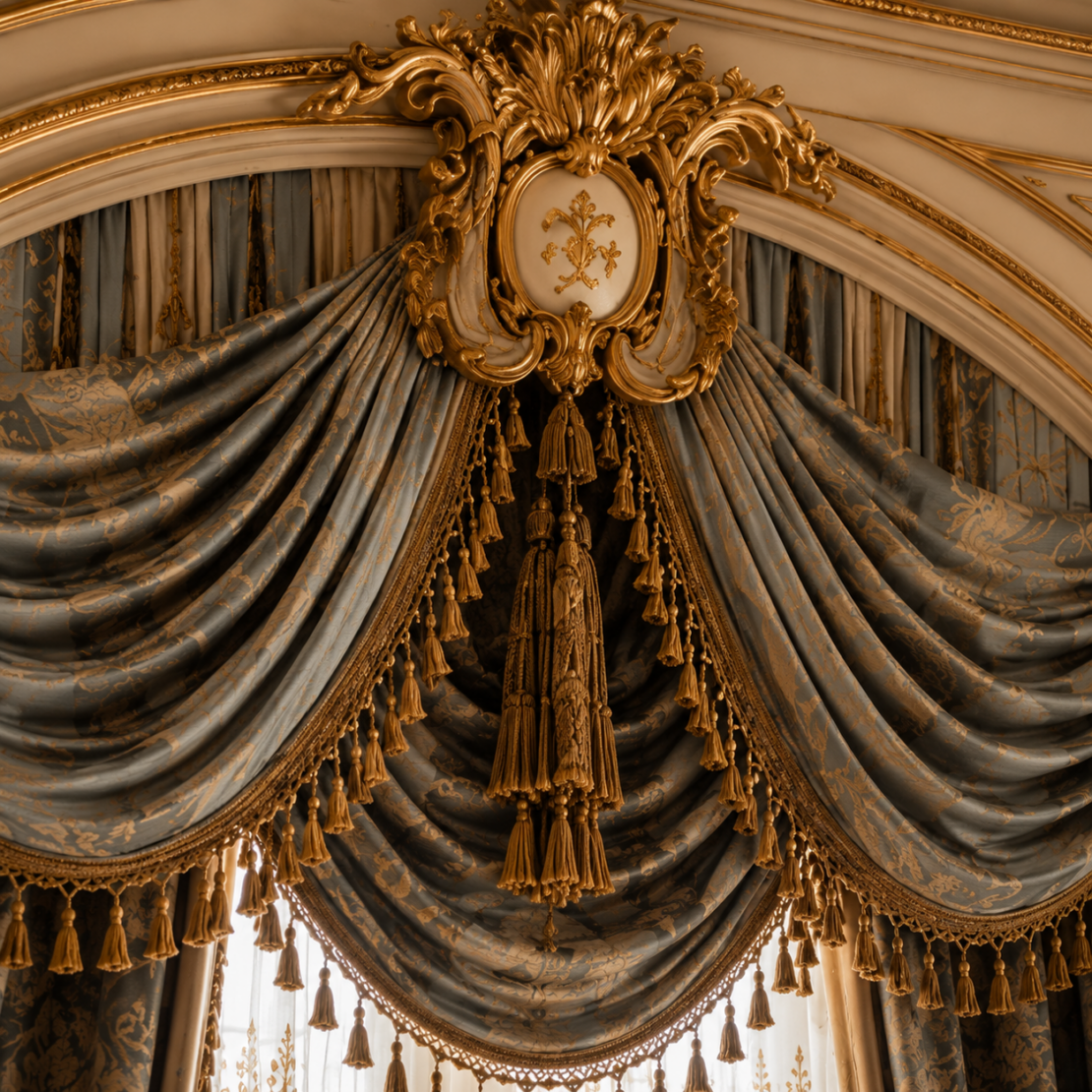
Swags are the draped fabric sections that sit across the top of the window. They create softness and movement, especially in rooms with high ceilings.
Tails, also called cascades or jabots, fall down the sides of the window and frame the curtain treatment. They can be simple and elegant, or heavily trimmed for a more formal look.
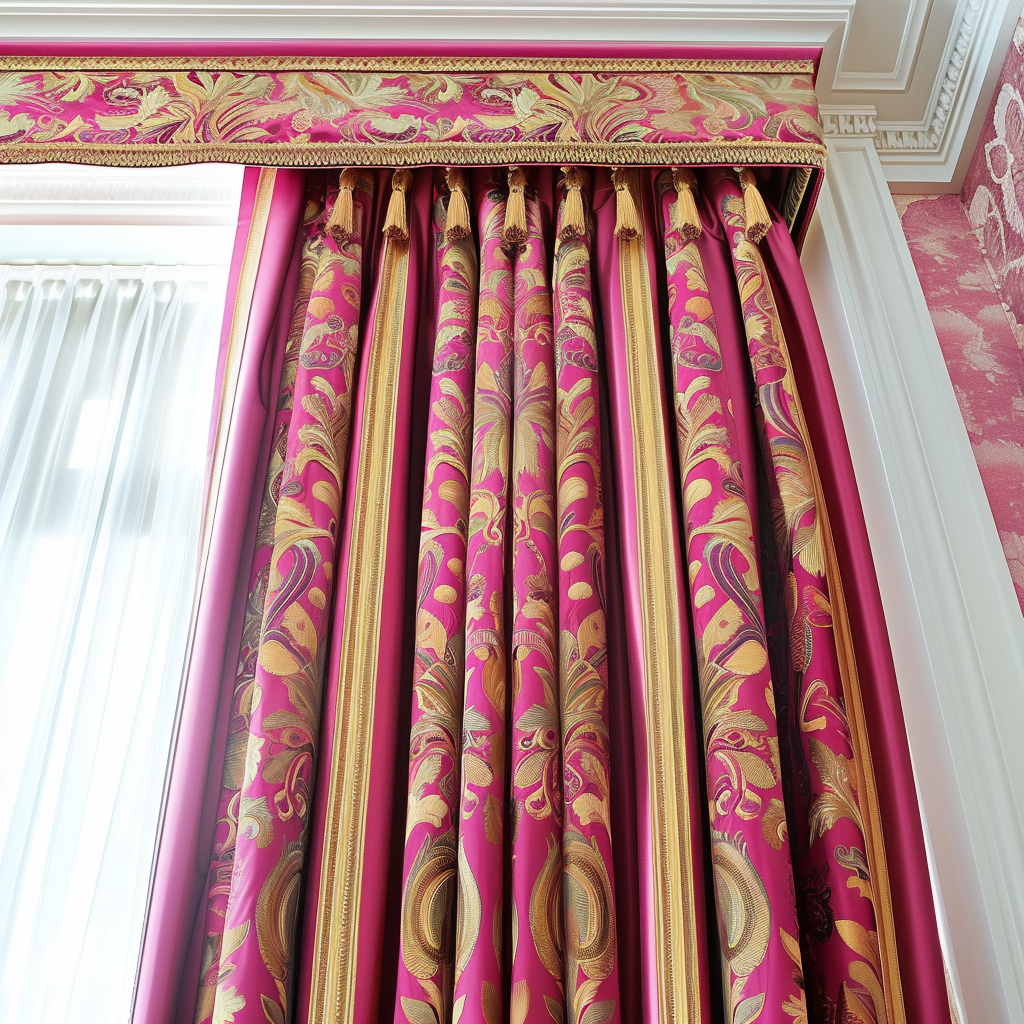
Pelmets and cornices conceal the curtain track or fixing system. In palace interiors, the design may include upholstered, shaped, gilded, carved or trimmed pelmets.
Sheer curtains provide privacy and light diffusion. Designers often use them behind the main curtains, particularly where the windows overlook gardens, courtyards or formal terraces.
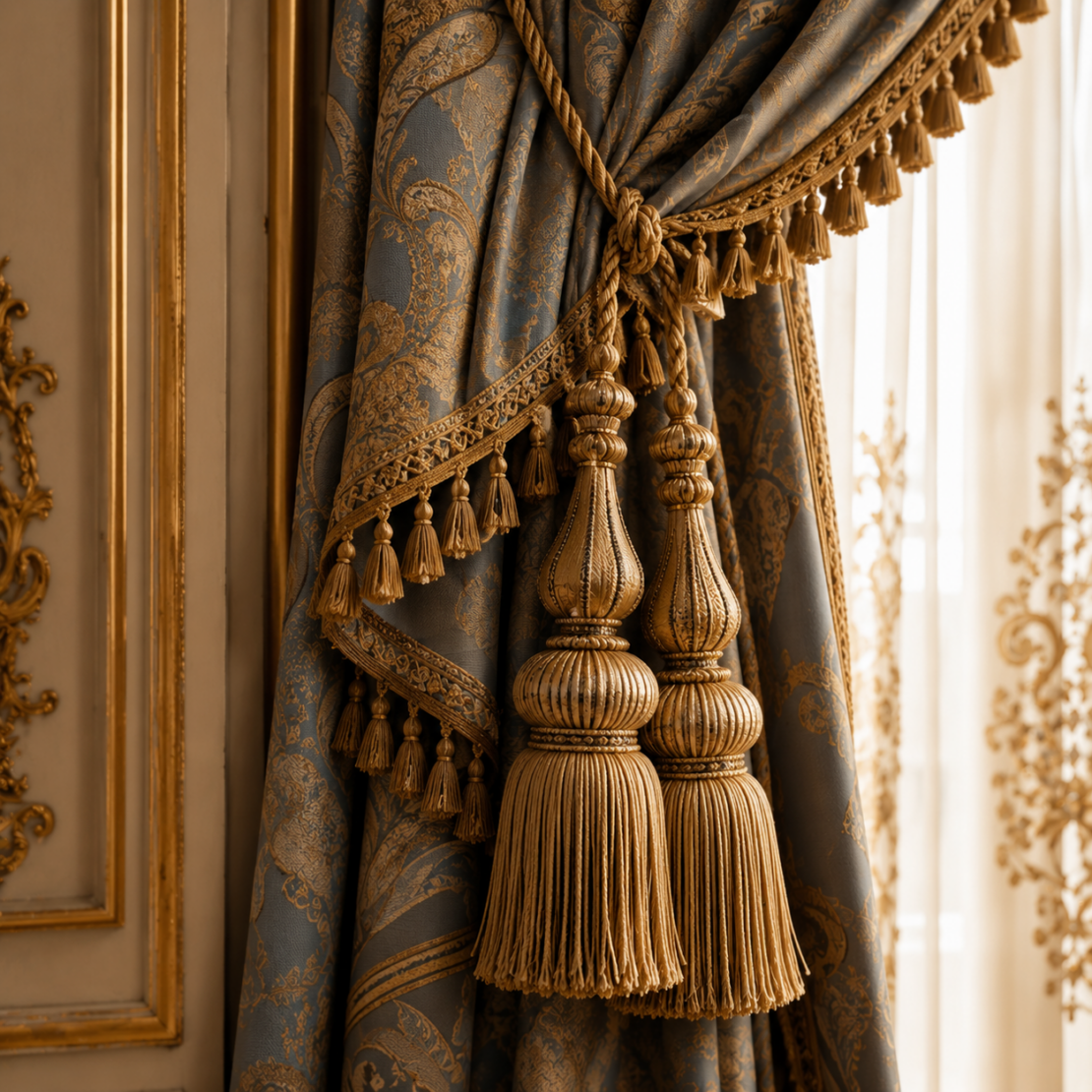
Tiebacks hold the curtains open and add further detail. For grand rooms, these may include large tassels, silk ropes, decorative rosettes or metal wall hooks.
Trims are critical. Bullion fringe, braid, tassels, embroidered borders and contrast linings can completely change the character of a curtain. Used correctly, they give the treatment depth and authority. Used badly, they make it look heavy and dated.
Choosing the right fabric
The fabric choice determines the entire mood of the window treatment.
Velvet gives depth, richness and a formal palace look. It works particularly well in deep blue, burgundy, emerald, bronze and antique gold. It also hangs beautifully, which is essential for tall windows.
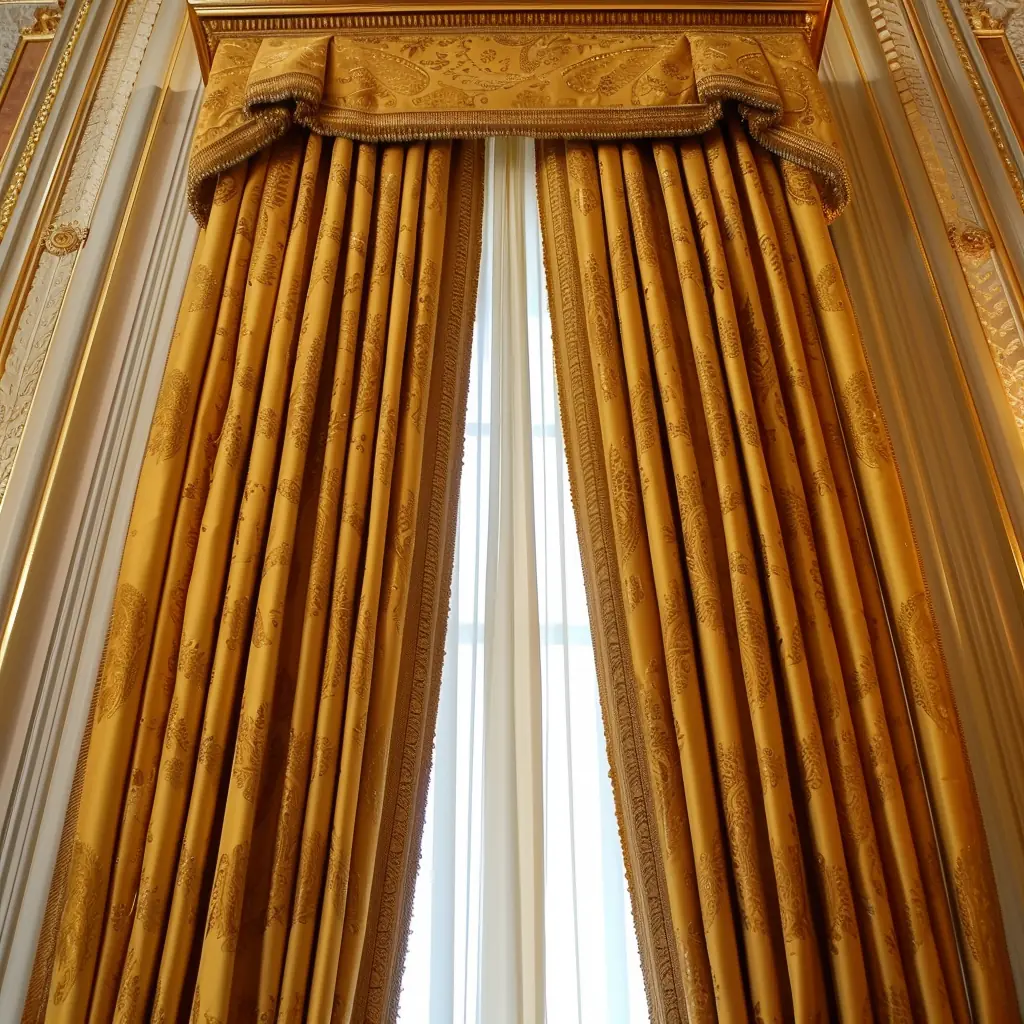
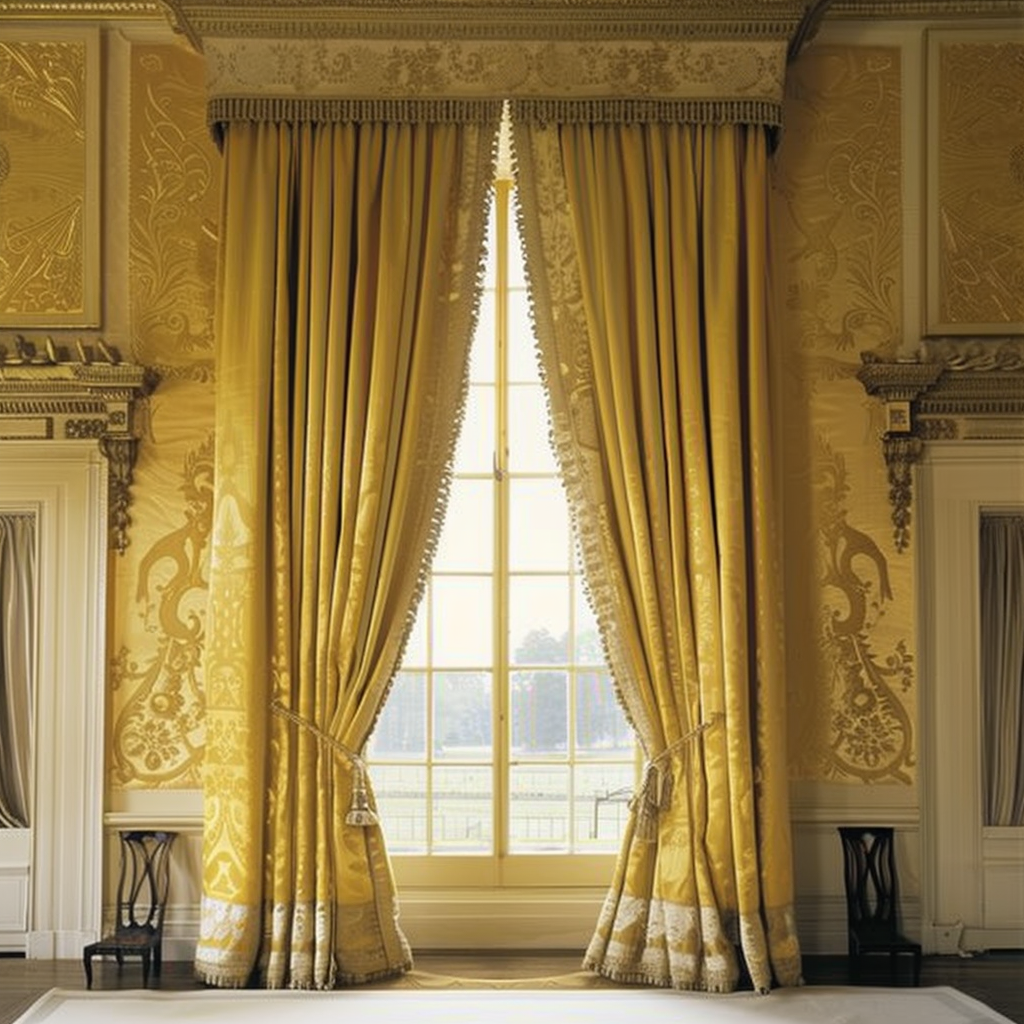
Silk brings elegance and luminosity. It is ideal for refined rooms where the curtains need to catch the light rather than dominate the space.
Damask and brocade create a more decorative effect. These fabrics suit historic interiors, formal drawing rooms, dining rooms and reception spaces.
Designers can also use linen and wool, but they create a quieter and less ceremonial finish. They are better suited to country houses, private bedrooms and relaxed heritage interiors.
The lining is equally important. Interlining gives the curtain body and insulation. Blackout lining may be required for bedrooms. UV-resistant lining can help protect delicate fabrics from sunlight, especially in interiors where light exposure can damage historic textiles. In some projects, fire-retardant treatment may also be needed.
Colour Palettes
The inspiration images show several strong colour directions.
Royal blue and gold create a regal, confident look. This works well in rooms with gilded plasterwork, parquet flooring, chandeliers and formal French doors.
Deep burgundy feels warmer and more dramatic. It is particularly effective in dining rooms, libraries, music rooms and evening spaces.
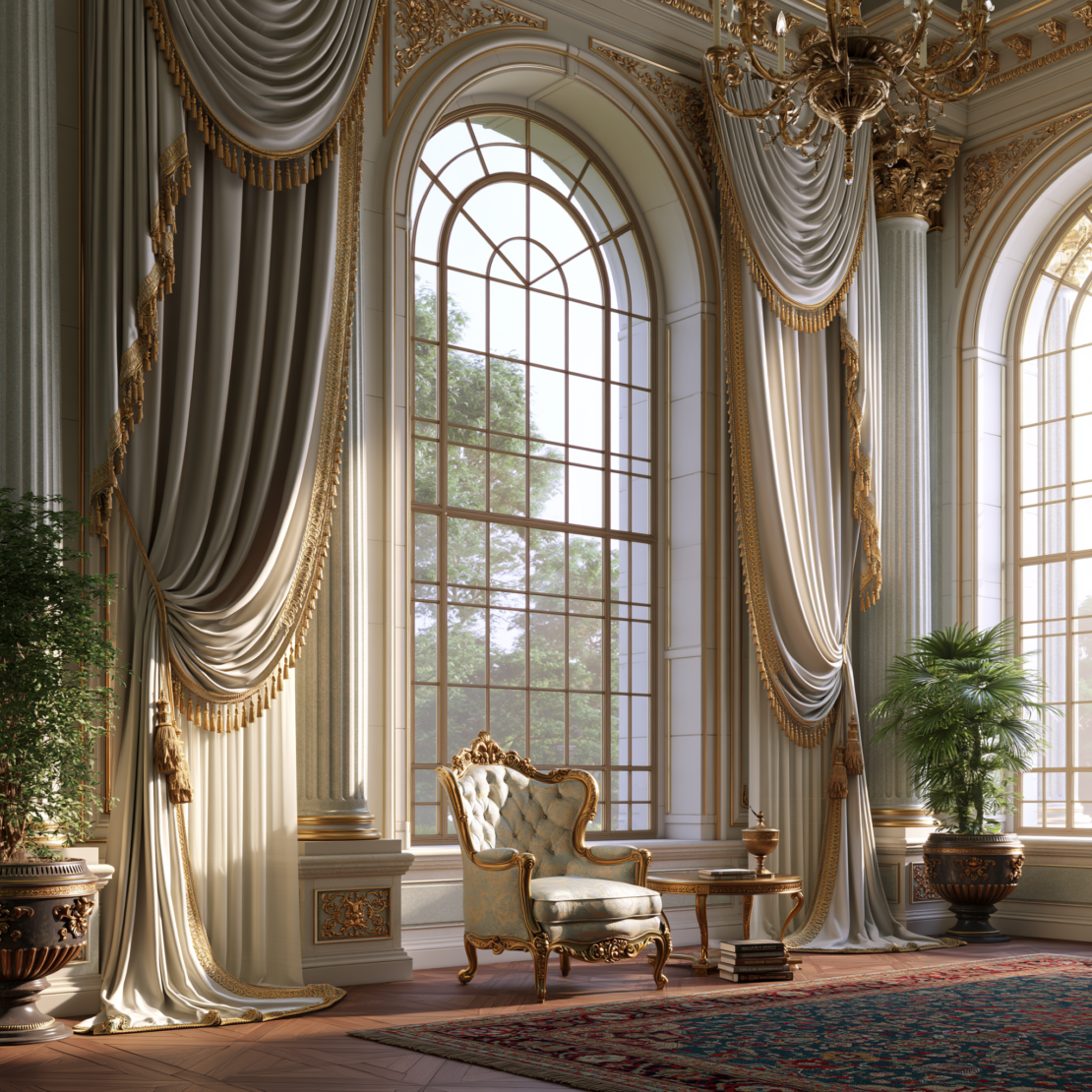
Ivory, champagne and soft gold create a lighter palace aesthetic. This is better for salons, bridal suites, grand bedrooms and rooms where the architecture is already highly ornate.
Antique gold damask gives the strongest historic reference. It can look exceptional in arched windows, gilded rooms and interiors with crystal chandeliers or carved furniture.
The wrong colour will undermine the whole room. A fabric that looks beautiful in isolation may be too flat, too bright or too modern once placed against historic plasterwork or marble flooring.
Designing for arched and tall windows
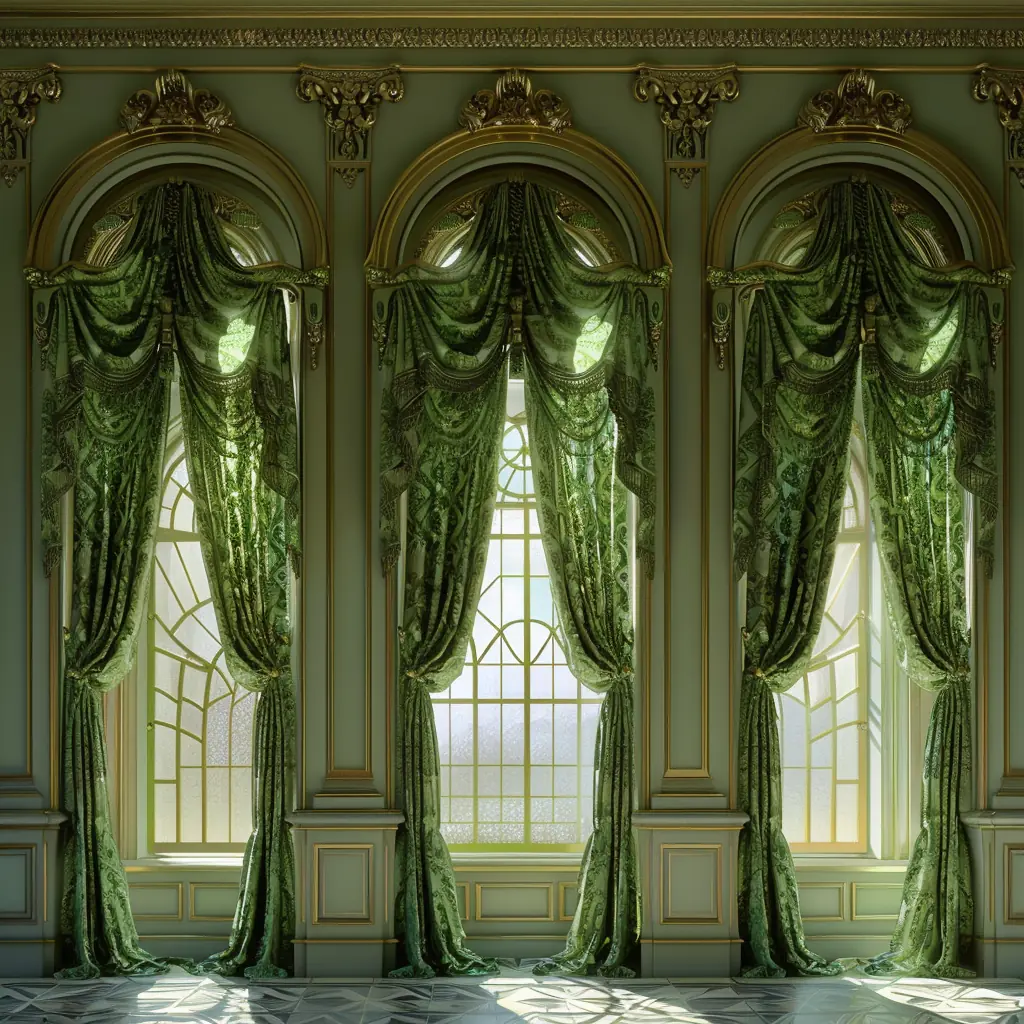
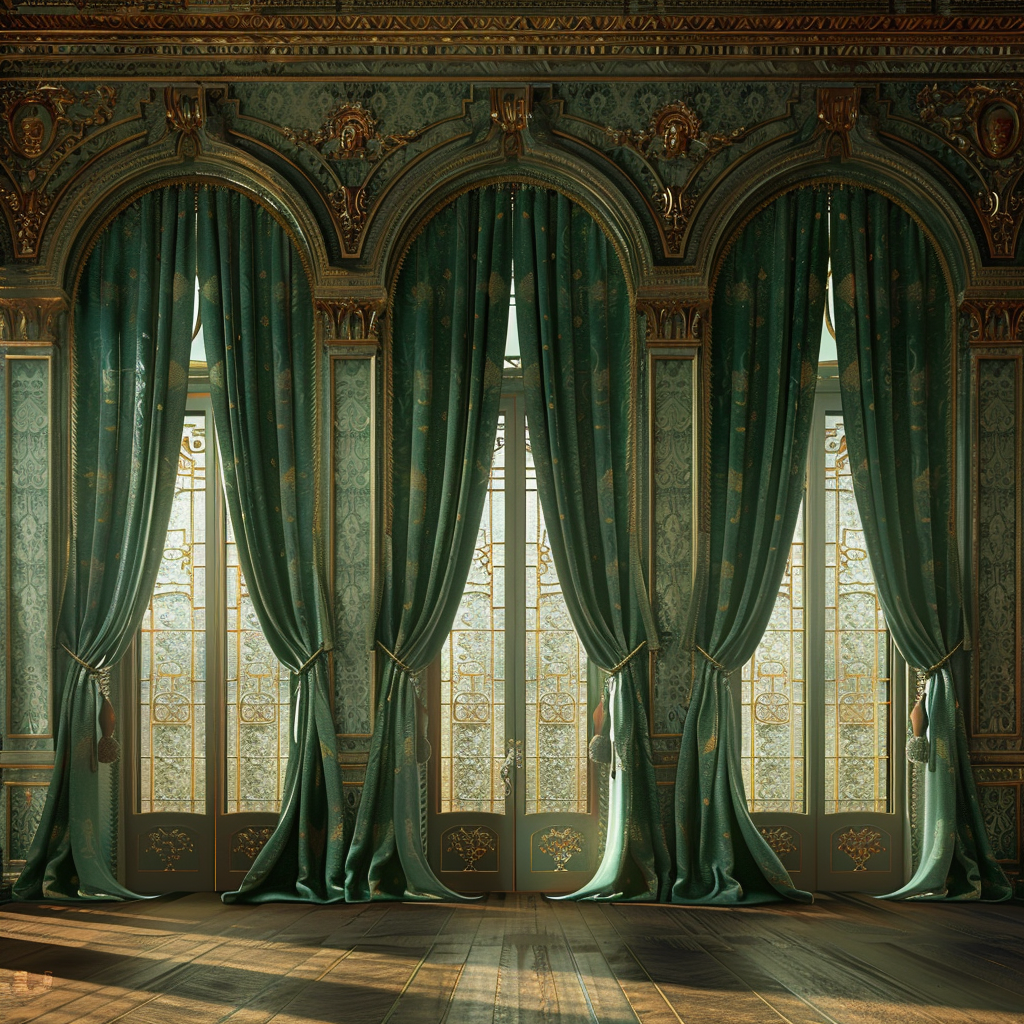
Arched windows require particular care. A straight pelmet can look clumsy if it fights against the architecture. In many cases, the curtain treatment needs to follow or acknowledge the arch.
This may involve a shaped pelmet, a central decorative crest, layered swags or side cascades that frame the window without hiding it. The aim is to make the window look taller and more important, rather than allowing fabric to overwhelm it.
Very tall windows also need careful fullness. Too little fabric will look mean. Too much fabric can overwhelm the room and become impractical. The designer must calculate the curtain stack, fixing position and final drop before manufacture.
For grand interiors, the bottom of the curtain may just kiss the floor, break slightly, or create a more formal puddled effect. The correct finish depends on the room use, the flooring and the maintenance requirements.
Modern performance behind a traditional look
A palace-style curtain can look traditional while still performing like a modern window treatment.
Behind the visible design, there may be discreet tracks, specialist brackets, hidden fixings, blackout lining, acoustic interlining, UV protection or motorisation. This is especially useful for tall or difficult-to-reach windows.
However, technical features must be planned early. Motorised tracks, electrical points, wall fixings and weight loadings all need to be considered before the decorative design is finalised. In historic or sensitive buildings, any fixing method must also respect the existing architecture.
The bespoke design process
A serious curtain scheme starts with the room, not the fabric.
The first stage is to understand the property, window dimensions, wall structure, ceiling height, existing mouldings and intended use of the room. From there, we consider the historical direction, colour palette, fabric options and level of decoration.
Concept designs may include mood boards, fabric samples, trims, sketches, CAD elevations, rendered visuals and wider interior design projects where required
Once the client agrees the design, the team finalises the technical drawings, measurements and specifications. Specialist curtain makers then make the curtains, and experienced fitters install them. by specialist curtain makers before being installed by experienced fitters.
For palace-style projects, installation is not a minor detail. These curtains are often heavy, layered and technically complex. Poor installation can ruin even the most beautiful fabric.
Grand window treatments are not limited to actual palaces. They can be appropriate for private residences, embassies, heritage hotels, listed buildings, country houses, formal apartments and luxury villas, particularly where historic interiors conservation is relevant to the wider specification.
The key is restraint. A palace-inspired curtain should suit the architecture and the client. It should not look like a stage set.
For international projects, practical issues also matter. Fabric availability, shipping, customs, fire regulations, site access, installation teams and local climate all affect the final specification.
This is why an experienced design process is essential. The curtain design must be beautiful, but it must also be buildable, installable and suitable for long-term use.
Why bespoke matters
A grand room needs a curtain treatment that designed specifically for its proportions.
Bespoke curtains allow the scale, fabric, trim, lining, fullness, heading, pelmet shape, tiebacks and installation method to be controlled in detail. This is what gives palace curtains their sense of permanence.
When designed properly, the curtains do not just dress the window. They complete the room.
Creating the finished interior
The curtains should form part of a fully considered interior scheme, working in harmony with the luxury furniture, lighting, rugs, wall finishes, mirrors, artwork and decorative accessories.
For example, a gold damask curtain can be echoed through gilded mirror frames, bronze lighting, carved furniture or decorative ceiling details. A blue velvet curtain may be balanced with ivory walls, crystal chandeliers and polished parquet flooring. A burgundy treatment can sit beautifully alongside antique brass, dark timber and warm marble.
This level of coordination is what separates a truly luxurious interior from a collection of expensive individual pieces.Final thoughts
Curtains designed for a palace require more than fabric and trim. They require scale, proportion, historical understanding, specialist making and careful installation.
Whether the setting is a formal residence, a historic building or a luxury private home, the result should feel considered, elegant and appropriate to the architecture.
At Juliettes Interiors, we create bespoke interior schemes and grand window treatments for clients who require this level of detail. Where completed projects must remain private, inspirational images can still show the richness, craftsmanship and ambition behind this type of work.
FAQs
What are palace curtains?
Palace curtains are grand, bespoke window treatments for formal, historic or highly decorative interiors. formal, historic or highly decorative interiors. They often include layered fabrics, swags, tails, pelmets, tassels, trims and specialist linings.
What fabrics are best for palace-style curtains?
Designers commonly use velvet, silk, damask, brocade and embroidered fabrics for palace-style curtains. for palace-style curtains. The best choice depends on the room, light levels, architecture, colour palette and required level of formality.
Can palace curtains be designed for a private home?
Yes. Designers do create palace-inspired curtains for private homes, country houses, penthouses and luxury villas. The designer should adapt the treatment to the architecture so that it feels elegant rather than excessive to the architecture so that it feels elegant rather than excessive.
Are swags and tails still used in luxury interiors?
Yes, but designers need to handle them carefully. Swags and tails can look exceptional in grand interiors, but poor proportions or excessive trimming can make them look dated. The success depends on scale, fabric choice and detailing.
Can you design curtains for historic or listed buildings?
The designer must consider the fixing method, fabric weight and installation approach carefully. In sensitive buildings, the design may need to respect existing plasterwork, panelling, cornices and conservation restrictions.
Can palace curtains be motorised?
Yes. Designers can often conceal motorised tracks behind pelmets or architectural detailing. However, the team should plan motorisation early because electrical points, access, curtain weight and fixing positions need to be checked.
How long do bespoke palace curtains take to make?
Timescales vary depending on the size of the project, fabric availability, embroidery, trims, technical drawings and installation requirements. Complex palace-style curtain schemes can take several months from concept to installation.
Do palace curtains need sheer curtains behind them?
Not always. Designers often recommend sheers. They provide privacy, soften daylight and protect the main fabric from direct sun exposure.
Can you recreate a historical curtain design?
A designer will interpret or sympathetically recreate a historical design. But the approach depends on the building, available references, copyright, conservation issues and practical requirements.
Why are some completed projects not shown publicly?
Many luxury residential and historic projects are confidential. Clients may not permit publication of finished rooms, especially in private residences, palaces, embassies or sensitive buildings. Inspiration imagery can still communicate the design direction without compromising privacy.